Giảm giá hấp dẫn cho tour du lịch!



ANCESTRAL ECHOES: FROM CHAMPA TOWERS TO THE CITADELS OF THE FRONTIER
For the discerning traveler, this region is a living museum. This part of Vietnam was once the heart of the Kingdom of Champa, a powerful seafaring civilization that ruled the coast from the 2nd to the 19th century.
NHA TRANGSHORE EXCURSIONLOCAL EXPERIENCES
Tobin Nguyen
1/17/20265 phút đọc
Once you have mastered the high-speed pulse of the "Boulevard" and the intricate maze of "The Grid," the modern facade of Nha Trang begins to peel away. What lies beneath is a much older, more mysterious soul—a landscape shaped by the rise and fall of empires over a millennium. For the discerning traveler, this region is a living museum. This part of Vietnam was once the heart of the Kingdom of Champa, a powerful seafaring civilization that ruled the coast from the 2nd to the 19th century.
But the history here isn't a single thread; it is a sandwich of cultures. You are standing in a place where ancient Hindu-Buddhist towers look out over 18th-century royal fortresses, and where the fading ochre of French colonial villas sits beside Chinese assembly halls. To truly understand the land, you must travel through these layers of time, moving from the sacred hills of Kauthara (Nha Trang) to the military gates of Dien Khanh and the wind-swept ruins of Panduranga (Ninh Thuan).
1. The Champa Gateway: Po Nagar and the Alchemy of Brick
Rising like a jagged crown above the mouth of the Cai River, the Po Nagar Cham Towers are the most iconic remnants of the Kauthara Principality. Built between the 7th and 12th centuries, these four remaining towers (out of an original ten) are not mere ruins; they are active spiritual batteries. Even today, they remain a site of pilgrimage for the ethnic Cham, the Chinese, and the Vietnamese, all coming to pay homage to Yan Po Nagar, the Mother of the Kingdom.
The Architectural Mystery: As you stand at the base of the North Tower (the tallest at 23 meters), look closely at the masonry. The bricks are joined together without any visible mortar. For decades, archaeologists have debated how the Cham achieved this. Legend says they used a resin from the forest (dầu rái), but modern chemical analysis suggests a more complex alchemy: the bricks were likely rubbed together with a thin layer of water and clay and then fired after the structure was built, fusing them into a single, solid mass. It is a lost art of "Tropical Gothic" construction that modern technology still struggles to replicate.
The Insider Ritual: The best time to visit isn't in the morning when the tour buses saturate the site. Instead, arrive at 4:30 PM. As the tropical sun begins to dip, the red bricks absorb the light, turning a deep, glowing orange that feels almost molten. This is when the local fishermen’s families arrive. You will hear the rhythmic chanting and smell the thick clouds of sandalwood incense. If you are lucky, you might witness the "Múa Chăm"—a traditional dance where women in colorful silk robes balance porcelain vases on their heads, their hands moving in the intricate, mudra-like gestures of an ancient Hindu past.
Cultural Code: You are entering a sacred space. Wear clothing that covers your shoulders and knees. If you forget, there are grey robes provided at the entrance—wear them with respect. Walking into the cool, dark inner sanctums of the towers, where the air is heavy with centuries of prayers and the smell of jasmine, is the closest you will get to traveling back a thousand years.
2. The Frontier Fortress: The Vauban Gates of Dien Khanh
About 10 kilometers west of the sea lies Dien Khanh, a town that feels a world away from the neon lights of the coast. If Nha Trang was the gateway for maritime trade, Dien Khanh was the shield for the Vietnamese empire’s southern expansion.
The Military Ghost: Built in 1793 by the Nguyen Dynasty, this citadel is a rare example of the Vauban style—a sophisticated European military architecture introduced by French engineers who assisted the Vietnamese Emperor. The citadel was designed as an elongated hexagon, surrounded by high earthen walls and a deep moat. Today, only the majestic arched gates remain, but they are spectacular.
The Slow Exploration: Don't just take a photo of the Western Gate and leave. Hire a local motorbike or take a slow walk through the "Old Town" of Dien Khanh. The rhythm of life here is decades behind the city. You will find ancient communal houses (Đình) with curved roofs decorated with porcelain dragons, and small workshops where artisans still cast bronze using bellows and clay molds. This is the "Frontier" history—the story of how the Vietnamese moved south, blending their traditions with the land they inherited from the Cham.
3. The Path to Panduranga: The Desert Kingdom of Ninh Thuan
For those willing to venture 100 kilometers south via the dramatic coastal pass, the province of Ninh Thuan offers the Po Klong Garai towers. This is the crown jewel of Champa architecture, and the landscape here is unlike anything else in Vietnam.
The Arid Majesty: While Nha Trang is lush and tropical, Ninh Thuan is a desert kingdom. Po Klong Garai sits atop a dry, cactus-studded hill overlooking a landscape of salt fields and wandering goat herds. Built in the late 13th century, the towers are dedicated to a legendary king who saved his people through a "tower-building contest" rather than war. The bricks here are even more weathered, their surfaces carved with images of Shiva and intricate floral motifs.
The Living Heritage: Ninh Thuan is home to the largest population of ethnic Cham people in Vietnam. Just a short drive from the towers is the Bau Truc Pottery Village, recognized by UNESCO as an intangible cultural heritage. Here, the women shape clay without a potter's wheel. They walk backward around a pedestal, their hips and hands moving in a hypnotic circle, literally walking the pot into existence. In the nearby My Nghiep Weaving Village, you can see the complex "Chak" patterns being hand-woven on looms—designs that have been passed from mother to daughter for seven centuries.
4. The Chinese Assembly Halls of Ninh Hoa
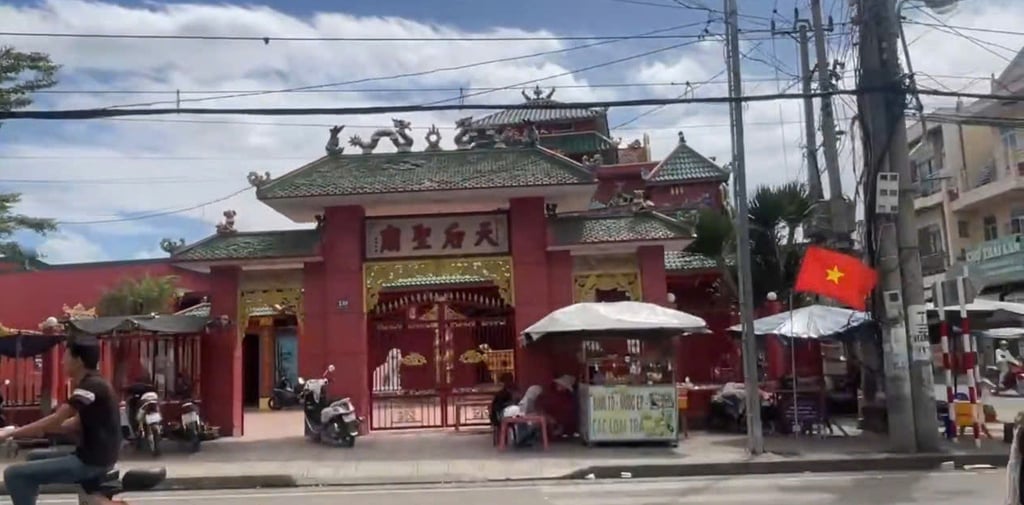
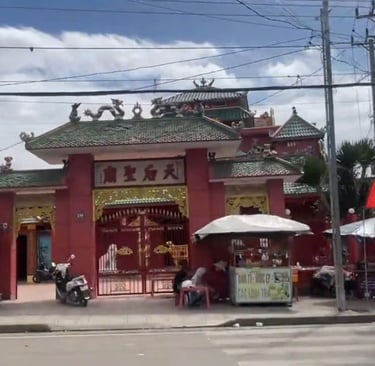
Heading North toward the Ninh Hoa district, the flavor of history shifts once more. Here, the influence is distinctly Chinese. During the 18th and 19th centuries, merchant guilds from Fujian and Guangdong established Assembly Halls (Hội Quán) to serve as religious centers and trade hubs.
The Sensory Experience: These halls are a riot of color—lacquered red wood, gold-leaf inscriptions, and ceramic roof tiles. Inside, you will find enormous spirals of incense hanging from the ceiling, burning for weeks at a time. They tell a story of Nha Trang as a cosmopolitan "Silk Road of the Sea," where incense from the highlands was traded for porcelain from China and spices from the Moluccas. Exploring these halls offers a quieter, more meditative side of the region’s history, far from the tourist crowds.
5. The French Echoes: Science and Solitude
Finally, one cannot talk about the soul of this region without mentioning the French legacy, embodied by Dr. Alexandre Yersin. A protégé of Louis Pasteur, Yersin chose Nha Trang as his home in the late 1800s.
The Museum of a Polymath: The Pasteur Institute and the Yersin Museum are located on the main boulevard, but they feel like an outpost of old Europe. Inside, you can see Yersin’s laboratory equipment, his library of leather-bound books, and his early photographs of the ethnic minorities in the central highlands. He was the man who discovered the plague bacillus and introduced rubber and quinine to Vietnam. To walk through his house is to understand the "Intellectual Heritage" of Nha Trang—a city that was once a global hub for biological science and exploration.
HERITAGE & ANCESTRAL EXPLORATION
Full-Day Champa Heritage Tour: A deep dive into the architecture and legends of the Champa Kingdom.
👉 [Insert Affiliate Link Here]
Ninh Thuan "Desert & Salt" Expedition: Visit the Po Klong Garai towers and traditional craft villages. 👉 [Insert Affiliate Link Here]
Dien Khanh & Ninh Hoa Private Transfer: Explore the Vauban fortress and Chinese assembly halls. 👉 [Insert Affiliate Link Here]
Guided Yersin & French Colonial Walk: Discover the scientific and architectural legacy of the French era.
👉 [Insert Affiliate Link Here]
Cham Pottery Workshop: A hands-on experience with the masters of Bau Truc village.
👉 [Insert Affiliate Link Here]
We are on social media
Vietnam Charm belongs to Vietpearl Travel., JSC
Contact:
Email: info@vietnamcharm.top
© 2026. by Vietnam Charm. All rights reserved
Travel license number: 01-827/2020
Refund Policy