Giảm giá hấp dẫn cho tour du lịch!



Bánh Mì (Bread): From Colonial Loaf to Global Icon — Tracking the Culinary Fusion That Defined Modern Vietnamese Street Food
More than a sandwich, it is a declaration of culinary independence: tracing the evolution of the baguette from a colonial staple into Việt Nam’s most vibrant, resourceful, and globally beloved street food masterpiece.
LOCAL EXPERIENCESFOODS
Tobin Nguyen
11/1/20256 phút đọc
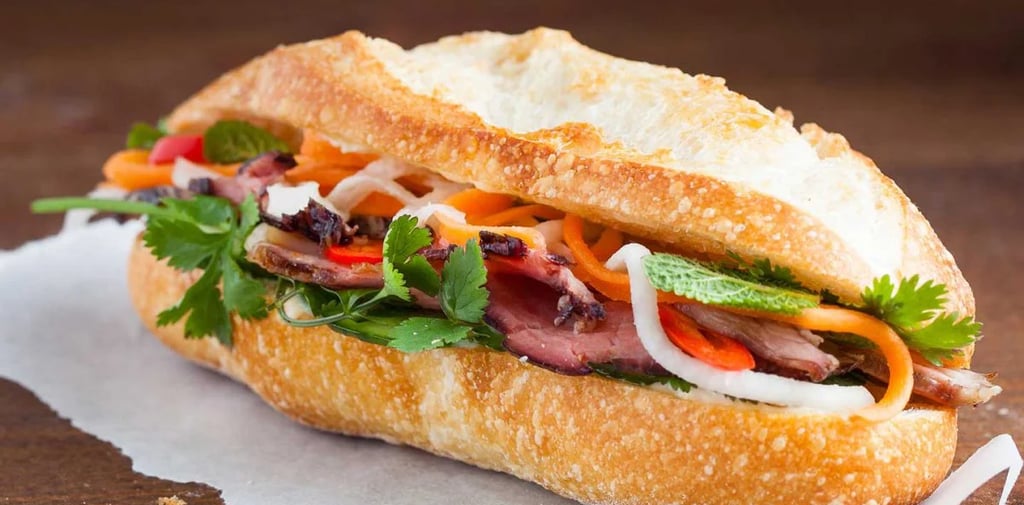
For the international community, Bánh Mì is the definitive culinary signature of modern Việt Nam—a dish that has aggressively and successfully exploded onto the global street food scene, earning universal reverence for its perfect, complex balance of textures and flavors. It is far more than a simple sandwich; it is a profound historical document you can hold in your hands, buy on any street corner, and consume with immediate satisfaction. Its very existence tells a complex, compelling story of adaptation, scarcity, ingenuity, and ultimate culinary triumph. The Bánh Mì is the triumphant result of taking a rigid, foreign culinary artifact—the French baguette—and completely Vieticizing it, transforming it into something vibrant, democratic, and wholly unique to the Southeast Asian context.
As specialists in Vietnamese history, cultural deep dives, and resourceful gastronomy at Vietnam Charm, we embark on an essential, detailed journey to decode the Bánh Mì phenomenon. We will meticulously track its evolution from its strict colonial origins to its current status as a flexible, dynamic, and globally beloved culinary icon. Understanding Bánh Mì is to grasp the sheer adaptability, speed, and creative spirit inherent in Vietnamese street food culture.
I. The Colonial Genesis: The Arrival of the Loaf and the Rice Revolution
The story of Bánh Mì begins, inevitably, with the French colonial presence in Việt Nam during the 19th and early 20th centuries. The French introduced many elements to the Vietnamese diet, but none were as structurally important or ultimately influential as the baguette. Initially, the baguette was a luxury item, prohibitively expensive, made exclusively with imported pure white wheat flour, and consumed almost solely by the French population and the small Vietnamese elite who adopted French customs. Its preparation was rigid, governed by precise French baking standards. This period established the shape of the bread, but not its soul.
Scarcity Drives Innovation: The Moment Wheat Met Rice
The pivotal turning point occurred during the mid-20th century, particularly amidst the severe economic hardships and escalating conflicts that followed World War II and continued into the post-colonial era. Imported wheat flour became scarce and prohibitively expensive, pushing its price out of the reach of the common population. This critical scarcity forced a brilliant, essential act of culinary innovation: Vietnamese bakers, demonstrating profound resourcefulness, began supplementing the expensive wheat flour with cheaper, locally available rice flour (bột gạo).
This strategic, forced substitution was the single most important factor in the Bánh Mì revolution. The addition of rice flour fundamentally altered the chemical and structural composition of the loaf. It made the resulting bread lighter, airier, and gave it the signature, thin, crispy crust that shatters beautifully upon biting—a defining characteristic that immediately distinguishes it from its denser, chewier, foreign French ancestor. This new, more affordable loaf—now definitively called the bánh mì—became instantly accessible to the masses. The revolution was simple: rice culture had adopted and fundamentally improved the colonial loaf.
II. The Essential Science of the Loaf: Crust and Crumb Perfection
The structural integrity and, more importantly, the celebrated auditory sensation of the Bánh Mì hinges entirely on its unique structure, which must deviate significantly from its European ancestor. The technical mastery of the Bánh Mì lies in two essential components: the crust and the crumb.
The Auditory Signature: The Thin, Brittle Crust
The thin, delicate crust is paramount because it serves multiple functions. Firstly, it allows the consumer to eat the sandwich quickly without the excessive jaw fatigue associated with a hard-crusted bread. Secondly, and most importantly, it provides the celebrated auditory sensation—the perfect krunch—that signals ultimate freshness and quality. This shattering sound is so integral that an inferior Bánh Mì, which chews rather than crunches, is immediately identifiable and often rejected by connoisseurs. The rice flour is the key agent that facilitates this thinness and brittleness.
The Lightness: The Airy Crumb
The interior of the Bánh Mì—the crumb—is deliberately designed to be the antithesis of the dense, chewy French crumb. The Vietnamese crumb is airy, light, almost cottony, and highly absorbent. This lightness serves two crucial logistical purposes: it reduces the starchy heaviness of the sandwich, making it a perfect quick meal in the tropical heat, and it creates ample space for the generous amount of filling while maintaining structural integrity. The use of rice flour is a testament to the Vietnamese genius for adapting available resources to achieve superior culinary results.
III. The Culinary Declaration of Independence: The Birth of the Filling
Once the loaf itself was successfully democratized and structurally improved, the evolution of the filling became the decisive moment of culinary independence. Historically, the French ate the bread simply with cold cuts, butter, and perhaps pâté. The Vietnamese took these basic components and completely reinvented their context, composition, and preparation, making the meal a complete, mobile cultural statement.
The Vietnamese Pillars of Flavor: The Triumphant, Layered Filling
The standard, perfectly balanced Bánh Mì filling is a masterpiece of complex layering, ensuring that every bite delivers a precise contrast of temperature, texture, and flavor. The assembly is rapid, a hallmark of essential street food efficiency:
The Fatty Base (Béo): This crucial foundation provides the richness and lubrication that prevents the bread from tasting dry. It is usually provided by a thin, creamy, intensely flavored layer of pâté (often pork or liver pâté, richly seasoned with Vietnamese spices) and a generous smear of mayonnaise or butter. This rich, savory element is the foundation upon which all other flavors immediately rest and bind.
The Protein (Mặn): The meat component is where regional and vendor variation explodes. The protein is always rich, seasoned, and often served warm to contrast with the cool vegetables. Choices range from simple, succulent grilled pork (thịt nướng) marinated in lemongrass and fish sauce, flavorful chả lụa (Vietnamese pork sausage), tender shredded chicken, or even xíu mại (savory meatballs in a light tomato sauce).
The Crisp Counterpoint (Giòn/Chua): Essential to the Bánh Mì experience is the element of cooling crunch and necessary acid. This is primarily achieved through thin slices of pickled daikon and carrots (đồ chua). The pickling process provides the vital Chua (sour) element that cuts sharply through the richness of the pâté and protein, preventing the sandwich from becoming heavy and adding a refreshing note crucial for the climate.
The Aromatic Finish (Cay/Thơm): The final layers are fresh herbs (cilantro, scallions) and slices of fresh, bright chili (optional, but highly recommended). These elements provide the necessary aromatic punch and the final layer of clean, fresh flavor, completing the circle of taste.
This ingenious, rapid-fire combination elevates the Bánh Mì from a simple sandwich into a structurally complex, nutritionally balanced meal that satisfies multiple sensory requirements simultaneously.
IV. The Modern Evolution: Bánh Mì as a Dynamic Canvas
Bánh Mì’s story is far from complete; it is still being written and continually adapted. It has proven itself to be a supremely dynamic and flexible canvas, adapting effortlessly to local tastes, global trends, and entrepreneurial creativity. This continued evolution is a testament to its democratic nature.
Regional Variations and Creative Fillings
While the classic Bánh Mì Đặc Biệt (Special Combo, featuring multiple cold cuts and pâté) remains the gold standard, modern Bánh Mì has exploded into countless specialized variations reflecting regional culinary styles and contemporary trends:
Bánh Mì Chảo (Bánh Mì Pan): A popular northern variant where the bread is served outside of the filling. The bread is used for dipping into a sizzling hot plate (chảo) of fried eggs, savory meatballs, pâté, and sausages swimming in a rich, peppery gravy. This allows the diner to customize the dipping level of each bite.
Bánh Mì Heo Quay (Crispy Pork Bánh Mì): A southern favorite, this features thick slabs of roasted pork belly with incredibly crispy, crackling skin, often served with a thick savory sauce that softens the bottom of the loaf while the top remains brittle.
Bánh Mì Kem (Ice Cream Bánh Mì): An eccentric, playful Sài Gòn street treat featuring scoops of ice cream (often coconut or durian) sandwiched between the crispy loaf. This adaptation highlights the playful and experimental nature of Southern cuisine, embracing sweetness as a filling.
Fusion and Vegan Bánh Mì: Globally, Bánh Mì has been successfully adapted with international fusion fillings like Korean Bulgogi, Indian Curry chicken, and—most significantly—innovative vegan fillings utilizing savory mushroom floss (chà bông nấm), rich layers of braised fried tofu, and intensified fresh herbs.
This sustained, creative evolution demonstrates Bánh Mì's resilience and its refusal to be confined by strict tradition, ensuring its lasting relevance in the modern global food scene.
V. Conclusion: The Masterpiece of Resourcefulness and Taste
Bánh Mì is more than just lunch; it is a direct, vibrant expression of the Vietnamese national character—resourceful, adaptable, fast-paced, and profoundly effective. Its structural foundation lies in economic necessity, its texture in architectural innovation (the rice flour), and its unforgettable flavor in complex layering and contrast. It solidifies its position as one of Việt Nam’s most sophisticated and enduring street food masterpieces. It proves that the greatest flavors often come not from wealth or imported ingredients, but from the perfect harmony of distinct, high-quality, local components, bound together by the ingenuity of the cook and the persistent genius of the bread.
We are on social media
Vietnam Charm belongs to Vietpearl Travel., JSC
Contact:
Email: info@vietnamcharm.top
© 2026. by Vietnam Charm. All rights reserved
Travel license number: 01-827/2020
Refund Policy