Giảm giá hấp dẫn cho tour du lịch!


MARKET WARFARE: THE BRUTALIST LOTUS VS. THE CULINARY HEARTBEAT
"A tale of two markets: One is a concrete icon of the past, the other is the beating heart of the present. Learn how to navigate the souvenir traps of Dam Market and find the authentic 'Umami' treasures of Xom Moi."
NHA TRANGSHORE EXCURSIONLOCAL EXPERIENCES
Tobin Nguyen
1/17/20266 phút đọc
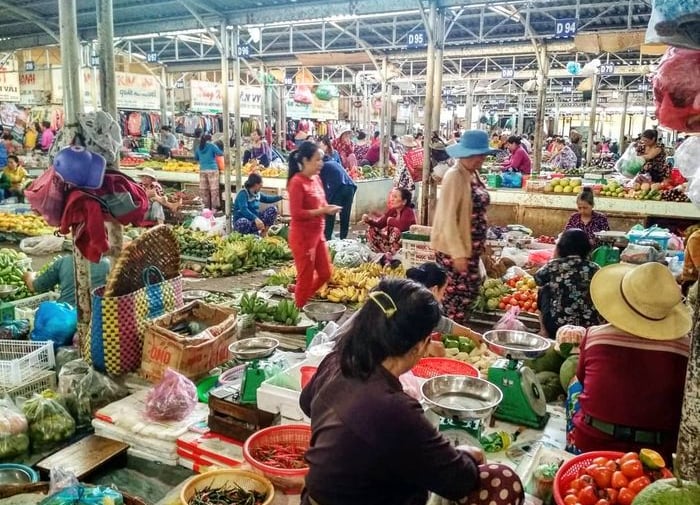
In the urban anatomy of Nha Trang, the markets are the lungs. They breathe in the fresh catch from the sapphire bay and exhale the aromas of spices, dried seafood, and tropical fruits into the city’s veins. For the traveler, stepping into a Vietnamese market is an act of sensory immersion—a blitzkrieg of sights, sounds, and the relentless, rhythmic dance of negotiation.
But do not be fooled by the colorful displays and the smiling vendors. Behind the vibrant facade lies a complex social ecosystem with its own unwritten laws, power dynamics, and ancient traditions. To master the city, you must understand the rivalry between its two giants: Dam Market (Chợ Đầm), the architectural icon of a bygone era, and Xom Moi Market (Chợ Xóm Mới), the authentic sanctuary where the city’s soul truly resides. One is for the "postcard" experience; the other is for those who want to taste the real Vietnam.
1. Dam Market: The Brutalist Lotus of a Trading Empire
Dam Market is impossible to miss. Its main building, a massive circular concrete structure designed to look like a lotus flower, is a masterpiece of 1970s Vietnamese Modernism. Built on what was once a swamp (Đầm), it was designed to be the commercial crown jewel of Central Vietnam.
The Architectural Statement: Even if you don't buy a single item, the "Lotus" building is worth the trip for fans of Brutalist architecture. The sweeping concrete curves, the stark geometry, and the vast, sun-drenched central atrium evoke the ambition of an old trading port. It feels like a relic of a time when Nha Trang was the primary gateway for the maritime Silk Road. Standing in the center of the atrium, looking up at the skylights, you can almost hear the echoes of the thousands of merchants who have passed through here over the last half-century. It is a cathedral of commerce, a monument to the city’s resilience through war and economic transformation.
The Reality Check: Today, the Lotus is primarily a hub for the "Tourist Trade." As the city evolved, the locals moved their daily shopping elsewhere, leaving the Lotus to the souvenir hunters. If you are looking for mass-produced trinkets, "I Love Nha Trang" T-shirts, or factory-made lacquerware, this is your stadium. It is loud, it is hectic, and it is unashamedly commercial.
The Tactics of the Lotus: Prices here are notoriously inflated. Because the vendors pay high rents for their "Lotus" stalls, they must play a high-stakes game with every tourist who walks by. The first quote you receive is often 50% to 100% higher than the actual value. It is a theatrical environment where haggling is the required currency. While it’s a great place for photography—the contrast between the grey concrete and the colorful cheap silks is a photographer's dream—a seasoned explorer knows that the most authentic goods are rarely found under the concrete lotus petals anymore.
2. Xom Moi Market: Where the City Actually Breathes
Located deep within "The Grid," Xom Moi is the antithesis of the Lotus. There are no architectural flourishes here, just a labyrinth of narrow aisles, wet floors, and the purest, most concentrated energy of Nha Trang. This is where the local housewife "fights" her daily battle for the freshest ingredients.
The Sensory Blitz: This is a "Wet Market" in its truest, rawest form. To walk into Xom Moi at 7:30 AM is to experience a sensory overload that no Western supermarket can prepare you for. You will see live eels writhing in plastic tubs, buckets of "Blue Swimming Crabs" still snapping their claws, and mountains of dragon fruit and durian still warm from the tropical sun. The ground is often damp from the melting ice used to keep the morning catch fresh, and the air is a complex, addictive mix of star anise, fresh cilantro, fermented shrimp paste, and the sharp, briny scent of the sea.
The Soul of Umami: Xom Moi is the culinary heart of the city. While Dam Market sells objects, Xom Moi sells flavors. This is where you find the true "Liquid Gold" of the coast: Muối Ớt Chanh. This signature green chili and lime salt is the engine that drives Nha Trang’s seafood culture. At Xom Moi, it hasn't been diluted or sweetened for Western palates; it is sharp, spicy, and electric.
Look for the stalls selling Mực Rim Me (tamarind-glazed dried squid). Unlike the versions found in tourist shops, the squid here is often sun-dried by the vendor’s own family on the decks of fishing boats, then simmered in a thick, sticky tamarind reduction that is both sweet and profoundly savory. This is "Umami" in its most concentrated form.
The "Fixed Price" Illusion: While there are no price tags at Xom Moi, the margins are much thinner. The vendors here rely on repeat business from local grandmothers who have been shopping at the same stall for thirty years. If you pay 50,000 VND for a kilo of mangoes here, you are likely paying the local rate. It is a much more honest, albeit chaotic, environment. The "Warfare" here isn't about the price; it’s about the quality. Watch a local woman inspect a fish—she looks at the clarity of the eyes, the redness of the gills, and the firmness of the flesh. To shop at Xom Moi is to learn the science of freshness.
3. The Rules of Engagement: Market Etiquette
To navigate these markets without being labeled a "clueless tourist" (or worse, being "chặt chém" – overcharged), you must understand the unwritten rules of the game:
The Morning Luck (Mở Hàng): The first sale of the day (usually between 6:30 AM and 7:30 AM) is a sacred ritual. Vietnamese vendors are deeply superstitious. They believe the first customer sets the "spiritual tone" for the entire day’s business. If you are the first person to stop at a stall, you have immense leverage, but also a responsibility. If you haggle too aggressively and walk away without buying, it is seen as a "vía nặng" (heavy spirit) that will bring bad luck for the next 12 hours. Conversely, if you buy quickly, fairly, and with a smile, the vendor will often give you a "Good Luck" discount, believing your positive energy will attract more customers.
The Power of the Smile and the "Bớt đi": In the West, negotiation is often seen as a confrontation. In Vietnam, it is a social contract. If you approach a vendor with a stern face and an aggressive tone, they will dig their heels in. But if you smile, use a few words of botched Vietnamese, and treat the process like a game, the walls come down.
The Phrase to Know: "Bớt đi" (Lower it, please). Say it with a grin and a shrug.
The "Walk Away" Move: If the price is too high, simply say "Thank you" and start to walk away. If there is room to move, the vendor will almost certainly call you back with a "final, final" offer.
The "Touch" Protocol: In the produce and seafood sections of Xom Moi, do not go poking and prodding the goods unless you intend to buy. Bruising fruit is a quick way to earn a scolding. Instead, point to what you want and let the vendor pick the best ones for you. This small gesture of trust is often rewarded with the highest quality stock. The vendor knows their produce better than you do—let them be the expert.
4. Why Professional Guidance is Your Secret Shield
For many Westerners, the sheer volume of Xom Moi can lead to "decision fatigue." The language barrier, the lack of familiar labels, and the intense pace can make it difficult to appreciate the nuances. This is why more explorers are turning to digital platforms and local experts to act as their "Cultural Interpreters."
By booking a market experience via an OTA (Online Travel Agency) or a boutique agency like Vietnamcharm, you are essentially hiring a shield. These guides know which vendors at Xom Moi use the least MSG in their prepared foods, which dried squid is truly sun-dried (not oven-dried in a factory), and which stalls have the most hygienic practices. They handle the "Warfare" of pricing so you can focus on the photography, the smells, and the stories.
Even better, many of these platforms now offer Free Walking Tours or Audio Guide Tours. These allow you to move at your own pace while having a "Guru" in your ear (or by your side) to explain why that specific herb is used in your soup or why the vendor is burning "hell money" at her altar. It turns a confusing morning into a profound cultural lesson.
THE MARKET WARFARE TOOLKIT
Xom Moi Deep-Dive (Klook/GetYourGuide): Managed market tours with vetted experts. 👉 [Affiliate Link]
Free Walking Tours & Audio Guides: Explore the "Grid" and the markets with our community-led tours. 👉 [Affiliate Link]
Vietnamcharm’s Chef Walk: Learn to pick ingredients like a local pro. 👉 [Affiliate Link]
We are on social media
Vietnam Charm belongs to Vietpearl Travel., JSC
Contact:
Email: info@vietnamcharm.top
© 2026. by Vietnam Charm. All rights reserved
Travel license number: 01-827/2020
Refund Policy