Giảm giá hấp dẫn cho tour du lịch!



Phú Mỹ Port: Decoding the “Brutal” Distance to Saigon and the Vũng Tàu Alternative
At first glance, Phú Mỹ looks deceptively close to the heart of Southern Vietnam. Yet every traveler who’s been here learns the same hard truth: proximity is an illusion, and time is the real currency. Understanding this distance — and choosing wisely — will decide whether your day becomes discovery or disaster.
SHORE EXCURSIONLOCAL EXPERIENCES
Tobin Nguyen
11/9/20257 phút đọc
The Great Illusion of Proximity
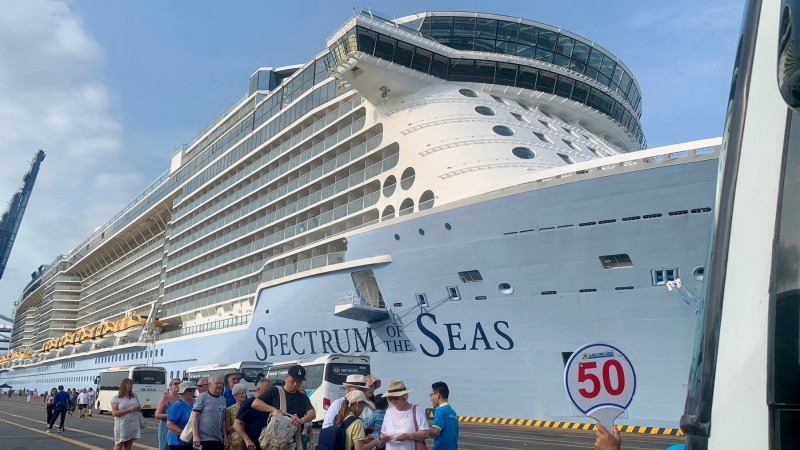
When your cruise ship anchors at Phú Mỹ Port, the air feels thick with anticipation. You’re technically in the province of Bà Rịa – Vũng Tàu, only seventy kilometers from Ho Chi Minh City, known affectionately as Saigon. On the map, that seems manageable. Two hours each way — what could possibly go wrong?
Yet this is the greatest illusion that deceives most travelers. The road to Saigon is not a highway of leisure but a journey of unpredictability — trucks, industrial zones, toll gates, and the ever-present hum of urban expansion.
For first-time visitors, the temptation is powerful: Saigon! The War Remnants Museum, the colonial Post Office, the Notre Dame Cathedral, Bến Thành Market. Every brochure screams of history and vitality. But beneath that excitement lies a logistical trap — a four-hour commute that can stretch to six without warning.
At Vietnam Charm, we’ve seen too many cruise passengers return pale and breathless, caught in gridlock, arriving at the port just minutes before the gangway closes. Their photos are rushed, their memories tense. We’ve also seen those who chose differently — calm faces returning from Vũng Tàu, the sea wind still on their hair, smiling as the ship horn echoes over the bay.
The difference lies not in luck, but in strategy.
The Reality of Distance: Four Hours Lost to Transit
Let’s confront the facts.
Phú Mỹ Port is not within Saigon’s metropolitan boundary. It is a deep-water industrial port built to handle cargo, not tourists. The drive to downtown Ho Chi Minh City is 70–90 kilometers, depending on your route. On a clear morning, it takes two hours. On a bad day, it’s three. And that’s just one way.
If your ship docks for eight hours, this means that at least half your time is consumed by asphalt. The other half must somehow carry all your sightseeing, dining, and cultural understanding — an impossible compression of a metropolis that deserves days.
Add to that the hidden variable: Saigon’s rush hour. Starting as early as 3:30 or 4:00 PM, the city becomes a slow-moving labyrinth of motorbikes, buses, and noise. A single red light can last five minutes; a short detour can cost half an hour.
So, if you plan to visit the city, the moment you enter, you are already racing the clock back to the ship. It is not adventure anymore; it is risk management.
The Harsh Strategy if You Must Visit Saigon
And yet — some travelers cannot resist the magnetic pull of Saigon. The name itself is iconic, evoking the war stories, the French boulevards, the energy of 9 million lives condensed into motion.
If that’s you, then discipline becomes your compass.
The only viable approach is what we call the “condensed Saigon protocol” — a tightly controlled itinerary focusing on one theme and zero waste.
Option 1: The Củ Chi Tunnels — The Safe Historical Focus
Instead of battling the chaos of downtown, choose a drive that leads northwest to Củ Chi, the underground labyrinth that symbolizes Vietnam’s wartime resilience.
Here, beneath the red earth and the whispering rubber trees, you’ll enter a network of tunnels that once sheltered thousands of soldiers and civilians. Narrow passageways, trapdoors, and living quarters tell stories that no museum wall can contain.
Guides here are often veterans or descendants of those who lived through the conflict. Their stories carry raw truth — not from textbooks, but from memory. You’ll crouch, crawl, and emerge with a new understanding of endurance.
Củ Chi is farther from the city center but faster to access from Phú Mỹ via the bypass highways, avoiding the heaviest urban congestion. The round-trip is longer in distance but safer in predictability.
This itinerary also ensures emotional depth — a visit that is more than sightseeing. It’s a dialogue with history.
Option 2: The Two-Landmark Express
If your heart insists on seeing Saigon — even for a glimpse — you must accept brutal simplicity. Pick only two destinations, both close to each other in District 1.
The Central Post Office, designed by Gustave Eiffel, and the Notre Dame Cathedral, standing proudly opposite, together form the most photogenic duo in the city.
You can admire their colonial architecture, step briefly inside the Post Office with its mosaic map of old Indochina, and sip a quick coffee at a sidewalk café nearby.
That’s it. Two places, one emotion — the blend of history and modernity that defines Saigon.
Skip the markets, skip the museums, skip the detours. Every extra stop increases the odds of missing your ship.
And always — always — travel in a professionally managed vehicle with a driver and guide experienced in Phú Mỹ–Saigon routes. They know the real-time traffic flows, alternate roads, and emergency contingencies.
This is not a city where you experiment with taxis or ride-hailing apps under time pressure.
The Safe Haven: Vũng Tàu — Where the Sea Softens Time
Now comes the wiser, gentler path: Vũng Tàu.
While Saigon tests your nerves, Vũng Tàu soothes them. Only 30 kilometers from Phú Mỹ Port, this coastal city offers a half-day experience of history, elegance, and ocean breeze.
The drive is barely 45 minutes. The roads are clean and scenic, and time — that most precious currency — flows differently here.
What to See and Feel in Vũng Tàu
Start your exploration at the Christ of Vũng Tàu, the towering statue perched on Núi Nhỏ (Small Mountain). Climb the 800 steps if you wish — the reward is a panoramic sweep of the city and sea that few cruise passengers ever witness.
Then, head to Bạch Dinh (White Palace). Built by the French in 1898 as a summer retreat for the colonial governor, its ivory façade and ocean-facing terrace recall the Riviera spirit of old Indochina. From the balconies, you can still see the curve of the bay, where modern ships replace the steam liners of the past.
A short drive away lies Front Beach (Bãi Trước) — ideal for a seaside stroll or a fresh seafood lunch. The grilled scallops with peanuts and scallion oil are local treasures.
For a touch of spirituality, the Thích Ca Phật Đài Pagoda on Big Mountain offers serenity and sweeping views. The pagoda complex combines Buddhist architecture with peaceful gardens and a giant Buddha statue seated amid frangipani trees.
In Vũng Tàu, everything feels accessible, peaceful, and safe. You experience authentic Vietnam without tension, without countdowns.
Why Vũng Tàu Is the Smart Choice
The city’s compact size means you can enjoy three or four major attractions within five hours, and still return comfortably to your ship.
There’s no gridlock, no stress, no gamble. Instead of spending your day trapped in traffic, you spend it on mountain steps, museum floors, and sunlit balconies.
The story you bring home is not of exhaustion but of calm discovery.
Local Wisdom: How Distance Defines Experience
Phú Mỹ teaches one lesson every traveler must eventually learn — distance defines meaning.
In Central Vietnam, the challenge is choice. In the South, it’s time.
Many travelers equate “famous” with “worthwhile,” assuming Saigon is the only name that matters. But travel maturity means understanding that experience is not measured in kilometers but in connection.
Vũng Tàu, though smaller, delivers that connection more efficiently. It lets you breathe, observe, and truly see.
The journey becomes less about checking landmarks and more about feeling the rhythm of local life — the laughter of students on motorbikes, the fishermen mending their nets, the vendors calling out beneath the tamarind trees.
That, too, is Vietnam — and in many ways, it’s purer than the crowded boulevards of the metropolis.
The Expert’s Golden Rule: Never Travel Alone from Phú Mỹ
This cannot be stressed enough: DIY travel from Phú Mỹ is a serious risk.
Unlike tourist ports such as Nha Trang or Đà Nẵng, Phú Mỹ is built for containers and cranes. There are no public taxis waiting at the terminal, no easy navigation tools for non-local drivers, and no nearby facilities for quick rescue if delays occur.
Without a licensed operator, you risk miscommunication, vehicle unavailability, or getting trapped in industrial checkpoints.
Every year, at least a few travelers miss their ship’s final boarding call here — usually those who underestimated the commute.
At Vietnam Charm, our On-Time Guarantee exists precisely for this reason. We have coordinated directly with port authorities, ship schedules, and experienced local drivers for years.
Our tours are not just “guided”; they are engineered — each route calculated to the minute, each contingency planned. When you travel under our care, the fear of time disappears, and what remains is pure experience.
The Human Story: What the Distance Reveals About the South
Distance has a strange way of revealing character.
As you drive between Phú Mỹ and the destinations around it, you witness the real Southern Vietnam — the raw, living layer beneath the tourist gloss.
You’ll see industrial workers on motorbikes, rice fields giving way to steel factories, Catholic churches beside Buddhist temples, and children waving at passing tour buses.
This is the beating heart of modern Vietnam — the meeting of tradition and progress, sweat and hope. It’s not the polished postcard version; it’s the country in motion.
That’s why even a “shorter” trip to Vũng Tàu can feel deeper than a rushed journey into Saigon. You are not merely visiting landmarks; you are watching a nation rise.
Final Advice: Safety Is the Absolute Priority
At Phú Mỹ, wisdom means restraint.
The traveler who chooses Vũng Tàu or Củ Chi is not missing out — they are mastering the art of travel judgment. They understand that beauty must be experienced, not chased.
Every successful journey here begins with a single principle:
Return to your ship calm, not breathless.
That’s the truest measure of a shore excursion well done.
So before you decide, ask yourself — do you want to spend your day in a traffic jam, or under a lighthouse breeze?
Conclusion: Choosing Wisdom Over Ambition
The allure of Ho Chi Minh City is undeniable. Its skyline gleams, its history resonates, and its rhythm is contagious. But from Phú Mỹ Port, ambition must bow to wisdom.
In this brief window of time, choosing Vũng Tàu’s tranquility or Củ Chi’s depth is far more intelligent than gambling against Saigon’s unpredictable clock.
Because travel is not about how far you go — it’s about how much you truly feel.
Connect With Vietnam Charm
If you require expert logistical consultation to design the safest and most meaningful itinerary from Phú Mỹ Port, trust the specialists at Vietnam Charm.
We craft precision-based, culturally rich shore excursions that balance discovery and safety. Every route is personally tested, every minute accounted for, and every experience infused with authenticity.
Our commitment is clear:
Guaranteed on-time return. Absolute safety. No stress. Just stories worth telling.
📍 Contact Vietnam Charm today to receive your tailored plan from Phú Mỹ Port — where experience meets expertise, and where wisdom always travels ahead of ambition.
We are on social media
Vietnam Charm belongs to Vietpearl Travel., JSC
Contact:
Email: info@vietnamcharm.top
© 2026. by Vietnam Charm. All rights reserved
Travel license number: 01-827/2020
Refund Policy