Giảm giá hấp dẫn cho tour du lịch!

RICE BEYOND THE BOWL: XÔI, BÁNH, AND BÚN — THE ABSOLUTE DIVERSITY OF VIỆT NAM'S ESSENTIAL GRAIN
More than a staple: exploring the profound culinary ingenuity of rice transformation, analyzing how the grain's plasticity is utilized to create an astonishing taxonomy of textures, from the dense stickiness of Xôi to the delicate translucency of Bánh, and its role as the economic backbone.
LOCAL EXPERIENCESVIETNAMESE CULTUREGASTRONOMY & TRADITION
Tobin Nguyen
11/6/20256 phút đọc
For the international diner, rice is often perceived as a simple, steamed accompaniment. However, in Việt Nam, rice (gạo) is the ultimate raw material—the essential, versatile, and irreplaceable foundation that underpins an astonishing variety of the national cuisine. The true genius of Vietnamese gastronomy lies not just in the cooking of the grain, but in its meticulous transformation—grinding, fermenting, steaming, and shaping it into a complex taxonomy of noodles (bún), cakes (bánh), and dense pockets (xôi). The resulting dishes are a profound cultural statement: a demonstration of patience, engineering, and the enduring resilience of the wet-rice civilization.
As specialists in Vietnamese heritage and profound cultural analysis at Vietnam Charm, we embark on an essential, detailed exploration to decode this mastery of transformation. We will meticulously analyze the culinary science required to transform the grain into its various forms, the philosophical difference between the two main types of rice (gạo tẻ and gạo nếp), the sociological function of specific rice derivatives in rituals and daily life, and the profound way this ingenuity articulates the core values of resourcefulness and culinary mastery. Understanding this versatility is essential to grasping the core economic and artistic foundation of Vietnamese food culture.
1. The Core Philosophy: Gạo Tẻ vs. Gạo Nếp — The Dual Identity of Rice
The basis of all Vietnamese rice-based cuisine is the distinction between the two fundamental varieties of the grain, each possessing unique starch properties that mandate their final culinary destiny. This duality is the starting point of the nation's culinary philosophy.
The first, and most common, is Gạo Tẻ (Ordinary Rice). This is the staple consumed daily, characterized by its dry, fluffy, and separate texture when steamed. It is the raw material used for most meals and, critically, for the production of the nation's immense variety of noodles (bún) and flat sheets (bánh). Its low-amylose starch content ensures that the resulting products are firm, stable, and easily separated. The daily consumption of Gạo Tẻ ensures physical sustenance and provides the necessary neutral base for the intense flavors of the accompanying dishes (fish sauce, herbs, and protein).
The second, and most ceremonially important, is Gạo Nếp (Glutinous or Sticky Rice). This rice is defined by its high-amylopectin starch content, which makes it highly adhesive and dense when cooked. Gạo Nếp is the ritualistic rice, reserved for ceremonial dishes like Xôi (Sticky Rice) and Bánh Chưng (Square Cake). Its stickiness is a profound sociological symbol: it represents Đoàn Kết (Unity and Cohesion)—the binding together of the family and the community. Its consumption is usually tied to festivals, ancestor worship, or moments of profound celebration, elevating the experience from mere sustenance to a spiritual declaration. This fundamental duality between the everyday (Gạo Tẻ) and the sacred (Gạo Nếp) dictates the entire rhythm of the culinary calendar.
2. The Science of Transformation: From Grain to Noodle (Bún) and Sheet (Bánh)
The transformation of Gạo Tẻ into the myriad forms of noodles and sheets is an intense, multi-stage process that requires precise milling, controlled fermentation, and specialized, generations-old equipment. This is where the patient science of rice transformation is perfected.
The key to creating both Phở (the wide, flat noodle) and Bún (the thin, round vermicelli) is the meticulous grinding and fermentation of the rice grain. The Gạo Tẻ is soaked and then ground into a fine, wet flour. This flour is often allowed a slight, controlled fermentation, which adds a subtle sourness and improves the plasticity of the final dough. The resulting dough is then mixed with water and subjected to specialized techniques:
For Bún (Vermicelli): The paste is forced through a sieve or extruder with fine holes directly into boiling water. The speed and pressure are meticulously controlled to create thin, uniformly round, and perfectly resilient strands. This process ensures the noodle is both firm enough to hold its structure and light enough to absorb the intense flavors of the accompanying broth or dipping sauce.
For Bánh Phở and Bánh Cuốn (Sheets): The wet batter is delicately poured onto a flat, cloth-covered steamer and quickly cooked into a thin, delicate sheet. This sheet is then either cut into noodles (Phở) or immediately rolled with filling (Bánh Cuốn). The translucency and delicate texture of the resulting sheet are the ultimate measure of the artisan's skill in controlling the batter's consistency and the steaming time.
This commitment to specialized processing ensures that the rice noodle is not a byproduct, but a distinct, structurally engineered vehicle designed to enhance the overall complexity of the final dish.
3. Xôi: The Sacrificial Food and the Art of Density
Xôi (Sticky Rice) is the highest, purest, and most visible expression of Gạo Nếp (Glutinous Rice) and holds a profound sacrificial and ceremonial role in the Vietnamese belief system.
Xôi is the ultimate food of the Ancestral Altar (Bàn Thờ) and the primary offering in almost every communal festival. Its dense, compacted form and rich texture symbolize abundance, permanence, and the continuity of the bloodline. The meticulous preparation—involving soaking the Gạo Nếp for hours and then steaming it slowly in a specialized steamer until the grains swell and fuse—is a ritualistic commitment of time and patience. The resulting Xôi is often beautifully colored and flavored with natural ingredients (like the deep green of Xôi Xéo or the vibrant purple of Xôi Lá Cẩm), transforming the humble grain into a jewel-like offering worthy of the gods and ancestors.
The consumption of Xôi is associated with moments of intense personal and communal significance: it is a mandatory food at weddings, death anniversaries (Giỗ), and the New Year. Eating Xôi is an act of communal affirmation, sharing the dense, sticky symbol of unity with the family. The various forms of Xôi (sweet, savory, colored) reflect the nation's resourcefulness in turning a ceremonial food into a viable, protein-rich street food staple, demonstrating the fluidity between the sacred and the profane in Vietnamese culinary life.
4. Bánh: The Culinary Canvas and the Philosophy of Wrapper
The Bánh (Cakes) category represents the most creative and structurally diverse utilization of rice flour, serving as a vast culinary canvas that reflects profound regional differences and ingenuity.
The unifying principle across all Bánh is the role of the wrapper or casing. Rice flour is engineered to serve as the structural envelope for rich, complex fillings, maintaining the integrity of the contents:
Bánh Chưng / Bánh Giầy: The ultimate ceremonial cakes (as discussed in the Tết analysis), symbolizing Heaven and Earth through their contrasting shapes and the use of sticky rice.
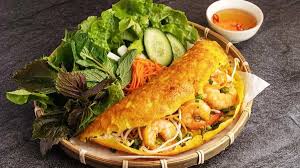
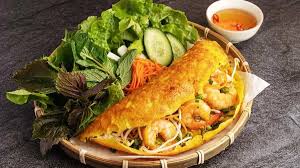
Bánh Xèo (Sizzling Cake): A crispy, turmeric-yellow crepe made from a rice flour batter, folded over savory filling. The unique texture is achieved by the high heat and the precise blend of rice flour, which is designed to be shattering and brittle, contrasting sharply with the moist filling.
Bánh Bột Lọc (Tapioca Dumplings): While using tapioca, the casing is often a mix with rice flour, resulting in a unique, chewy, translucent texture. The visual aesthetic of the translucency is critical, revealing the savory contents within and adding a layer of visual delicacy to the consumption experience.
Bánh Tráng (Rice Paper): The thin, transparent sheet used for rolling (Gỏi Cuốn), is itself a finished Bánh product—a perfect, delicate medium that requires precise sun-drying and steaming techniques.
This mastery of the Bánh form demonstrates the Vietnamese commitment to textural artistry, turning the simple rice flour into a vast, complex palette of structural forms designed to deliver high-impact sensory contrast.
5. Conclusion: The Unwavering Backbone of Civilization
The mastery of rice transformation is the ultimate, enduring testament to the Vietnamese genius for culinary engineering, patience, and profound resourcefulness. The grain is not merely a component; it is the unwavering economic, artistic, and spiritual backbone of the civilization. By decoding the essential duality of Gạo Tẻ and Gạo Nếp, the technical discipline required to create the thousands of Bún and Bánh variations, and the sacred role of Xôi, the observer gains access to a core truth: rice is more than sustenance. It is a living chronicle of the nation’s history, teaching every generation the enduring value of hard work, engineering mastery, and the profound beauty that can be created from the most humble of grains. The ability to transform simple rice into such an astonishing array of complex, beautiful foods is the ultimate declaration of Vietnamese resilience and ingenuity.
We are on social media
Vietnam Charm belongs to Vietpearl Travel., JSC
Contact:
Email: info@vietnamcharm.top
© 2026. by Vietnam Charm. All rights reserved
Travel license number: 01-827/2020
Refund Policy