Giảm giá hấp dẫn cho tour du lịch!



STONES OF A FOREIGN FAITH: DECODING FRENCH CATHEDRAL ARCHITECTURE AND ITS IMPACT ON VIỆT NAM'S URBAN SKYLINE
More than religion: exploring the complex architectural dialogue between European Gothic and indigenous Vietnamese aesthetics, analyzing how colonial church structures functioned as potent symbols of foreign power, and their enduring, nuanced legacy within the modern metropolitan landscape.
LOCAL EXPERIENCESVIETNAMESE CULTURETHE ARCHITECTURAL SOUL
Tobin Nguyen
11/6/20255 phút đọc
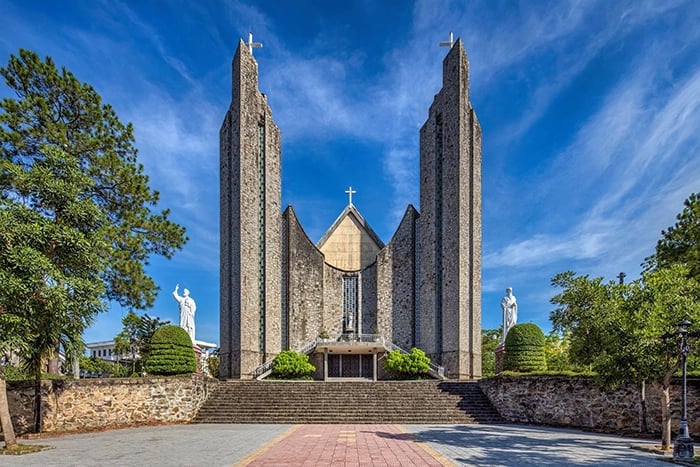
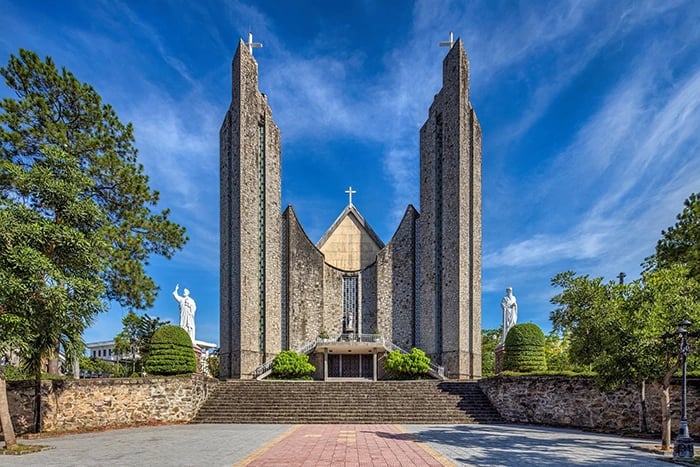
For the international observer, the visual tapestry of major Vietnamese cities is often marked by the towering, unexpected presence of grand European cathedrals—structures like the Notre Dame Basilica in Ho Chi Minh City or the St. Joseph's Cathedral in Hà Nội. These massive, imposing buildings, constructed primarily during the French colonial era, are physical anomalies: they are powerful, dramatic assertions of Neo-Gothic and Romanesque architectural philosophy standing in stark, structural, and spiritual contrast to the surrounding organic urban fabric of tube houses and traditional temples. These cathedrals are far more than mere places of worship; they are the most enduring, visible material remnants of the colonial project, designed to project permanence, spiritual dominance, and the structural superiority of European faith and culture.
As specialists in Vietnamese heritage and profound cultural analysis at Vietnam Charm, we embark on an essential, detailed exploration to decode this architectural paradox. We will meticulously analyze the colonial philosophy of projection that governed their scale and placement, the architectural adaptations necessitated by the tropical climate, the sociological complexity of their role in the Catholic community, and the profound way these foreign stones have been absorbed and reimagined within the narrative of modern Vietnamese sovereignty. Understanding this architectural legacy is essential to grasping the core values of cultural resilience, religious tolerance, and the powerful national ability to internalize and transform the material remnants of the past.
1. The Colonial Philosophy: Scale, Placement, and the Projection of Power
The genesis of the grand French-built cathedrals in Việt Nam was profoundly political, serving as physical instruments of colonial projection and spiritual dominance. Their architecture was designed to overwhelm and assert control over the indigenous spiritual landscape.
The structures were built on a deliberately imposing, monumental scale, often utilizing imported European architectural styles such as Neo-Gothic (characterized by soaring arches, high vaulted ceilings, and complex stone detailing) or sturdy Romanesque Revival (characterized by thick walls and massive columns). This scale was intended to visually challenge the traditional Vietnamese spiritual architecture, which is typically smaller, more ornate, and built with lighter, organic materials (wood, tiled roofs). The height and mass of the cathedrals physically dominated the urban skyline, asserting the visible supremacy of the foreign faith.
The strategic placement of these cathedrals was equally critical. They were often positioned at the geographical and administrative centers of the newly developed French quarters (the central hubs of Sài Gòn and Hà Nội), near major government offices, military barracks, and wide, European-style boulevards. This placement was a conscious effort to integrate the Catholic faith into the very political and spatial heart of the colonial enterprise, signaling that the imperial mission and the spiritual mission were inextricably linked. The architecture itself was thus a visible, structural declaration of the colonial ambition to establish permanent, unshakeable roots.
2. Architectural Adaptation: Tropical Necessity and Material Synthesis
While the philosophical intent of these cathedrals was European, their physical construction and necessary function in the tropical climate mandated a series of ingenious architectural adaptations and material syntheses, making them unique to the Vietnamese context.
The primary architectural challenge was the intense heat and humidity. European Gothic churches rely heavily on large glass windows for light, but this was impractical in the tropical climate, where excessive light meant unbearable heat. To counteract this, Vietnamese cathedrals often utilized thicker walls, minimized glass elements, and incorporated high, vaulted ceilings to encourage vertical air circulation, providing natural cooling through thermal physics. The choice of materials was also adapted: although some materials, like high-quality colored glass and European stone, were imported as symbols of luxury, many structures relied heavily on local Vietnamese brick and specialized tiles for cost-effectiveness and durability against the pervasive humidity and monsoonal rains.
The construction often saw the integration of local craftsmanship and labor. While the overall blueprints were French, the detailed carving, tiling, and sometimes the execution of the roof work utilized the skills of Vietnamese artisans. This engagement, though economically mandated, led to subtle, unique aesthetic shifts—a slight variation in carving details or a unique approach to color application—that inadvertently imbued the foreign structures with an indigenous touch. These cathedrals, therefore, stand as a testament to the Vietnamese artisan’s capacity to execute complex foreign designs while maintaining mastery over local materials.
3. Sociological Duality: Faith, Community, and the Urban Fabric
The existence of the French-built cathedrals creates a profound sociological duality within the urban fabric, functioning both as a unique cultural community center and as a visible marker of historical difference.
For the Vietnamese Catholic community, these cathedrals are essential spiritual anchors. Catholicism, which established significant roots in Việt Nam (particularly in the Central and Northern regions), is an important part of the nation's spiritual tapestry. The cathedrals serve as massive, necessary communal centers for worship, providing a sense of historical continuity and spiritual belonging for millions of adherents. The adherence to ancient European ritual within the tropical chaos of the Vietnamese city provides a unique, profound form of spiritual grounding.
However, for the non-Catholic, non-Christian majority, the cathedrals function as monuments of history and architecture. They are sites of civic and cultural interest, often used as meeting points, photo backdrops, and simple visual references on the urban map. The sound of the tolling bells, the massive scale of the structure, and the occasional sight of a wedding party utilizing the monumental steps create a continuous, dramatic contrast with the surrounding rhythm of traditional life. The cathedral is thus absorbed into the public life of the city, becoming a neutral, integral part of the urban identity rather than remaining solely a foreign symbol.
4. The Legacy of Reclamation: Sovereignty and Architectural Confidence
The endurance of French military and administrative architecture, as previously discussed, is matched by the cultural and political reclamation of the church structures. This process highlights the ultimate confidence and resilience of the sovereign Vietnamese state.
The government's approach to these massive, symbolic structures has been characterized by preservation and neutrality. Unlike other symbols of foreign power that were subject to erasure, the cathedrals, being active places of worship for a significant population, were preserved as historical and cultural artifacts. This preservation is a powerful statement of religious tolerance and national maturity—the ability to maintain a historical architectural legacy without yielding to the political meaning originally intended by its builders. The structures are stripped of their former political dominance and are accepted as simply a layer of the nation's complex history.
The cathedrals now stand as a permanent testimony to Việt Nam's ability to internalize, neutralize, and claim the material remnants of every historical power. The great stone structures that were once instruments of colonial assertion now simply testify to the nation's long, diverse, and enduring spiritual journey, asserting that Vietnamese identity is strong enough to encompass these monumental, foreign stones without compromise.
5. Conclusion: The Permanent Dialogue of Stone
French cathedral architecture in Việt Nam is a compelling, permanent dialogue of stone, contrasting European grandeur with indigenous resilience. The structures, built to assert colonial power and spiritual dominance, have been subtly transformed by the Vietnamese spirit. By analyzing their strategic placement, their necessary tropical adaptation, their role as vital communal anchors for the Catholic population, and their ultimate reclamation as monuments of national history, the observer gains access to a core truth: the cathedrals are more than historical relics. They are a profound, structural testimony to the Vietnamese capacity for cultural resilience and sophisticated tolerance. The sight of the massive stone spire rising above the swirling chaos of the xe máy remains the most powerful visual metaphor for the nation's ability to seamlessly integrate the historical past into the dynamic, continuous flow of its present.
We are on social media
Vietnam Charm belongs to Vietpearl Travel., JSC
Contact:
Email: info@vietnamcharm.top
© 2026. by Vietnam Charm. All rights reserved
Travel license number: 01-827/2020
Refund Policy