Giảm giá hấp dẫn cho tour du lịch!



THE 3,500-YEAR RESURRECTION - THE ANCIENT WHITE CERAMICS OF BO BAT
The 3,500-Year-Old DNA of the Mother Kiln A tale of two legacies: One is the world-famous star of Vietnamese pottery, the other is the forgotten ancestor who fueled an empire. Discover why Bo Bat is the "Root of all Roots" and how one man revived a 3,500-year-old heartbeat from the mud of Ninh Binh.
NINH BINHLOCAL EXPERIENCES
Tobin Nguyen
1/23/20263 phút đọc
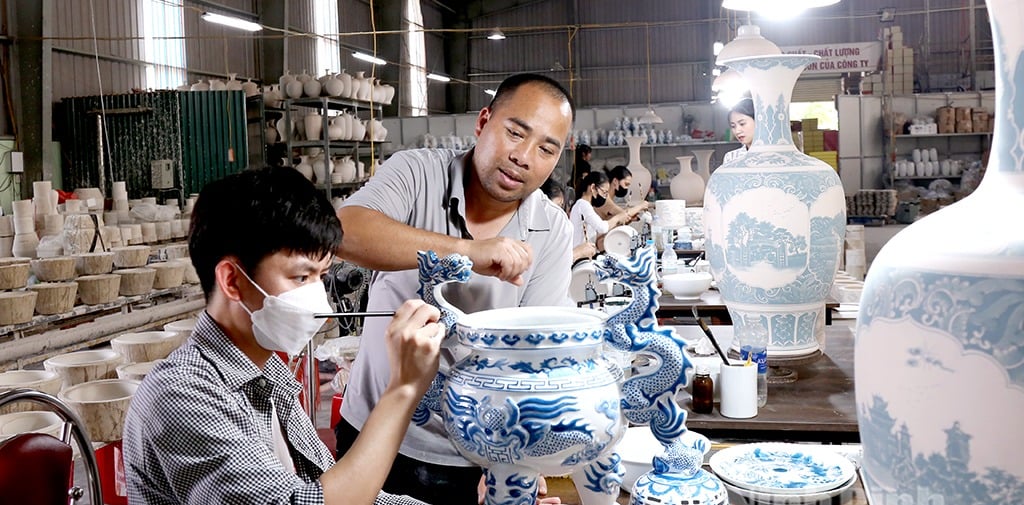
If you ask any Vietnamese person about pottery, they will instantly name Bat Trang. It is the A-list celebrity of the craft world, sitting proudly on the banks of the Red River. But if you mention Bo Bat, you will likely receive a blank stare.
Yet, history has a way of hiding the most vital truths in the dirt. The truth is a historical gut-punch: Without the Bo Bat kilns, Bat Trang would be a town without a soul. To let the "child" shine, the "mother" had to accept a brutal sentence: To be erased from the map for a full millennium.
I. The 3,500-Year-Old Ghost
When we talk about "ancient" in Vietnam, we usually mean a few hundred years. But Bo Bat ceramics operate on a different timeline altogether. Archaeological evidence and lineage records suggest this craft didn't just start a few centuries ago—it has been breathing for 3,500 years.
Originally hailing from the Bạch Bát - Bồ Xuyên area (now Yên Thành, Ninh Binh), this wasn't just a village craft; it was a strategic imperial asset. When King Dinh Tien Hoang unified the twelve warlords in the 10th century and established the capital at Hoa Lu, he didn't look for decorators; he looked for engineers. The master potters of Bo Bat were summoned to bake the very bricks that formed the citadel walls of the first Vietnamese empire. They were the ones who turned Ninh Binh clay into royal palaces and sent their exquisite white wares as tribute across borders.
II. 1010 AD: The Great Migration
In the year 1010, the world shifted. King Ly Thai To moved the capital to Thang Long (Hanoi). He didn't just take the gold and the court; he took the "Golden Hands." The master artisans of Bo Bat packed their wheels and followed the royal barge. They settled in a fertile bend of the Red River to establish a new production hub for the new capital. They named their new home Bat Trang—a tribute to their "Bach Bat" origins. From that moment on, Bat Trang became the royal darling, while the original Bo Bat—the "Ancestor Kiln"—fell into a silence that lasted 1,000 years. By the 17th century, the fires had gone out. The village became a ghost of its former self, lost to time and overshadowed by its own creation.
III. The Resurrection of the "8X" Visionary
For centuries, Bo Bat was nothing but a memory whispered by elders. That changed in 2005.
Enter Pham Van Vang, a man born in 1981 (an "8X" generation in Vietnam) who refused to let his ancestors’ legacy remain buried. He grew up hearing legends of the white clay but saw only rice paddies. In an act of pure obsession, Vang left his life behind and traveled to Bat Trang—the village his ancestors built—to "re-learn" the craft that was rightfully his.
He returned to Ninh Binh to do what seemed impossible: Restart a 3,500-year-old engine. He didn't just bring back techniques; he went back to the source. He climbed the local hills of Yen Thanh to find the exact same white clay deposits used during the Dinh Dynasty. He proved that the DNA of Bo Bat wasn't dead; it was just waiting for a pair of hands to wake it up.
IV. The Anatomy of White Clay
What makes Bo Bat ceramics different? It’s the "Milk of the Earth."
The signature characteristic of Bo Bat is its unique white porcelain-like body. It is exceptionally dense, hard, and rings like a bell when struck. Because the clay is sourced from the surrounding hills of Yen Mô, it carries a mineral purity that is distinct from the river-silt clay of the north.
When you hold a piece of Bo Bat pottery, you aren't just holding a souvenir. You are holding a piece of the Ninh Binh landscape that has been refined, hand-turned on a wheel, and hand-painted with motifs of the Hoa Lu capital or the Tràng An landscapes. It is "Slow Art" in its purest form. Every stroke of the brush is a tribute to the 3,500 years of silence that preceded it.
V. Beyond the Souvenir: A National Treasure
Today, Bo Bat isn't just a village; it’s a comeback story. In 2015, it was recognized as a National Representative Industrial Product. In 2020, it earned a 4-star OCOP rating. But for Pham Van Vang and his 20-plus artisans, the stars and certificates aren't the point.
The point is the fire. When the kilns glow at night in Yen Thanh, it’s a signal to history that the mother has returned.
The Journalist's Epilogue: If Bat Trang is the bustling, modern face of Vietnamese pottery, Bo Bat is its ancient, stoic heart. Coming here isn't about shopping; it's about witnessing a resurrection.
Next time you see a piece of Bat Trang porcelain, remember the "Exiled First-Born" in Ninh Binh. Remember the man who went back to the mud to find his name. Bo Bat doesn't need to be as famous as its child; it only needs to be as eternal as the white clay beneath its feet.
We are on social media
Vietnam Charm belongs to Vietpearl Travel., JSC
Contact:
Email: info@vietnamcharm.top
© 2026. by Vietnam Charm. All rights reserved
Travel license number: 01-827/2020
Refund Policy