Giảm giá hấp dẫn cho tour du lịch!



THE ANATOMY OF EXCHANGE: TRADITIONAL CHỢ CULTURE — DECODING THE COMMUNAL, MATRIARCHAL HEART, AND THE SOUL OF VIETNAMESE COMMERCE
More than trade: exploring the Chợ Truyền Thống (Traditional Market) as Việt Nam’s ultimate sociological and economic crucible, analyzing its profound function as the unquestionable communal center, its enduring matriarchal structure, and its embodiment of self-reliant commerce and unvarnished social truth.
VIETNAMESE CULTURETHE AGRARIAN HEARTLOCAL EXPERIENCES
Tobin Nguyen
11/8/20255 phút đọc
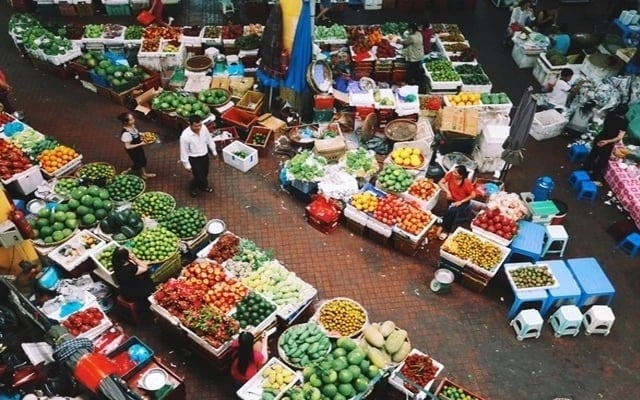
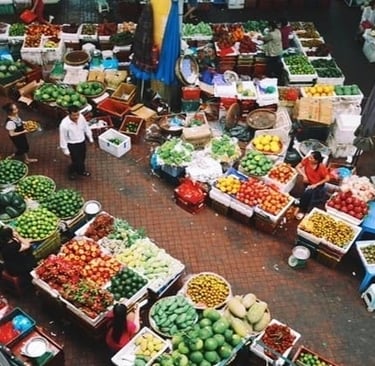
For the international economist, the sociologist, and the seeker of the nation’s unmediated pulse, the Traditional Chợ (Market)—a vibrant, chaotic, and intensely sensory explosion of color, sound, and scent—is far more than a place to buy goods. It is the nation’s oldest, most resilient, and most vital communal stage—the non-negotiable heart where the rhythms of daily life, gossip, business, and tradition converge. The Chợ is defined by a profound, democratic equality: here, every social hierarchy is momentarily dissolved, replaced by the immediate, fluid, and often loud exchange between buyer and seller. It is the purest, most honest mirror reflecting the relentless entrepreneurial spirit and the fierce collectivism of the Vietnamese people.
As specialists in Vietnamese heritage and profound cultural analysis at Vietnam Charm, we embark on an essential, detailed exploration to decode this vibrant, noisy narrative. We will meticulously analyze the historical mandate that established the market as the core civic institution, the sociological power of its enduring matriarchal structure, the architectural philosophy of its spatial chaos and immediate accessibility, and the profound way the Chợ articulates the core national values of self-reliance, communal intimacy, and the unvarnished honesty of commerce. Understanding the Traditional Market is essential to grasping the emotional heart and the continuous, dynamic energy of Vietnamese social life.
1. The Historical Mandate: Chợ as the Core Civic Institution
The genesis and the profound sociological gravity of the Traditional Chợ are rooted in a clear historical mandate: the market was established not merely as a site for trade, but as the core, unyielding civic institution essential for maintaining the economic, social, and logistical cohesion of the agrarian village (làng).
In the agrarian economy of the past, characterized by decentralized farming and self-sufficient villages, the Chợ was the only scheduled, collective point of convergence. Markets were typically held on cyclical dates (ngày phiên) (e.g., every 5 days or 10 days) to facilitate efficient resource aggregation. This scheduling ensured that farmers, artisans, and merchants from surrounding, often isolated, villages had a guaranteed opportunity to meet, trade their surplus, and gather essential supplies. The Chợ thus transformed the individual efforts of decentralized labor into a unified, cohesive regional economy.
Furthermore, the Chợ served vital non-economic functions. It was the primary newsroom for the region—the site where gossip was exchanged, political rumors were disseminated, and essential social interactions (courting, matchmaking, dispute resolution) took place. The market day was a mandated social ritual, ensuring the continuous flow of information and the maintenance of inter-village relations. The Chợ was the foundational stage where the local populace affirmed its commitment to the social contract and the collective rhythm of the agrarian cycle.
2. The Sociological Power: The Enduring Matriarchal Structure
The most unique and profound sociological characteristic of the Traditional Chợ is its enduring, dominant matriarchal structure. The market is overwhelmingly managed, defined, and run by women, reflecting a deep, historical truth about the Vietnamese economic division of labor.
In the traditional agrarian model, the field (đồng) was often the domain of the men (ploughing, heavy labor), while the home and the market (chợ) were the non-negotiable domain of the women. Women were the custodians of the household finances, the primary traders, and the economic managers who transformed the raw agricultural output into consumable wealth. This historical role has consecrated the Chợ as a space of female economic sovereignty—a domain where women’s bargaining skill, shrewdness, and profound organizational capacity are the primary engines of commerce.
The market environment fosters a unique form of social democracy and immediate honesty among the women who trade there. The fluid, often loud, and highly engaged bargaining process is not aggressive; it is a ritual of mutual respect, where the buyer and seller acknowledge each other's acumen and establish a personal relationship (quan hệ) that goes beyond the price of the transaction. The enduring matriarchal structure ensures that the market remains a place of intense emotional energy, practical wisdom, and fierce, unyielding economic resilience.
3. The Architectural Philosophy: Chaos, Accessibility, and the Human Scale
The unique, powerful aesthetic of the Traditional Chợ is defined by an architectural philosophy of planned chaos, total accessibility, and the human scale—a direct, functional rejection of rigid, modern, fixed structures.
The market space is fundamentally organic and adaptable. Products are often sold directly from the ground on simple mats, woven baskets, or the back of a bicycle, ensuring immediate, unmediated access between the raw product and the consumer. This lack of rigid architectural formality encourages a fluid, democratic atmosphere where everyone—regardless of social status—is required to stoop, navigate the narrow pathways, and physically engage with the commerce. The entire sensory experience is overwhelming, creating an intense, vibrant energy that is the audible and visible pulse of the city.
The chaos is, in fact, highly organized and specialized. The market is often divided into distinct, non-negotiable sections (khu): the "Wet Market" (meat, fish, produce) and the "Dry Market" (clothing, tools, household goods). This spatial organization allows the market to function with maximum efficiency, ensuring that specialized goods are found in predictable, localized clusters. The human scale—the dominance of low stools (ghế đẩu), street-level vendors, and close-quarters interaction—reinforces the intimacy and the collective energy, making the Chợ the ultimate social stage where life is conducted with unvarnished, transparent immediacy.
4. The Economic Code: Negotiation, Trust, and the Bartering Art
The economic exchange within the Traditional Chợ operates on a sophisticated code of negotiation, personal trust, and the revered art of bartering (mặc cả). This code establishes the moral framework for Vietnamese commerce.
The process of bargaining is not viewed as conflict; it is a necessary social ritual—a fluid, witty, and often theatrical dialogue where both the buyer and the seller engage in a playful yet serious game of establishing a fair, mutually respectful price. The willingness to engage in the mặc cả process is a sign of respect for the market's social rules and the vendor's skill. The negotiation process ensures that the transaction is always personalized and relational, rooted in the establishment of quan hệ (relationship) rather than simply a rigid, impersonal price tag.
Trust and quality control are enforced not by bureaucratic regulation, but by communal reputation and continuous, visible interaction. A vendor relies on their continuous presence and the quality of their product to ensure their survival; a reputation for dishonesty spreads instantly and fatally throughout the market network. The market is thus a self-regulating system where social discipline is the ultimate guarantor of commercial integrity. The economic code asserts that the most effective, resilient commerce is one rooted in personal accountability and deep communal intimacy.
5. Conclusion: The Permanent, Dynamic Heartbeat of the Nation
The Traditional Chợ Culture is the ultimate, enduring, and dynamic testament to the Vietnamese spirit's entrepreneurial ingenuity and fierce collectivism. It is a living institution that transforms the necessity of trade into a profound social ritual. By analyzing the historical mandate that established the market as the core civic institution, the immense sociological power of its enduring matriarchal structure, the architectural philosophy of its accessible chaos, and the sophisticated, personalized code of negotiation, the observer gains access to a core, fierce truth: the Chợ is far more than commerce. It is the permanent, unwavering heartbeat of the nation’s social and economic soul—a powerful, sensory declaration that asserts the cultural value of pragmatic resilience, the sovereignty of the entrepreneurial woman, and the belief that the strongest, most enduring community is one that meets daily to engage in the loud, honest, and dynamic ritual of life.
We are on social media
Vietnam Charm belongs to Vietpearl Travel., JSC
Contact:
Email: info@vietnamcharm.top
© 2026. by Vietnam Charm. All rights reserved
Travel license number: 01-827/2020
Refund Policy