Giảm giá hấp dẫn cho tour du lịch!


THE ART OF PATIENCE: VIETNAMESE LACQUERWARE — DECODING THE LAYERED AESTHETICS, PAINSTAKING PROCESS, AND THE PHILOSOPHY OF POLISH
More than decoration: exploring Sơn Mài as Việt Nam’s ultimate artistic discipline, analyzing the metaphysical duality of concealment and revelation, the ritualistic process of layering and polishing, and its profound role as a philosophical testament to human endurance and mastery over time.
LOCAL EXPERIENCESVIETNAMESE CULTUREGASTRONOMY & TRADITION
Tobin Nguyen
11/6/20255 phút đọc
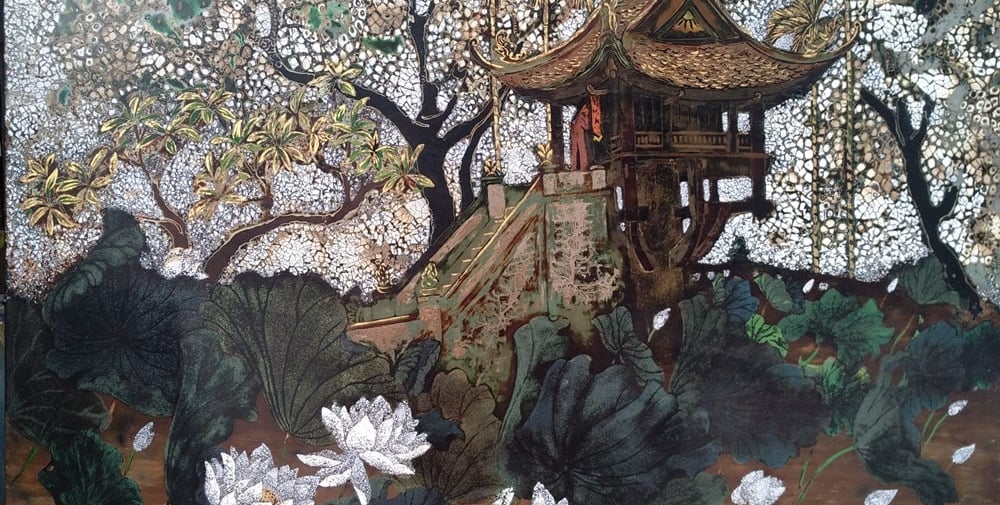
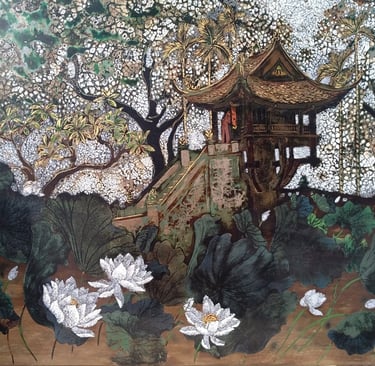
For the international collector, the gallery curator, and the observer of fine crafts, Vietnamese Lacquerware (Nghệ thuật Sơn Mài) represents the apex of the nation’s artistic discipline. It is a surface defined by its unique, luminous depth, its profound stillness, and its seemingly impossible complexity of texture and material. Sơn Mài is far more than a decorative technique; it is a masterpiece of intentional concealment and painstaking revelation—a controlled artistic ritual that demands absolute dedication, immense patience, and a philosophical acceptance of time as the primary co-creator. The creation of a single, museum-quality lacquer piece can span months or even years, embodying the most resilient values of Vietnamese craftsmanship.
As specialists in Vietnamese heritage and profound cultural analysis at Vietnam Charm, we embark on an essential, detailed exploration to decode this meticulous art. We will meticulously analyze the historical genesis that refined the process into a unique art form, the metaphysical philosophy of layering and polishing, the technical mastery required to integrate diverse natural materials (egg shell, gold, mother-of-pearl), and the profound way Sơn Mài articulates the cultural values of endurance, subtlety, and the quiet pursuit of eternal beauty. Understanding lacquerware is essential to grasping the core aesthetic restraint and the disciplined patience embedded in the Vietnamese artistic soul.
1. The Historical Mandate: From Protective Seal to High Art
The genesis of lacquerware in Việt Nam is rooted in the simple, ancient necessity of material protection, but its destiny was transformed by the 20th century into a medium for high, nationalistic art.
Lacquer itself is derived from the sap of the Cây Sơn (lacquer tree), native to the Northern region (particularly the Phú Thọ province). Historically, this durable, water-resistant sap was used primarily as a protective sealant for boats, furniture, and ritual objects, safeguarding them against the intense humidity and pests of the tropical climate. The early use was purely utilitarian, valuing the lacquer for its resilience and protective quality.
The transformative shift that elevated Sơn Mài to a unique, modern art form occurred in the 1920s and 1930s at the École Supérieure des Beaux-Arts de l’Indochine (Indochina School of Fine Arts) in Hà Nội. Here, Vietnamese artists—trained in French painting techniques but seeking an indigenous medium—began to experiment radically with the traditional lacquer process. They moved the medium from furniture to flat panels, introduced new color palettes, and, crucially, developed the technique of polishing to reveal (which is the philosophical heart of Sơn Mài). By integrating foreign concepts (perspective, composition) with indigenous materials (egg shell, mother-of-pearl), these artists created a distinctly Vietnamese style, establishing lacquer painting as a high, nationalistic art form that proudly asserted Vietnamese artistic identity on the global stage.
2. The Metaphysical Philosophy: Concealment, Layering, and Revelation
The profound philosophical core of Sơn Mài lies in its process of layering, concealment, and slow revelation. It is an art form defined by what is hidden and what is painstakingly brought back to the surface.
The creation of a lacquer painting is an immense, ritualistic commitment, often involving over 20 stages and a period spanning many months. The process begins with the preparation of the support (typically wood or bamboo), which is meticulously treated and sealed. The artist then begins the ritual of layering—applying thin coats of lacquer mixed with pigments and fine materials. The layers are applied not to build a visible image immediately, but to create depth and bury the intended image and materials beneath opaque layers of lacquer.
The true artistry begins with the polishing (mài)—the meditative, manual process of slowly, painstakingly rubbing down the dry, hardened lacquer surface with charcoal powder and water. This is the moment of revelation. The artist must use supreme control to gauge the precise thickness of the layer being removed, stopping exactly when the desired color or material (the gold leaf, the red pigment, the embedded eggshell) emerges at the surface. If the artist polishes too much, the entire layer is ruined, and the material is lost. This technique demands an unparalleled blend of patience, focus, and non-attachment. The artist must accept that the image is not painted on the surface, but excavated from the depth. The process is a powerful metaphor for human endurance, teaching that beauty and truth are revealed only through time, diligence, and conscious effort.
3. The Technical Mastery: Integration of Natural Materials
The technical complexity of Sơn Mài is elevated by its unique, ingenious use of integrated, natural materials. These materials are not merely applied; they are structurally embedded into the lacquer layers, transforming the surface into a complex mosaic of light and texture.
The most famous material additions are:
Vỏ Trứng (Egg Shell): Used to create the pure white color and unique texture. Egg shells are meticulously cleaned, crushed, and then arranged by hand into intricate patterns before being fixed and lacquered over. The fragments reflect light subtly, providing a matte, textural contrast to the high polish of the surrounding lacquer.
Xà Cừ (Mother-of-Pearl/Inlay): Thin slices of iridescent mother-of-pearl are meticulously cut into complex shapes (often flowers, scenes, or geometric patterns) and set into the lacquer. The surface is then lacquered over and polished down until the mother-of-pearl is flush with the surface. The iridescent quality of the inlay catches light dynamically, adding depth and shifting color to the piece.
Vàng và Bạc (Gold and Silver Leaf): Thin sheets of gold or silver leaf are applied to the surface to create shimmering, reflective elements. Gold and silver, being structurally soft, can be polished without being completely removed, creating areas of high contrast and luxury, often reserved for celestial figures or sacred elements.
The successful integration of these diverse materials—from the organic fragility of eggshell to the metallic shine of gold—into a single, unified, glossy surface is the ultimate test of the artisan's technical mastery and disciplined control over the layering process.
4. The Aesthetic of Subtlety: Light, Reflection, and Luminous Depth
The final, distinguishing aesthetic quality of Sơn Mài is its unique luminous depth and subtlety. The finished piece is not merely colorful; it holds light internally, transforming the object into a profound optical experience.
Because the colors and materials are buried beneath multiple, translucent layers of clear lacquer, the light does not simply bounce off the surface; it penetrates and reflects from the lower layers, giving the lacquer an extraordinary, unique visual depth. The colors seem to reside within the surface, rather than resting upon it. This quality creates a powerful sense of stillness and meditation. A lacquer piece is rarely loud or aggressive; its beauty requires patience and time, rewarding the viewer who moves and studies the reflection.
This aesthetic of luminous subtlety aligns perfectly with the core Vietnamese aesthetic values, which often favor understatement, deep meaning, and controlled emotion over blatant display. The lacquer piece is designed to be contemplative, its surface hiding the immense labor and time that went into its creation. It stands as a profound material testament to the belief that the true value of an object, like the true character of a person, is revealed only through dedicated effort, time, and patient refinement.
5. Conclusion: Time, Discipline, and Eternal Beauty
Vietnamese Lacquerware is the ultimate, enduring testament to the nation's spiritual and artistic discipline. It transforms the simple protective resin of a tree into a medium for profound philosophical expression. By analyzing the intense ritual of concealment and revelation, the mastery of embedding diverse natural materials, and the aesthetic philosophy of luminous depth, the observer gains access to a core truth: Sơn Mài is far more than paint and polish. It is a material chronicle of time, teaching the viewer that the most beautiful, enduring achievements are those that require absolute patience, meticulous control, and a total, unwavering dedication to the artistic process. The finished piece is a quiet declaration of the human spirit's ability to transcend time through focused, creative endurance.
We are on social media
Vietnam Charm belongs to Vietpearl Travel., JSC
Contact:
Email: info@vietnamcharm.top
© 2026. by Vietnam Charm. All rights reserved
Travel license number: 01-827/2020
Refund Policy