Giảm giá hấp dẫn cho tour du lịch!

THE ART OF RESOLVE: PROPAGANDA POSTERS — DECODING THE VISUAL LANGUAGE OF UNITY, SACRIFICE, AND THE UNYIELDING NATIONAL SPIRIT
More than posters: exploring Nghệ Thuật Tuyên Truyền (Propaganda Art) as Việt Nam’s ultimate visual manifesto of collective will, analyzing its profound, disciplined aesthetics of bold lines and primary colors, its role in forging collective heroism and patriotic fervor, and its embodiment of unyielding unity against existential threat.
LOCAL EXPERIENCESVIETNAMESE CULTURERESILIENCE & MEMORY
Tobin Nguyen
11/6/20255 phút đọc
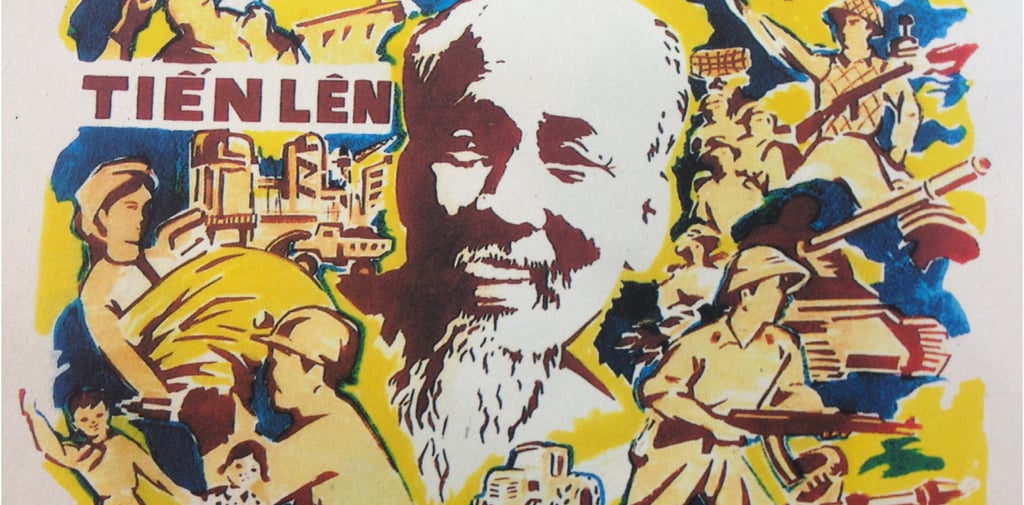
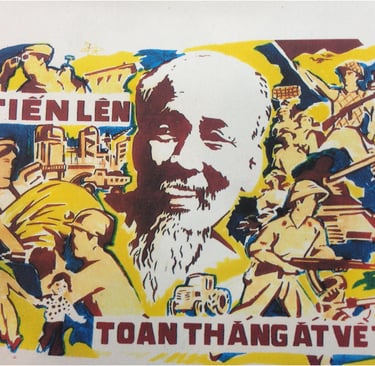
For the international art historian, the sociologist of conflict, and the seeker of the nation’s deepest political convictions, Vietnamese Propaganda Art—primarily the mass-produced, vividly colored posters—is far more than a historical footnote. It is the nation's most direct, emotionally charged, and structurally effective visual language, serving as a mandated instrument for political mobilization, psychological unity, and the visual codification of revolutionary virtue. This art is defined by an absolute, non-negotiable mission: to transform complex ideological goals into immediately legible, emotionally resonant symbols that compel every citizen to action. The poster, strategically placed in the rice field, the factory, and the urban center, became the ubiquitous, silent, powerful voice of the state, ensuring that the visual narrative of resolve was omnipresent.
As specialists in Vietnamese heritage and profound cultural analysis at Vietnam Charm, we embark on an essential, detailed exploration to decode this visual archive of national will. We will meticulously analyze the historical mandate that dictated the art’s functional clarity, the structural grammar of its disciplined aesthetics (color, form, and gesture), the sociological function of its collective iconography (the worker-soldier-peasant trinity), and the profound way this art articulates the core national values of unwavering sacrifice, disciplined unity, and the relentless pursuit of a collective, heroic destiny. Understanding propaganda art is essential to grasping the emotional engines of patriotic mobilization and the aesthetic of national survival.
1. The Historical Mandate: Art as the Weapon of Mass Mobilization
The genesis and enduring functional mandate of Vietnamese Propaganda Art are rooted in the specific, historical necessity of mass mobilization and ideological unity during decades of existential conflict. The art was born as a weapon of the revolution—a necessary tool to synchronize the emotional and political commitment of a diverse, largely agrarian, and often non-literate population.
The core philosophy, guided by principles established during the resistance eras, mandated that the art must prioritize functional clarity and immediate emotional impact over subtle aesthetic ambiguity. The goal was simple: to instruct, inspire, and unify. The poster needed to be understood instantly by the peasant in the rice field, the worker in the factory, and the intellectual in the city. This mandate dictated the art's powerful, disciplined aesthetic: it stripped away complexity, utilizing bold lines, simple compositions, and vivid primary colors to ensure the message was unambiguous and emotionally resonant.
The pervasive distribution of the posters—stenciled onto walls, reproduced on mass-produced lithographs, and carried along the Ho Chi Minh Trail—ensured that the state’s visual narrative was omnipresent and continuous. The art created a shared visual language that transcended regional dialects and literacy barriers, serving as a vital, non-verbal mechanism for national cohesion and political instruction. Propaganda art was, and remains, the ultimate visual testament to the philosophy that disciplined, unified imagery is indispensable for the creation and sustenance of a collective national will.
2. The Structural Grammar: Color, Form, and the Aesthetics of Resolve
The profound power of Vietnamese propaganda art is rooted in its rigorous structural grammar—a disciplined aesthetic that utilizes color, form, and gesture to convey absolute moral clarity and unyielding heroic purpose.
Color as Moral Code: The color palette is dominated by primary, saturated hues—specifically Red (symbolizing the Party, revolution, and sacrificial blood), Yellow/Gold (symbolizing the Star, the light of the future, and national prosperity), and Blue/Green (symbolizing the peace, the rice fields, and the uniform of the worker or soldier). This limited, high-contrast palette is deliberately engineered for maximum visual impact and immediate emotional resonance. The colors are not passive; they are an active call to action, imbuing the visual space with a sense of urgency, moral clarity, and unwavering optimism for the future.
The Geometry of Action: The compositions rely on dynamic, upward-sweeping lines, sharp angles, and strong, clear geometry—a visual language adapted from Soviet and Chinese revolutionary art but infused with an indigenous fervor. Figures are invariably depicted in motion: marching forward, raising a rifle, gripping a tool, or pointing decisively toward the horizon. This geometry asserts a powerful, psychological truth: the nation is moving forward, unified, and relentlessly purposeful. The composition eliminates ambiguity, enforcing a sense of necessary, disciplined momentum.
The Language of Gesture: The most potent tools in the grammar are the gestures of the heroic figures. The raised, clenched fist symbolizes defiance, resolve, and unity of purpose. The extended, pointing arm (often used to frame the figure of Hồ Chí Minh or a revolutionary leader) symbolizes clear ideological direction, political vision, and the mandated path to victory. The simplicity of these gestures ensured that the message—Defy, Sacrifice, and Follow—was universally and instantly understood.
3. The Sociological Iconography: The Trinity of Collective Heroism
The sociological core of the art is its commitment to collective, rather than individual, heroism, codified in the pervasive iconography of the Trinity of the Worker, Soldier, and Peasant (Công-Nông-Binh). This visual dogma was essential for forging unity across diverse social classes.
Propaganda art rarely celebrates a singular, isolated hero (unless the figure is Hồ Chí Minh, who transcends class). Instead, it consistently features a cohesive, synchronized group—the soldier holding the rifle, the worker gripping the tool, and the peasant carrying the sickle, often standing side-by-side. This iconography served a critical, non-negotiable sociological function: it visually asserted the absolute equality and interdependence of all social classes in the struggle for national liberation. No single class was superior; success depended entirely on the disciplined synchronization and mutual sacrifice of all three.
This visual dogma reinforced the principle of đoàn kết (unity). The smiling, synchronized faces and the shared, forward-looking gaze communicated a powerful message of optimism and unwavering collective resolve. The art provided a mirror where the common person—the worker or the peasant—could see themselves elevated to the status of national hero, recognizing their daily labor and sacrifice as indispensable to the larger revolutionary narrative. Propaganda art was thus a continuous, democratic assertion of the value of the common person's disciplined contribution.
4. The Thematic Chronicle: Sacrifice, Production, and the Dual Front
Propaganda posters served as the dynamic thematic chronicle of the revolutionary era, documenting the state’s changing priorities, the progression of the conflicts, and the crucial necessity of fighting on both the military front and the production front.
The art consistently presented a dual mandate: the nation must fight the enemy and simultaneously maximize production to sustain the military effort and feed the population. Posters were divided between:
The Military Front (Sacrifice): Images depicting soldiers bravely charging forward, maintaining vigilance, or caring for the wounded. These themes emphasized heroism, tactical discipline, and the absolute necessity of sacrifice (sự hy sinh) for the ultimate goal of peace and unification.
The Production Front (Labor): Images showcasing beaming peasants achieving record rice harvests, women operating machinery in factories, or workers diligently building infrastructure (roads, bridges, communication lines). These themes emphasized labor discipline, technological adoption, and the moral duty to ensure the resilience and self-sufficiency of the homeland.
This thematic duality asserted a core national truth: the home front was just as vital as the battlefront. The woman planting rice, the child carrying supplies, and the elder weaving cloth were all visually consecrated as essential participants in the ultimate, collective struggle. The art transformed daily hardship into acts of sacred, disciplined patriotism.
5. Conclusion: The Permanent Visual Testament to National Will
Vietnamese Propaganda Art is the ultimate, enduring, and visually magnificent testament to the nation's profound commitment to unity, disciplined resolve, and national sovereignty. It is a visual language that transformed complex political goals into a simple, overwhelming call to action. By analyzing the historical mandate for functional clarity, the rigorous structural grammar of bold lines and primary colors, the sociological iconography of the Worker-Soldier-Peasant Trinity, and the thematic chronicle of the dual front, the observer gains access to a core truth: this art is far more than historical imagery. It is the permanent, unwavering testament to collective will—a powerful, visual declaration that asserts the cultural value of disciplined patriotism, mutual sacrifice, and the belief that the nation’s survival and identity are eternally secured by the synchronized, purposeful action of its unified populace. The posters remain the fierce, vibrant voice of an unbowed spirit.
We are on social media
Vietnam Charm belongs to Vietpearl Travel., JSC
Contact:
Email: info@vietnamcharm.top
© 2026. by Vietnam Charm. All rights reserved
Travel license number: 01-827/2020
Refund Policy