Giảm giá hấp dẫn cho tour du lịch!


THE BATTLEFIELD OF FLOWERS: QUẢNG TRỊ CITADEL — DECODING THE SIEGE, SACRIFICE, AND THE PHILOSOPHY OF ENDURING MEMORY
More than ruins: exploring Thành Cổ Quảng Trị (Quảng Trị Citadel) as Việt Nam’s ultimate sacred monument to martyrdom, analyzing the profound psychological weight of the 81-Day Siege, its function as the sacred threshold of unification, and its embodiment of spiritual immortality through collective memory.
VIETNAMESE CULTURETHE WATER CIVILIZATIONLOCAL EXPERIENCES
Tobin Nguyen
11/8/20255 phút đọc
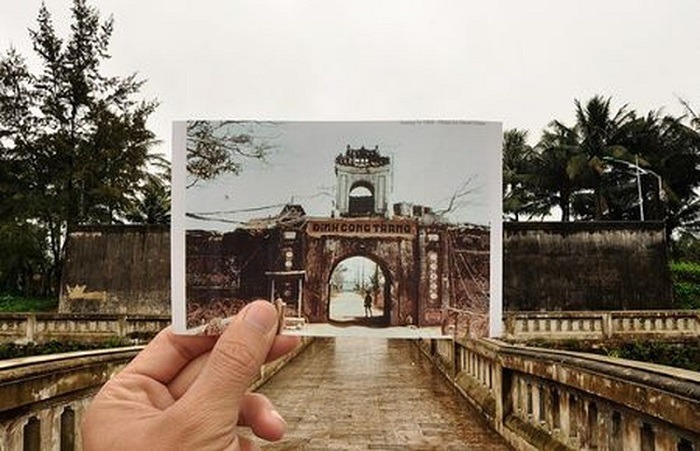
For the international war historian, the pilgrim of peace, and the seeker of the most profound acts of human courage, Thành Cổ Quảng Trị (Quảng Trị Citadel) is not merely a historical ruin. It is the nation's supreme, most sacred mausoleum—a site consecrated by an unimaginable density of human sacrifice, transforming the very soil into a permanent, painful archive of resilience and devotion. This site, located at the brutal epicenter of the 20th-century conflicts, is defined by the memory of the 81-Day Siege in 1972, an ordeal of such fierce intensity that the defense of the Citadel became the ultimate, existential test of the national will. The ground here is not earth; it is the silent, profound resting place of heroes, perpetually teaching the living about the true, immeasurable cost of peace.
As specialists in Vietnamese heritage and profound cultural analysis at Vietnam Charm, we embark on an essential, detailed exploration to decode this archive of sorrow and defiance. We will meticulously analyze the strategic necessity that transformed the Citadel into a political and military symbol, the emotional mandate that elevates the site to a national spiritual pilgrimage, the architectural philosophy of its preserved ruin, and the profound way this ground articulates the core national values of sacrificial immortality, collective gratitude, and the enduring, powerful philosophy of memory. Understanding Quảng Trị Citadel is essential to grasping the emotional depth and the moral integrity that anchors the modern Vietnamese consciousness.
1. The Strategic Mandate: The Threshold of Unification and Political Symbolism
The fierce, prolonged nature of the fighting at Quảng Trị Citadel was dictated by a non-negotiable strategic and political mandate: the Citadel was the sacred threshold of unification—a crucial, symbolic gateway whose control was essential for defining the political future of the entire nation.
The Citadel, historically an administrative center, was geographically located at the most sensitive point of the war: immediately south of the 17th Parallel (DMZ) that divided the North and South. Its control was not just a military necessity; it was an absolute political declaration. For the Northern forces, holding the Citadel was a strategic imperative to secure the foothold necessary for the final push toward reunification. For the Southern forces and their allies, reclaiming it was essential to maintaining the political demarcation and the integrity of their defensive line. The site was thus transformed from a stone fortress into the ultimate political symbol—a direct, visible representation of the nation’s divided destiny.
This symbolism dictated the unprecedented military intensity of the 81-Day Siege. The Citadel became a target of continuous, devastating bombardment, enduring a density of ordnance estimated by some historians to be equivalent to several tactical nuclear weapons. The relentless commitment of soldiers on both sides, who endured the incessant shelling and brutal close-quarters combat, proves that the fight was not for territory alone, but for the spiritual and political soul of the nation. The Citadel’s fate was intrinsically linked to the fate of the nation itself.
2. The Emotional Mandate: Pilgrimage, Grief, and the Sacred River
The memory of the Siege of Quảng Trị Citadel is managed by a powerful emotional mandate that transforms the site into the most poignant national spiritual pilgrimage—a necessary journey for confronting the deepest source of collective grief and gratitude.
The intense devastation meant that, tragically, the vast majority of the soldiers who perished defending the Citadel were lost without a trace—their bodies and remains buried beneath the shattered earth, the stone, and the constant, overwhelming volume of ordnance. This lack of identifiable remains created a profound national wound and a non-negotiable spiritual obligation for the surviving nation: to consecrate the entire ground as a collective grave and mausoleum.
The adjacent Sông Thạch Hãn (Thạch Hãn River), which many soldiers crossed under fire, became a sacred river of memory. The ritual of thả hoa đăng (releasing flower lanterns) onto the river at night is a profound, recurring act of national communion and grief—a spiritual gesture where the living send light and memory across the water to the souls of the unrecovered dead. The pilgrimage to the Citadel is thus a journey into the heart of collective remembrance, an emotional contract where the present generation reaffirms its absolute gratitude (lòng tri ân) to the generation of sacrifice. The memory asserts that true peace must be perpetually earned through the pain of remembrance.
3. The Architectural Philosophy: The Ruin as a Moral Archive
The preservation and presentation of the Quảng Trị Citadel adheres to a profound architectural philosophy: the ruin itself is the moral archive—a deliberate, unembellished testimony to the brutality of the conflict and the endurance of the human spirit.
The site is not fully rebuilt or cosmetically restored to its pre-war state. Instead, it is preserved in a state of controlled, raw ruin—the jagged remnants of the stone walls, the deep craters, and the scattered fragments of military hardware. This architectural choice is a powerful moral statement: it asserts that the truth of the suffering must be made physically manifest and visible. The raw ruin becomes the most honest teacher, compelling the visitor to confront the visceral reality of the siege, rather than merely reading about it. The site is an anti-monument to the glorification of war; it is a monument to the cost of war.
The central, preserved grounds feature the Tượng Đài Chiến Sĩ (Soldiers’ Monument), which is simple, quiet, and commanding. It anchors the collective memory, ensuring that the silence of the sacrifice is the dominant emotional tone. The philosophy here is that the immense number of lives lost transformed the ground itself into the sanctuary; the earth of the Citadel is the ultimate, non-negotiable monument to resilience and martyrdom. The preservation of the ruin is a perpetual act of spiritual fidelity.
4. The Philosophy of Enduring Memory: The Unseen Lives and Immortality
The memory of Quảng Trị Citadel is sustained by a powerful, collective philosophy of enduring memory—a conviction that the unseen lives of the lost soldiers achieved a sacred form of immortality through the collective consciousness of the nation.
The site embodies the idea that true heroism lies in anonymous, self-sacrificial devotion. The countless young soldiers who died defending the two square kilometers of the Citadel did so knowing they might never be individually named or recovered. The nation’s subsequent ritual of remembrance—the flower lanterns, the pilgrimages, the respectful silence—is a continuous attempt to restore and consecrate their individual identities within the vast, collective narrative. The memory transforms the military objective into a spiritual covenant: "We remember you, therefore you live."
The memory asserts a final, profound truth: Peace is a daily act of sustained remembrance. The pain of the Siege is channeled not into bitterness or hatred, but into a fierce moral motivation to maintain the national unity and self-determination that their sacrifice secured. The Citadel is the ultimate, visible reminder that the moral core of the modern nation is built upon a foundation of absolute, total, and heartbreaking devotion.
5. Conclusion: The Permanent Archive of the Unseen Soul
Thành Cổ Quảng Trị (Quảng Trị Citadel) is the ultimate, enduring, and most sacred archive of the nation's profound resilience, sacrifice, and spiritual depth. It is a ground consecrated by fire that now radiates the quiet power of eternal memory. By analyzing the strategic imperative that made it the threshold of unification, the emotional mandate that requires the flower lantern ritual, the architectural philosophy that preserves the raw ruin as a moral archive, and the philosophy of memory that immortalizes the unseen soldier, the observer gains access to a core, luminous truth: Quảng Trị is far more than ruins. It is the permanent, unwavering sanctuary of the unseen soul—a powerful, structural declaration that asserts the cultural value of disciplined sacrifice, collective grief, and the belief that the moral foundations of the nation are eternally rooted in the hallowed earth and the unextinguished light of remembrance.
We are on social media
Vietnam Charm belongs to Vietpearl Travel., JSC
Contact:
Email: info@vietnamcharm.top
© 2026. by Vietnam Charm. All rights reserved
Travel license number: 01-827/2020
Refund Policy