Giảm giá hấp dẫn cho tour du lịch!


THE BOTANICAL SUMMIT: NGỌC LINH MASSIF — DECODING BOTANICAL SANCTUARY, INDIGENOUS WISDOM, AND THE ULTIMATE SOURCE OF THE NATION'S MEDICINAL KHÍ
More than a mountain: exploring Ngọc Linh Massif (2,598m) as Việt Nam’s ultimate botanical, spiritual, and cultural sanctuary of the Central Highlands, analyzing the profound journey through the Mountain of Ginseng, the intimate covenant with the indigenous Xơ Đăng (Sedang) culture, and its embodiment of medicinal power and ancient wisdom.
VIETNAMESE CULTURELOCAL EXPERIENCESVIETNAM'S VERTICAL SOUL
Tobin Nguyen
11/8/20255 phút đọc
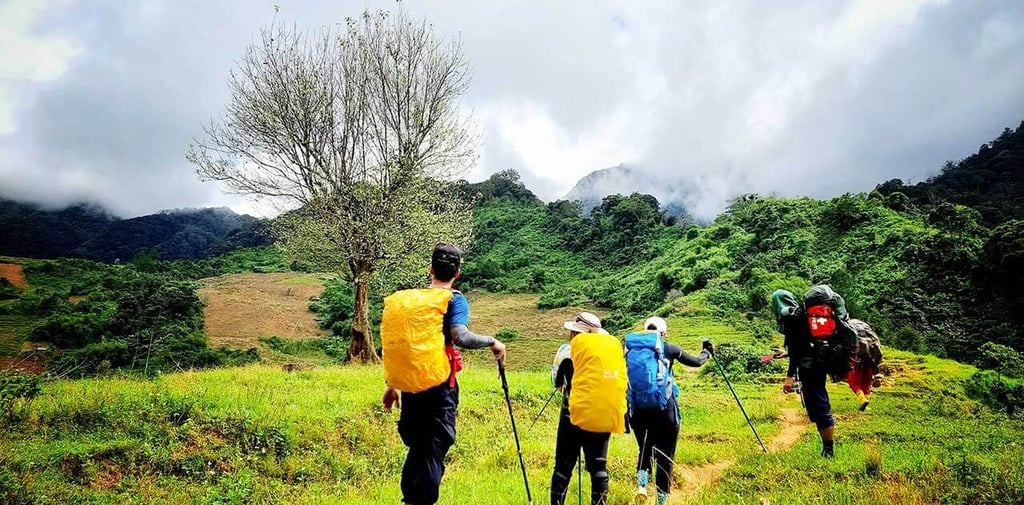
For the international ethnobotanist, the holistic wellness seeker, and the observer who understands that true wealth is measured in natural purity, Ngọc Linh Massif—a towering, sacred mountain range spanning the border of Quảng Nam and Kon Tum—is not merely a geographical height. It is the nation’s sacred, unmoving, and most explicit archive of medicinal purity and spiritual power—a vast, pristine sentinel that protects the habitat of the legendary Sâm Ngọc Linh (Vietnamese Ginseng). The experience of trekking here asserts an ultimate, non-negotiable truth: healing is found in solitude, nature is the ultimate pharmacy, and the greatest power is the pure, concentrated Khí (Life Force) granted by the ancient mountains. The entire journey is a rigorous metaphor for the Vietnamese soul: finding unshakeable spiritual strength in the quiet, immense power of the Earth's most precious botanical treasury.
As specialists in Vietnamese vertical exploration at Vietnam Charm, we conclude this epic series by inviting the global adventurer on an essential, detailed journey to decode this profound, sacred epic. We will meticulously analyze the botanical mandate that consecrated the mountain as a source of unparalleled medicinal purity, the cultural mandate that ties the ecosystem to the spiritual life of the Xơ Đăng and Giẻ Triêng communities, the spiritual discipline required to navigate the high-altitude silence, and the profound way this massif articulates the core national values of ecological humility, medicinal wisdom, and the fierce, quiet pride of indigenous sanctuary. Understanding Ngọc Linh is essential to grasping the emotional depth and the moral clarity that defines Việt Nam's ultimate spiritual spine.
1. The Botanical Mandate: The Mountain of Ginseng and the Archive of Purity
The defining character and the immense spiritual gravity of Ngọc Linh are dictated by a clear botanical mandate: the mountain is the sole, sacred sanctuary of Sâm Ngọc Linh (Vietnamese Ginseng), consecrating the entire massif as the nation's ultimate archive of medicinal purity.
The King of Herbs: Sâm Ngọc Linh is a high-altitude, endemic species renowned as one of the most potent medicinal herbs in the world, prized in Traditional Vietnamese Medicine (TVM) for its powerful adaptogenic and restorative properties. The mountain's unique high-altitude, moist, and pristine microclimate is the non-negotiable cradle for this life-giving plant. Trekking here is a pilgrimage to the source of healing, walking through the silent, sacred habitat of the King of Herbs. The environment asserts a primal truth: the greatest, most potent wealth is biological and requires absolute protection and solitude.
The Archive of Khí: In the TVM framework, the mountain is believed to concentrate and generate immense amounts of pure Khí (Life Force/Energy), which is then absorbed by the potent medicinal plants that thrive on its slopes. The trekking experience is a form of energetic replenishment, where the physical act of climbing through the clean, high-altitude air allows the explorer to absorb the mountain's intense, restorative energy. The silence of the forest is the audible rhythm of this energy generation.
2. The Cultural Mandate: Indigenous Sanctuary and the Wisdom of the Xơ Đăng
Ngọc Linh holds a deep cultural and spiritual mandate, consecrated by the long, sustained, and reverent coexistence of the local indigenous Xơ Đăng (Sedang) and Giẻ Triêng (Je'h) communities, who are the unquestionable custodians of the mountain's purity.
The Guardians of the Sâm: The indigenous groups view the mountain not as a resource to be exploited, but as a sacred, living guardian whose benevolence is necessary for their survival. Their traditional knowledge of the forest, their spiritual reverence for the plants, and their traditional laws are the first line of defense against poaching and exploitation. Trekking here is a profound act of cultural reverence, requiring the explorer to move with deep respect for the indigenous knowledge system that has successfully protected this sensitive ecosystem for centuries.
The Spiritual Spine: The mountain is viewed as the spiritual spine of the entire Central Highlands region. The local communities perform Lễ Cúng (Ritual Offerings) to the Thần Núi (Mountain God), asking for safety, successful harvest, and the continued blessing of the medicinal plants. The trekking journey becomes a non-verbal covenant with this spiritual architecture, acknowledging that human access is a privilege granted by the indigenous custodians and the mountain's spiritual sovereign.
3. The Structural Challenge: Vertical Solitude and the Discipline of the Ascent
The trekking experience in Ngọc Linh presents a deep structural challenge—a rigorous test of vertical solitude and the disciplined conquest of the forest's density, often through obscure or newly cut trails.
The Discipline of the Labyrinth: The deep slopes of Ngọc Linh are covered in dense primary forest, characterized by thick undergrowth, immense, ancient trees, and a perpetual dampness that creates treacherous, slippery footing. The trail is often faint, requiring the guide to engage in continuous intuitive navigation. The mountain demands a slow, deliberate pace and unyielding, disciplined footwork; it rewards patience and punishes arrogance. The ascent is physically exhausting, forcing the trekker to find inner rhythm (tĩnh tâm) through the sustained, grinding effort.
The Solitude of the Ascent: Due to its isolation and protected status, the peak is rarely crowded, ensuring the trekker experiences a profound, sustained solitude. The isolation strips away external support, compelling the mind to cease its external chatter and focus entirely on the internal dialogue and the immediate, challenging path. This enforced solitude is the mountain's greatest gift—a powerful opportunity for spiritual clarity and self-mastery achieved through a quiet, continuous conversation with the self and the profound silence of the high forest.
4. The Ecological Mandate: Purity, Sanctuary, and the Wisdom of Water
The spiritual and physical experience of Ngọc Linh is defined by an absolute ecological mandate—the necessity of preserving the mountain's absolute purity, particularly the integrity of its precious water sources.
The Sanctuary of Clean Water: The mountain’s pristine forests and high rainfall are the source of numerous, crucial rivers and streams that feed the lower Central Highlands. The water, cold, clear, and unpolluted, is viewed as the purest form of Khí and life essence. The trekker’s journey is a continuous dialogue with this element, often involving deep, cold river crossings and careful reliance on the mountain's springs. The park enforces a fierce conservation ethic: the purity of the water is non-negotiable, and the trekker's presence is a non-verbal promise to uphold the sanctity of the source.
The Final Sanctuary: The immense density and difficulty of the terrain ensure that Ngọc Linh remains a biological and spiritual sanctuary—a refuge for biodiversity that has resisted the pressures of development and exploitation. The success of the trek is measured not by speed, but by the trekker's ability to leave the environment undisturbed, pure, and respected. The mountain asserts that the highest form of human achievement is stewardship and self-control.
5. Conclusion: The Permanent Testament to Medicinal Power
Ngọc Linh Massif is the ultimate, enduring, and spiritually profound testament to the Vietnamese spirit's capacity for disciplined reverence, ecological purity, and the unyielding quest for inner healing. It is a mountain that transforms its dense, challenging habitat into a sanctuary of life-giving power. By analyzing the botanical mandate that consecrated the peak as the home of Vietnamese Ginseng, the cultural mandate that ties the ecosystem to the ancestral wisdom of the Xơ Đăng guardians, the structural challenge of vertical solitude and the dense forest, and the spiritual pursuit of the mountain's concentrated Khí, the observer gains access to a core, luminous truth: Ngọc Linh is far more than a peak. It is the permanent, unwavering declaration of medicinal power and ancient wisdom—a powerful, quiet assertion that asserts the cultural value of disciplined humility, ecological gratitude, and the belief that the nation's most profound, resilient form of strength is eternally secured by the quiet, continuous, and respectful protection of the Earth's pure, ancient, and life-giving soul.
We are on social media
Vietnam Charm belongs to Vietpearl Travel., JSC
Contact:
Email: info@vietnamcharm.top
© 2026. by Vietnam Charm. All rights reserved
Travel license number: 01-827/2020
Refund Policy