Giảm giá hấp dẫn cho tour du lịch!

THE BRUSHSTROKES OF WISDOM: VIETNAMESE CALLIGRAPHY — THE RITUAL OF INK, PAPER, AND THE PHILOSOPHY OF THE TẾT WISH
More than writing: exploring the contemplative power of Thư Pháp as an elite artistic discipline, analyzing its evolution from classical Hán Nôm scripts to modern Quốc Ngữ forms, and its sacred role in shaping destiny during the Lunar New Year.
HERITAGE & SPIRITLOCAL EXPERIENCES
Tobin Nguyen
11/6/20255 phút đọc
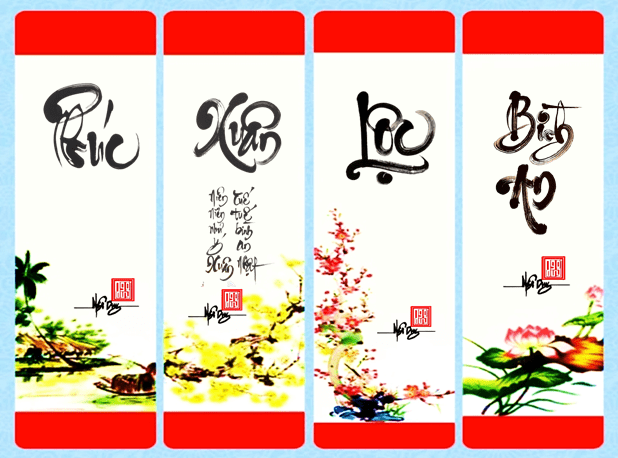
For the international traveler, the image of a scholar, often in traditional long robes, meticulously crafting elegant characters on crimson paper, remains one of the most serene and profound cultural scenes of the Vietnamese Lunar New Year (Tết). This ancient practice, known as Thư Pháp (Calligraphy), transcends mere literacy; it is a spiritual discipline, a demanding artistic form, and a fundamental vehicle for expressing hopes, wisdom, and moral philosophy. Vietnamese Calligraphy serves as a vital bridge, connecting the modern citizen directly to the scholarly traditions, poetic integrity, and deep ancestral reverence of the past.
As specialists in Vietnamese heritage and profound cultural analysis at Vietnam Charm, we embark on an essential, detailed exploration to decode this meticulous art. We will meticulously analyze the historical evolution of the script (from classical Chinese/Nôm to modern Quốc Ngữ), the spiritual ritual embedded in the process of creating the characters, the aesthetic principles that define a master's stroke, and the enduring role Thư Pháp plays in defining the intellectual and ethical landscape of the nation, especially during its most important cultural holiday. Understanding Thư Pháp is essential to grasping the high value placed on intellectual refinement and the belief in the written word's power to shape fate.
1. The Historical Evolution: From Ideogram to Alphabet
Vietnamese Calligraphy boasts a complex, dynamic history that mirrors the nation's struggle for cultural identity and linguistic sovereignty. The form and philosophy of Thư Pháp have adapted dramatically while retaining the core commitment to brushwork mastery.
Historically, the practice was exclusively tied to the classical written forms that dominated the intellectual life of the court and the scholarly elite: Hán Tự (Chinese Characters) and the subsequent adaptation, Chữ Nôm (Southern Characters). Hán Nôm served as the primary literary and administrative language for nearly a thousand years. Calligraphy during this period was inherently an elite art form, accessible only to those educated in the complex ideograms. A master calligrapher (Ông Đồ) was not just a skilled artisan; they were a scholar, philosopher, and poet whose mastery of the brush confirmed their high intellectual status and deep understanding of classical texts. The act of writing was inseparable from the act of profound philosophical contemplation.
The crucial shift occurred in the 20th century with the widespread adoption of Chữ Quốc Ngữ (National Language)—the romanized, phonetic script based on the Latin alphabet. This adaptation democratized literacy but presented a profound challenge to the art of Thư Pháp. The traditional beauty and spiritual depth of calligraphy relied heavily on the inherent balance, meaning, and complexity of the ideograms. Initially, some feared the simple, straight lines of the romanized script could not convey the same artistic depth. However, Vietnamese calligraphers proved the resilience of the art form, successfully adapting the brushwork techniques, the fluid motion, and the spiritual energy (khí) of classical calligraphy to the modern alphabet, ensuring the aesthetic and philosophical integrity of the practice endured even as the script changed.
2. The Ritual of Creation: The Discipline of Ink and Paper
The creation of a calligraphic work is a profound, meditative ritual governed by intense discipline, mirroring the spiritual pursuit of perfection and harmony. It is a slow, measured process that stands in direct opposition to the speed and impermanence of modern life.
The process begins with the meticulous preparation of the Four Treasures of the Study (Văn Phòng Tứ Bảo): the Brush (Bút): the instrument of expression, often made from bamboo and animal hair; the Ink (Mực): ground from traditional ink sticks, its consistency determining the fluidity of the line; the Paper (Giấy): typically the absorbent giấy dó (do paper) or the vibrant red paper (giấy hồng điều) favored for Tết, symbolizing luck; and the Inkstone (Nghiên): the surface upon which the ink is prepared, symbolizing stability. The deliberate, slow act of grinding the ink is the first act of meditation, clearing the mind and focusing the artist's intent.
The core of the ritual lies in the discipline of the brushstroke. The calligrapher must control not only the movement of the brush but the weight, speed, and angle of their hand to achieve the perfect balance of lực (force), khí (spiritual energy), and thần (spirit) within the character. A single stroke is often an irreversible commitment. Unlike other forms of art that allow for correction, the perfection of calligraphy demands complete focus and spiritual composure; any hesitation or flaw is permanently recorded in the ink. This demand for immediate perfection reinforces the philosophical concept of sincerity and authenticity.
3. The Aesthetics of Mastery: Force, Balance, and Khí
The aesthetic appreciation of Vietnamese Calligraphy is complex, extending beyond mere legibility to an analysis of the energy and emotion conveyed by the master's execution. A great piece of Thư Pháp is not simply read; it is felt.
The highest criteria for judging a calligraphic work are:
Lực (Inner Force): The strength and vitality imbued in the stroke, visible in the way the ink saturates the paper and the variations in line thickness. A powerful stroke suggests confidence and conviction.
Khí (Spiritual Energy): The continuity and flow of energy that connects the individual strokes, even when the brush leaves the paper. Khí gives the entire composition a sense of dynamic movement and wholeness, embodying the artist's spiritual state.
Thần (Spirit/Soul): The overall emotional impact and philosophical depth conveyed by the work. Thần is the hardest quality to achieve, reflecting the artist's mastery of the subject matter and their ability to imbue the writing with profound, sincere meaning.
Khai and Hợp (Openness and Containment): The balance between the open spaces (negative space) and the contained, inked characters. The unwritten space is often as important as the written stroke, symbolizing the necessary balance between stillness and action.
The most prized works are those that achieve a harmonious disequilibrium—lines that are technically precise yet feel spontaneously alive, combining the discipline of the scholar with the fluid freedom of the poet.
4. The Sacred Ritual of Tết: Wishing and Destiny
The enduring visibility and spiritual function of Thư Pháp are most pronounced during the Tết Nguyên Đán (Lunar New Year) festival, where the calligrapher assumes a sacred role as a conduit of fortune.
During Tết, the master calligrapher (Ông Đồ) moves from the quiet of the scholar's study to the bustling public spaces, setting up shop on street corners or in communal parks. Crowds gather, not to buy mass-produced art, but to commission a piece of calligraphy personally tailored to their needs and wishes for the coming year.
The commissioned words are typically characters representing universal virtues, aspirations, or blessings:
Tài (Talent/Success): Wishing for career achievement and prosperity.
Lộc (Fortune/Prosperity): Wishing for wealth, luck, and abundance.
Nhẫn (Patience/Endurance): Wishing for the strength to overcome difficulties.
Phúc (Happiness/Blessing): Wishing for general good fortune and peace for the family.
An (Peace/Safety): Wishing for security, health, and tranquility.
The final piece of red paper, with its bold, black ink, is taken home and placed prominently in the home—often near the ancestral altar or the living room—as a spiritual talisman. The belief is that the Ông Đồ's mastery, discipline, and sincerity in the moment of creation imbues the written word with the power to manifest the desired destiny. The act of commissioning Thư Pháp is thus a profound ritualistic investment in the spiritual fortune of the family for the entire year, a visible, continuous affirmation of hope and morality.
5. Conclusion: The Enduring Power of the Written Word
Vietnamese Calligraphy is a masterful tradition that transforms the simple act of writing into a spiritual pilgrimage toward perfection, discipline, and poetic grace. By analyzing its historical journey from the complexities of Hán Nôm to the simplicity of Quốc Ngữ, the intense ritual of its creation, and its sacred function as a spiritual talisman during Tết, we understand its profound role. Thư Pháp is the ultimate testament to the high value Vietnamese culture places on intellectual refinement, sincere expression, and the enduring, powerful belief that the words we choose and the way we render them hold the key to shaping our spiritual and material destiny. The silent brushstroke carries the weight of a thousand years of wisdom.
We are on social media
Vietnam Charm belongs to Vietpearl Travel., JSC
Contact:
Email: info@vietnamcharm.top
© 2026. by Vietnam Charm. All rights reserved
Travel license number: 01-827/2020
Refund Policy