Giảm giá hấp dẫn cho tour du lịch!



THE CENTRAL ARTERY: BẠCH MÃ NATIONAL PARK — DECODING THE CLOUD DIVIDE, COLONIAL MEMORY, AND THE SYNTHESIS OF COAST AND MOUNTAIN
More than a park: exploring Vườn Quốc Gia Bạch Mã (Bạch Mã National Park) as Việt Nam’s ultimate ecological and historical frontier, analyzing its profound function as the "Cloud Divide" separating the Northern and Southern climates, the haunting archive of French colonial memory, and its embodiment of Central Vietnam's resilience and quiet, enduring beauty.
VIETNAMESE CULTUREVIETNAM'S VERTICAL SOULLOCAL EXPERIENCES
Tobin Nguyen
11/8/20255 phút đọc
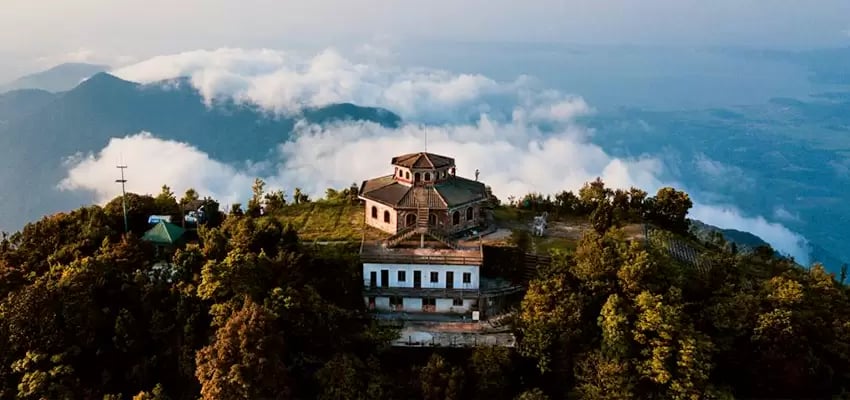

For the international climatic scientist, the student of colonial history, and the seeker of the nation’s deepest point of ecological transition, Bạch Mã (White Horse) National Park, situated at the pivotal, narrow spine of Central Việt Nam between Huế and Đà Nẵng, is not merely a mountain retreat. It is the nation’s sacred, unmoving, and most explicit marker of climatic, historical, and biological change—a massive, mist-shrouded geological artery that filters the weather, anchors the clouds, and holds the spectral memory of a colonial past. The experience of trekking here asserts an ultimate, non-negotiable truth: nature is the supreme, relentless arbiter of human ambition, history is transient, and true tranquility is found only in submission to the cyclical, cleansing power of the mountain mist. The atmosphere itself is dense with history, humidity, and the profound silence of ecological synthesis.
As specialists in Vietnamese vertical exploration at Vietnam Charm, we invite the global adventurer on an essential, detailed journey to decode this profound, misty epic. We will meticulously analyze the climatic mandate that dictates the mountain's relentless fog and high rainfall, the historical mandate that consecrated its peak as a prestigious French resort, the ecological synthesis that blends Northern and Southern flora, and the profound way this artery articulates the core national values of enduring tranquility, historical humility, and the fierce, quiet pride of ecological preservation. Understanding Bạch Mã is essential to grasping the emotional depth and the unshakeable spirit that defines Central Việt Nam’s soul.
1. The Climatic Mandate: The Cloud Divide and the Architecture of Mist
The defining character of Bạch Mã National Park is rooted in a clear climatic mandate: its strategic height and position at the narrowest section of the country transform it into the ultimate "Cloud Divide"—a massive atmospheric filter that perpetually shrouds the peaks in mist, ensuring its unique, lush ecosystem.
The Filter of Fog: Reaching nearly 1,500 meters, Bạch Mã acts as the irrevocable barrier separating the northern, cooler, monsoon-driven climate from the southern, warmer, more arid tropical climate. The warm, moisture-laden air sweeping in from the nearby Biển Đông (East Sea/South China Sea) is forced upward by the mountain's sheer face, cooling rapidly and condensing into a continuous, thick blanket of sương mù (fog) and high rainfall. This constant atmospheric saturation dictates the entire ecosystem, creating a lush, evergreen tropical rainforest defined by perpetual dampness and low visibility.
The Psychological Mist: For the trekker, the mist and high humidity are the primary psychological adversaries. The thick fog reduces visibility to mere meters, transforming the familiar path into an intimate, immediate labyrinth. This forces a profound mindfulness (chánh niệm)—a disciplined reliance on the immediate step, the sound of water, and the knowledge of the guide, rather than the distraction of grand, distant vistas. The mountain asserts that clarity is earned internally, not provided externally. The frequent, unpredictable rain ensures that the path is perpetually slick, demanding disciplined footwork and humble patience. The atmosphere itself is a spiritual cleanser, washing away haste and urban anxiety.
2. The Historical Mandate: Colonial Memory and the Humility of Ruins
The Bạch Mã Peak holds a deep historical mandate, consecrated in the early 20th century as the site for a vast, prestigious French colonial hill station. Trekking through the park is a silent journey through a haunting archive of human ambition contrasted with nature’s ultimate, peaceful triumph.
The French Aspiration: French colonial administrators, seeking escape from the relentless heat of the coastal plains (Huế and Đà Nẵng), established Bạch Mã as a vast resort, building over 139 magnificent villas, guesthouses, and administrative structures with the ambition of creating a self-sufficient, temperate European sanctuary in the tropics. The park’s history is thus deeply intertwined with the colonial desire to conquer and restructure the environment.
The Humility of the Ruins: The subsequent conflicts and the relentless, restorative power of the jungle have ensured that the French ambition lies today in ruins. Trekking trails pass by the spectral, moss-covered ruins of these grand colonial villas—broken stone steps, crumbling fireplaces, and shattered walls now completely embraced and consumed by the rừng (jungle). These ruins are the ultimate, silent testament to historical humility. Nature’s triumph is total and peaceful: the jungle has quietly reclaimed its own. The trekker walks through this history, witnessing the profound, comforting truth that all human structures eventually yield to the slow, relentless, regenerative power of the Earth. The ruins are a moral lesson in transience.
3. The Ecological Synthesis: Waterfalls, Canyons, and the Meeting of Species
Bạch Mã functions as a remarkable ecological synthesis, serving as a pivotal Central Artery where the flora and fauna of the northern and southern biospheres meet, creating a habitat of immense, concentrated biodiversity and sublime natural beauty.
The Artery of Life: The park’s high rainfall feeds a complex system of streams, ravines, and dramatic waterfalls. The trekker’s journey is often defined by the profound, cleansing power of the water element. The highlight is the system of Ngũ Hồ (Five Lakes)—a series of five interconnected, crystal-clear pools cascading through a lush ravine, demanding disciplined agility and a willingness to engage intimately with the cold, pure water. This system asserts the spiritual principle that life is a continuous flow and that purity is achieved through movement.
The Đỗ Quyên Cascade: The pilgrimage culminates at the Thác Đỗ Quyên (Rhododendron Waterfall)—a magnificent, sheer cascade plunging hundreds of meters into a valley gorge. The view from the top is a profound moment of vertical awe and perspective, reinforcing the mountain's immense scale. The rhododendron flowers (a classic temperate species) found near the falls are a potent symbol of the park’s ecological synthesis—a unique blend of cold-climate flora thriving alongside tropical jungle species. The park is a living, breathing laboratory where biological boundaries are fluid and cooperative.
4. The Trekking Challenge: Slickness, Silence, and the Call of the Wilderness
The trekking experience in Bạch Mã presents a unique physical and psychological challenge—a rigorous test of balance, patience, and submission to the mountain's intimate solitude.
The Challenge of Slickness: Due to the relentless mist and high rainfall, the trails are perpetually slick, root-bound, and uneven. The primary physical demand is disciplined balance and core control—a constant, precise negotiation with the slippery surface. The mountain demands humility and slowness; haste is punished by immediate slips. This physical submission fosters a deep, necessary focus on the immediate relationship between the foot and the ground.
The Intimate Silence: The low-hanging mist often muffles the sound of the external world, creating an intense, intimate silence broken only by the sound of dripping water, the distant roar of the falls, and the rustling of the high canopy. This enforced silence provides a profound opportunity for introspection and inner dialogue. The park's stillness allows the soul to reset, shedding the noise of the urban self and submitting to the profound, quiet rhythm of the Central Vietnamese wilderness.
5. Conclusion: The Permanent Testament to Ecological Transition
Bạch Mã National Park is the ultimate, enduring, and hauntingly beautiful testament to the Vietnamese spirit's capacity for historical humility, ecological synthesis, and profound resilience. It is a mountain that transforms climatic necessity into a lush, quiet sanctuary. By analyzing the climatic mandate that established the mountain as the Cloud Divide, the historical mandate that consecrated its ruins as an archive of colonial failure, the ecological synthesis that blends Northern and Southern species near its magnificent waterfalls, and the physical challenge of its slippery, misty trails, the observer gains access to a core, luminous truth: Bạch Mã is far more than a park. It is the permanent, unwavering declaration of ecological transition—a powerful, quiet assertion that asserts the cultural value of disciplined patience, historical reflection, and the belief that the purest, most profound beauty is eternally found in the misty, serene, and unbowed heart of the Central Vietnamese spine.
We are on social media
Vietnam Charm belongs to Vietpearl Travel., JSC
Contact:
Email: info@vietnamcharm.top
© 2026. by Vietnam Charm. All rights reserved
Travel license number: 01-827/2020
Refund Policy