Giảm giá hấp dẫn cho tour du lịch!


THE COSMIC TOLERANCE: THE MOTHER GODDESS WORSHIP — DECODING SYNCRETISM, ECSTASY, AND THE POWER OF THE FEMININE SPIRIT
More than a ritual: exploring the vibrant theological landscape of Thờ Mẫu Tam Phủ as a profound, living spiritual manifesto that asserts feminine primacy, integrates national heroes, and defines the theatrical heart of Vietnamese popular faith.
HERITAGE & SPIRITLOCAL EXPERIENCES
Tobin Nguyen
11/6/20257 phút đọc
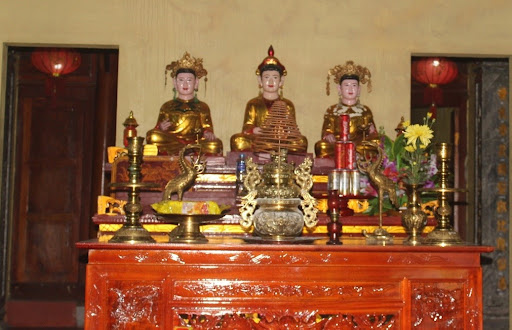
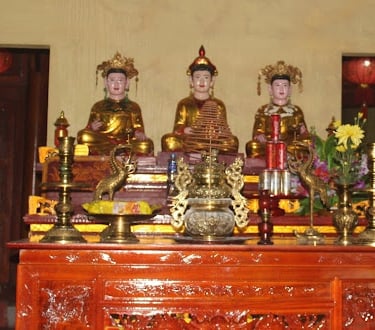
For the cultural observer, the traveler, and the seeker of profound spiritual experience, the ritual of Thờ Mẫu Tam Phủ (Worship of the Mother Goddesses of the Three Realms) offers the most immediate, dramatic, and emotionally charged encounter in Vietnamese spiritual life. Recognized by UNESCO as a Masterpiece of the Oral and Intangible Heritage of Humanity in 2016, this belief system transcends the boundaries of traditional, institutionalized religion; it is a complex, living theology centered on the supreme, life-giving power of the Feminine—the Mother (Mẫu)—who governs the visible and invisible Cosmos, encompassing Heaven, Earth, Water, and the Mountains. To witness the central ritual of Hầu Đồng (Spirit Mediumship) is not merely to attend a ceremony, but to be swept into a vibrant, emotional theater where the divine descends to the human realm amidst an intoxicating blend of music, color, and spiritual ecstasy.
As specialists in Vietnamese heritage and profound cultural analysis at Vietnam Charm, we embark on an essential, detailed exploration to decode this spiritual meridian. We will meticulously analyze the vibrant cosmology of the Three Realms, the theological supremacy of the Mother in a historically patriarchal society, the sophisticated theatrical structure of the Hầu Đồng ritual, and the profound role this faith plays in empowering the female spirit and integrating the diverse social and historical elements into a cohesive national identity. Understanding Thờ Mẫu is essential to grasping the deepest, most colorful, and most resilient spiritual currents of the Vietnamese soul.
1. The Philosophical Architecture: Mẫu and the Flow of Life in the Tam Phủ
The theological framework of the Mother Goddess worship is the Tam Phủ (Three Realms), a cosmological structure that divides the visible and invisible worlds. This entire existence is governed and sustained by the supreme Mother Goddess, Mẫu Tối Cao (Supreme Mother), who is the ultimate source of all life, energy, and compassionate creation.
The faith is fundamentally organized around the continuous veneration of the Mother, asserting her spiritual primacy and power over all natural forces. Beneath the Supreme Mother, the pantheon expands to include the Mothers of the Three Realms, each embodying and governing a distinct aspect of existence, emphasizing the cyclical, nurturing, and powerful flow of nature. Heaven (Thiên Phủ) is ruled by the Mẫu Thượng Thiên (Mother of Heaven), governing light, the atmosphere, celestial energy, and the destiny of the nation. She is the source of pure, governing, ultimate power. Earth and Mountains (Địa Phủ) are overseen by the Mẫu Thượng Ngàn (Mother of the Forest/Mountains), governing mountains, forests, fertility of the land, and the raw, untamed abundance of nature. She is often associated with the ethnic minority groups and the deep-seated Vietnamese reverence for the ecological environment. Finally, Water (Thoải Phủ) is the dominion of the Mẫu Thoải (Mother of Water), governing rivers, lakes, oceans, and all life-giving water resources, reflecting Việt Nam's identity as a civilization tied to the fluidity of water and the sea. This cosmology is profoundly earth-centered and feminine, prioritizing the power of nature, fertility, and compassionate protection over the rigid, purely patriarchal systems of classical Confucianism.
The most widely revered figure in the mortal realm is Mẫu Liễu Hạnh (Princess Liễu Hạnh), often considered the most distinctly Vietnamese saint and the central focus of popular devotion. She embodies the perfect fusion of native animism, Taoist concepts, and local folklore. Her central, beloved narrative—a celestial princess banished to Earth who uses her divine power to travel across the land, correct injustice, punish the corrupt, and bless the virtuous—makes her an accessible, compassionate, and fiercely protective Mother figure. Her story provides a direct, emotional, and intensely personal link between the common person and the highest celestial powers, offering immediate hope and intervention.
2. The Hầu Đồng Ritual: The Theatrical Descent of the Divine
The spiritual core of the Thờ Mẫu faith is the Hầu Đồng (Spirit Mediumship) ceremony. This is an elaborate, hours-long, and highly public ritual performed by a trained Thanh Đồng (medium)—who acts as the temporary, human vessel for the various deities (Chư Vị) to descend and interact directly with the human world. It is a spectacle designed for emotional connection, spiritual healing, and affirming the existence of the invisible world.
The ceremony is intensely theatrical, transforming the temple hall or Điện into a vibrant, multi-sensory stage of devotion. The ritual is entirely driven by a live, dedicated musical ensemble, the Cung Văn, who masterfully plays traditional instruments like the Đàn Nguyệt (Moon Lute), Đàn Nhị (Fiddle), and various percussions. The music is not random; it serves as a sonic signal and emotional bridge, changing tempo, melody, and mode precisely to announce which specific deity (giá đồng) is about to descend into the medium's body. The music guides the spiritual energy, the trance state, and the rhythmic pace of the entire ritual. The medium undergoes rapid, dramatic, and mesmerizing costume changes—sometimes dozens in one session. Each costume is a meticulous, vibrant, symbolic representation of the descending deity: the serene blue and white of the Water Mother, the bold red of the Earth Mothers, or the simple, strong military uniform of a commanding General or Prince. This visual transformation immediately affirms the deity's presence. As the deity possesses the medium, the medium enters a state of controlled ecstasy or trance. The descent is marked by specific ritual movements, stylized dances, and unique vocal tones or gestures that are instantly recognizable as belonging to that specific deity. The movements are often vigorous, affirming the power and presence of the spiritual visitor.
The primary function of the Hầu Đồng is the direct, intimate interaction between the divine and the devotees. As the deity possesses the medium, they often speak directly to the audience, giving spiritual advice, offering blessings, and—most visibly and eagerly awaited—distributing Lộc (blessings). Lộc typically consists of small, tangible gifts such as money, candy, or silk scarves, distributed by the medium to the kneeling, eager devotees. Receiving Lộc is seen as a direct, tangible transmission of the deity’s spiritual fortune and protection, meant to bring prosperity, health, and luck in the coming year. The highly charged atmosphere of the ritual provides a crucial space for emotional release. Devotees often weep, pray intensely, or offer direct, heartfelt requests to the descending deity, finding solace, affirmation, and spiritual guidance that strengthens their resolve in the face of daily hardships. The ritual is a profound spiritual catharsis.
3. The Socio-Theological Tapestry: Syncretism and Feminine Empowerment
The Thờ Mẫu Tam Phủ faith system is remarkable for its profound theological flexibility and syncretism, acting as a spiritual melting pot that affirms diverse local histories while asserting the ultimate power of the feminine.
The faith asserts the primacy of the Mother as the supreme life-giving, protecting, and governing force of the cosmos. In a historically Confucian, patriarchal society, Thờ Mẫu provided a crucial, powerful theological counterweight, offering spiritual empowerment and essential leadership roles to women. The most powerful, revered spiritual figures in the faith—the Mothers and many of the chief mediums (Thanh Đồng)—are female. The faith actively celebrates the life-giving, protective, compassionate, and sometimes fiercely judgmental power of motherhood, offering a spiritual refuge and sense of authority that was often denied in the temporal political sphere.
Furthermore, the full pantheon of the faith is not limited to the celestial Mothers. It includes the Tứ Phủ Công Đồng (The Assembly of the Four Palaces/Ranks), which systematically integrates nearly every powerful historical or legendary figure into its cosmology, including patriotic generals (like Trần Hưng Đạo), local heroes, figures of ethnic minority origins (like the Mountain Saints), and even mythical animals. This acceptance of diverse historical and local figures into its divine court means the faith serves as a potent vehicle for national memory and cultural integration. It is a spiritual melting pot that affirms diverse local histories and regional personalities, binding them into a cohesive national spiritual framework rooted in history and legend, embodying the essence of Vietnamese cultural tolerance. The faith ultimately allows the Vietnamese people to embrace their diverse history within a single, unifying spiritual architecture.
4. The Enduring Resilience: Mẫu Worship in the Modern World
Despite periods of suppression and the immense pressures of economic modernization, the Thờ Mẫu faith has demonstrated extraordinary resilience, expanding its influence and adapting its rituals to meet the emotional and spiritual needs of the contemporary Vietnamese population.
The faith’s ability to offer immediate, emotional, and personal intervention contrasts sharply with the often abstract and philosophical nature of academic Confucianism or institutionalized Buddhism. The descending deities in the Hầu Đồng ritual speak directly to the material concerns of their followers—health, business success, luck, and protection from harm—making the practice intensely relevant to the daily struggles of urban and rural life. This focus on immediate, tangible solutions and blessings ensures its enduring popular appeal.
The faith also plays a crucial role in the transmission of traditional arts and music. The live performance of the Cung Văn ensemble, the intricate, ritualistic costuming, and the stylized dances performed by the medium are all fundamental elements of intangible heritage. The continuous performance of the ritual ensures the preservation of these complex, ancient forms, providing an essential cultural laboratory for music and textile arts. The UNESCO recognition was a powerful affirmation of this fact, validating the tradition globally and spurring intense national efforts to document and protect the associated arts from extinction.
The pilgrimages to the major Mother Goddess temples—such as Phủ Giầy (Nam Định) or the temples dedicated to the Mountain Mother—draw millions annually, demonstrating that the faith is a powerful, active force in mobilizing the population and affirming a shared spiritual journey.
5. Conclusion: The Vibrant Heart of Vietnamese Spirituality
The Worship of the Mother Goddesses of the Three Realms is Việt Nam’s profound, passionate argument for the power of compassion, nature, and the supreme feminine spirit. It is a faith system that uses vibrant sound, spectacular color, evocative music, and theatrical ecstasy to bridge the chasm between the human and the divine. By analyzing the compassionate rule of the Mothers, the theological flexibility that embraces all heroes, the emotional drama of the Hầu Đồng, and the sociological empowerment of the faith, we understand its immense role as a cornerstone of popular spiritual life. This UNESCO INTANGIBLE HERITAGE is a powerful testament to the resilience of spiritual belief, ensuring that the vibrant, passionate voice of the Mother continues to guide and bless her children and the nation, offering a powerful, accessible spiritual experience in an increasingly complex world.
We are on social media
Vietnam Charm belongs to Vietpearl Travel., JSC
Contact:
Email: info@vietnamcharm.top
© 2026. by Vietnam Charm. All rights reserved
Travel license number: 01-827/2020
Refund Policy