Giảm giá hấp dẫn cho tour du lịch!


THE DAWN RITUALS: LONGEVITY CULTURE — DECODING PUBLIC EXERCISE, THÁI CỰC QUYỀN, AND THE PHILOSOPHY OF DƯỠNG SINH IN URBAN PARKS
More than exercise: exploring Văn Hóa Dưỡng Sinh (Vietnamese Longevity Culture) as the nation's ultimate communal practice of well-being, analyzing its profound integration of public, disciplined movement, the spiritual necessity of harnessing the dawn's energy, and its embodiment of continuous self-cultivation and harmonious existence.
LOCAL EXPERIENCESVIETNAMESE CULTUREGASTRONOMY & TRADITION
Tobin Nguyen
11/6/20255 phút đọc
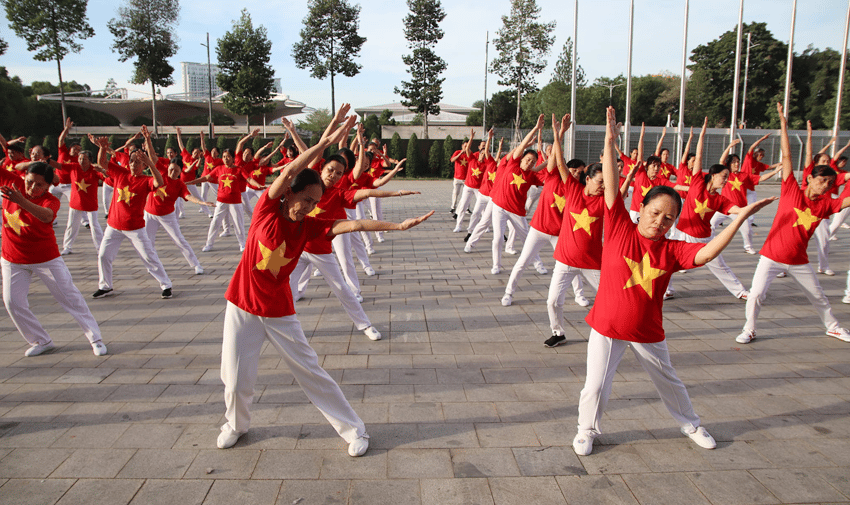
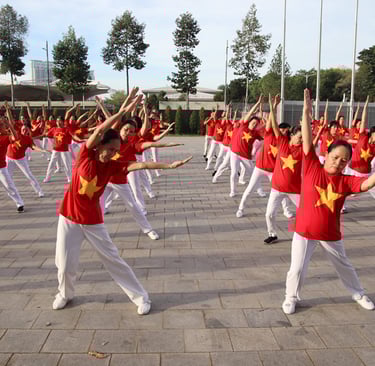
For the international sociologist, the wellness enthusiast, and the seeker of the nation’s deepest communal rhythms, the Dawn Rituals—the sight of hundreds of citizens across every major Vietnamese city park, moving in synchronized, slow, and disciplined patterns of Thái Cực Quyền (Tai Chi), Khí Công (Qigong), and communal exercise—is not merely a quaint morning habit. It is the nation’s most visible, enduring, and democratically accessible philosophy of proactive wellness—a collective covenant asserting that the foundation of health (sức khỏe) and longevity (dưỡng sinh) is found not in aggressive intervention, but in disciplined, continuous, and gentle self-cultivation and the harmonious harnessing of the external environment's energy. The urban park, in this culture, is transformed into a sacred, public stage for spiritual and physical self-mastery.
As specialists in Vietnamese heritage and profound cultural analysis at Vietnam Charm, we embark on an essential, detailed exploration to decode this intimate, profound communal philosophy. We will meticulously analyze the cosmological mandate that requires the harnessing of the dawn's energy, the structural genius of Văn Hóa Dưỡng Sinh as a blend of movement and meditation, the sociological function of the park as a vital site for communal wellness and democratic access, and the profound way this practice articulates the core national values of disciplined patience, collective cohesion, and the belief that longevity is an earned, daily spiritual state. Understanding Longevity Culture is essential to grasping the emotional heart and the proactive, resilient spirit that underpins Vietnamese well-being.
1. The Cosmological Mandate: Harnessing the Dawn and the Flow of Khí
The entire rhythm and necessity of Văn Hóa Dưỡng Sinh are rooted in a clear cosmological mandate: the absolute necessity of rising early to harness the pure, uncontaminated energy (Khí) of the dawn—the moment of the universe's energetic reset—to cultivate the body's internal vitality.
The Power of Bình Minh (Dawn): The early morning (bình minh) is viewed as the optimal time for energy absorption. At this hour, the environment's Khí is considered to be at its most fresh, potent, and positive state, before it becomes polluted or agitated by the day's stress and urban chaos. The gentle, disciplined movements of Tai Chi and Khí Công are specifically designed as a form of energetic harvesting—methods to slowly, rhythmically draw this pure external Khí into the body, replenish the internal energy reserves, and guide the flow smoothly along the Kinh Mạch (Meridians). This practice is the essential, daily foundation for all subsequent health.
The Ritual of Gentle Movement: The slow, fluid, and circular nature of the movements contrasts sharply with the aggressive, fast-paced intensity of Western exercise. This slowness is intentional; it allows the practitioner to enter a meditative state (tĩnh tâm) while moving, ensuring that the Tâm (Mind) guides the Khí (Energy), and the Khí guides the Lực (Force). The movement becomes a gentle dialogue with the self and the environment, asserting that true vitality is achieved through harmony, not aggression. The early rising is the disciplined, daily covenant with the natural cosmological rhythm, ensuring the practitioner's body remains a flexible, open conduit for life energy.
2. The Structural Genius: Tai Chi, Khí Công, and the Synthesis of Movement and Stillness
Văn Hóa Dưỡng Sinh demonstrates a high degree of structural genius by integrating practices like Thái Cực Quyền (Tai Chi) and Khí Công (Qigong) into a coherent system that synthesizes movement, breath, and meditation.
Thái Cực Quyền (Tai Chi): This practice embodies the philosophy of Âm-Dương (Yin-Yang) balance in physical form. Every movement is a controlled, fluid transition from Âm (Yin/Receiving) to Dương (Yang/Giving)—from slow, yielding extension to subtle, internalized power. The practice forces the practitioner to maintain a low, stable center of gravity, achieving a profound sense of groundedness and internal stability, which is the physical manifestation of tĩnh tâm. Tai Chi is the ultimate moving meditation, using external form to cultivate internal equilibrium.
Khí Công (Qigong): This practice focuses intensely on Hơi Thở (Breath Control) and Ý Niệm (Intent). Simple, repetitive movements are synchronized with deep, abdominal breathing to manually control and enhance the flow of Khí throughout the body. The fundamental structural principle is that "Ý Dẫn Khí" (The Mind Leads the Energy): the practitioner uses focused intent to guide the life force to areas that require healing or replenishment, transforming the breath from a passive function into an active, powerful therapeutic tool. Longevity is thus understood to be a direct result of disciplined, conscious breathing.
The structural genius is that these practices are low-impact but high-yield—they achieve profound results in strengthening muscles, improving balance, and calming the nervous system without imposing damaging stress on the joints, making them perfectly suited for continuous practice from youth well into old age.
3. The Sociological Function: The Park as Sanctuary and the Communal Covenant
The most defining characteristic of Văn Hóa Dưỡng Sinh is its sociological function: the transformation of the urban park (công viên) into a sacred, democratic sanctuary for communal wellness, where individual health is pursued as a collective endeavor.
Democracy of Wellness: The park is the ultimate democratic stage for health. There are no membership fees, no social barriers, and no technological requirements; participation is open to all ages and social strata. The practices are often taught and led by local elders or experienced practitioners, fostering a system of communal, peer-to-peer mentorship where knowledge is shared freely. This ensures that the essential tools for longevity are accessible to every citizen, enshrining the core value that health is a collective, social right.
The Covenant of Rhythm: The large, synchronized groups moving in rhythm create a powerful collective energetic field. Moving together reinforces đoàn kết (unity) and provides a constant source of social motivation and gentle accountability. The sight of hundreds of people—from school children to their great-grandparents—moving in harmony provides a visual, powerful reassurance of the continuity of tradition and the resilience of the community. The park is thus a vital social anchor, ensuring that health remains a disciplined, social, and visible commitment.
4. The Philosophical Goal: Longevity, Tĩnh Dưỡng, and the Mastery of Time
The ultimate philosophical goal of Văn Hóa Dưỡng Sinh is Trường Thọ (Longevity), understood not as mere physical duration, but as the achievement of a state of sustained, active well-being (tĩnh dưỡng) and the disciplined mastery of time itself.
Mastery of Time: The slow, deliberate pace of the exercises teaches the practitioner to slow down the internal clock, focusing on the quality of the moment rather than the quantity of the external rush. This internal mastery of time is the key to managing stress and preventing disease (which often stems from excess speed and agitation). Dưỡng Sinh is, fundamentally, the practice of slowing down life's internal erosion.
Active Aging: Longevity in this context is not passive; it is active self-cultivation. The continuing practice into old age ensures that the body remains flexible and the mind remains clear, affirming the belief that the elderly are the spiritual and energetic anchors of the family and community. The elder's continued, disciplined presence in the park serves as a powerful, living testament to the effectiveness of the traditional philosophy, teaching younger generations that discipline is the ultimate source of enduring vitality.
5. Conclusion: The Permanent Testament to Harmonious Living
Văn Hóa Dưỡng Sinh (Longevity Culture) is the ultimate, enduring, and visually magnificent testament to the Vietnamese spirit's capacity for disciplined self-cultivation, communal harmony, and profound self-care. It is a philosophy that transforms the urban park into a sacred laboratory for vitality. By analyzing the cosmological mandate that requires the harnessing of dawn's energy, the structural genius of the Tai Chi and Khí Công synthesis, the sociological function of the park as the democratic health stage, and the philosophical goal of achieving active, disciplined longevity, the observer gains access to a core, luminous truth: Longevity Culture is far more than exercise. It is the permanent, unwavering declaration of harmonious living—a powerful, visible assertion that asserts the cultural value of disciplined self-mastery, continuous spiritual cultivation, and the belief that the purest, most resilient form of health is continuously achieved through the gentle, communal, and disciplined pursuit of inner and outer balance.
We are on social media
Vietnam Charm belongs to Vietpearl Travel., JSC
Contact:
Email: info@vietnamcharm.top
© 2026. by Vietnam Charm. All rights reserved
Travel license number: 01-827/2020
Refund Policy