Giảm giá hấp dẫn cho tour du lịch!



THE DELTA'S ARTERIES: WATERWAYS AS HIGHWAYS — DECODING THE LOGISTICS AND RESILIENCE OF THE MEKONG'S COMMERCIAL FLEET
More than rivers: exploring the profound engineering of the Mekong Delta's canal system as the vital logistical spine of Southern Việt Nam, analyzing the genius of the ghe and thuyền, and the philosophy of human life dictated by the rhythm of the current and the flood.
LOCAL EXPERIENCESVIETNAMESE CULTUREURBAN & DAILY LIFE
Tobin Nguyen
11/11/20255 phút đọc
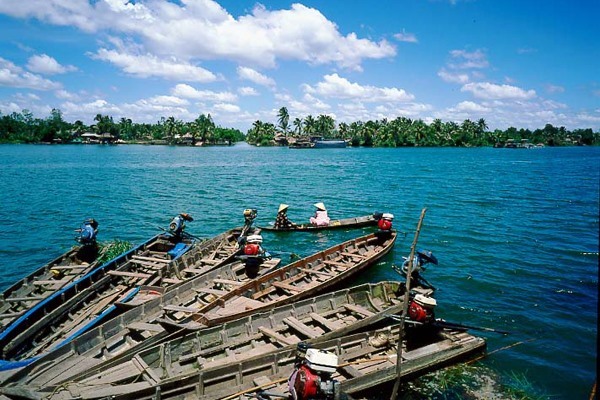
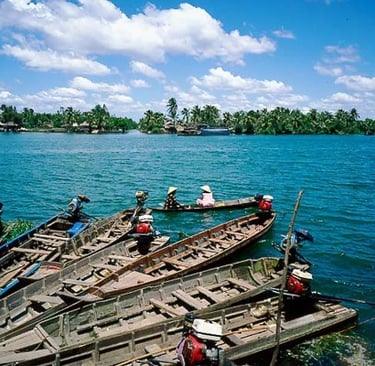
For the international visitor, the Mekong River Delta presents itself as a mesmerizing, fluid labyrinth—a sprawling network of mighty rivers, intricate canals (kênh rạch), and dense, emerald vegetation. This landscape, where land and water seamlessly merge, is not just a geographical feature; it is a masterpiece of human and natural engineering—the absolute logistical, economic, and cultural heart of Southern Việt Nam. The waterways are not obstacles; they are the region’s essential highways, the lifeblood that dictates commerce, communication, and the very philosophy of existence for the millions who call this dynamic environment home.
As specialists in Vietnamese heritage and profound cultural analysis at Vietnam Charm, we embark on an essential, detailed exploration to decode this aquatic civilization. We will meticulously analyze the geographical necessity that mandated water-based logistics, the structural ingenuity of the Delta's unique commercial fleet (the ghe and thuyền), the economic philosophy of the floating market, and the profound way this fluid environment articulates the adaptability, resilience, and symbiotic relationship between the Southern people and the relentless power of the river. Understanding Mekong logistics is essential to grasping the core values of self-reliance, fluidity, and survival in the face of nature’s immense power.
1. The Geographical Imperative: The Architecture of Water
The unique logistical structure of the Mekong Delta is a direct, ingenious, and inevitable response to its unparalleled geography. The region's defining characteristic is its low-lying elevation, massive water volume, and continuous fluidity, which renders conventional, large-scale road infrastructure extremely difficult and prohibitively expensive to build and maintain.
The Mekong River itself—known in Việt Nam as the Sông Cửu Long (River of Nine Dragons)—breaks into a vast, complex network of tributaries, rivers, and canals before emptying into the South China Sea. This network is the region’s original infrastructure, acting as the perfect, pre-existing system for transport. The annual mùa nước nổi (floating season), or flood, further dictates life, making water-based logistics the most practical, resilient, and economically sensible method of moving goods and people. This geographical necessity fundamentally shifts the cultural perspective: the boat (ghe/thuyền) is not an accessory to life; it is the primary logistical unit—the family car, the moving home, and the mobile shop—all rolled into one single, indispensable platform.
This reliance on water fosters a unique philosophy of adaptability. The Delta people are masters of the fluid environment, possessing an intimate, generational knowledge of the tides, currents, and seasonal depths that govern safe passage. This environmental literacy is the primary prerequisite for economic success, ensuring that resilience is inherently linked to hydrological knowledge.
2. The Structural Ingenuity: The Fleet of Ghe and Thuyền
The commercial and domestic fleet of the Mekong Delta is a masterpiece of functional minimalism and structural ingenuity, designed specifically to operate within the constraints of shallow water, narrow canals, and high-volume cargo.
The terminology itself reflects functional specialization: the Thuyền refers to smaller, often pointed domestic vessels used for short-range fishing, fetching water, or local transport. The Ghe refers to larger, heavier, often blunt-bowed commercial vessels used for long-haul cargo transport (rice, fruit, construction materials) and as the primary platforms for the famous floating markets. These vessels are constructed predominantly from durable local wood, utilizing shallow drafts to ensure they can navigate the myriad of complex, often silted canals and tidal tributaries.
The true logistical genius lies in the loading and capacity. The Delta vessels are structurally designed to maximize volume, capable of carrying towering, precarious loads of fruit, rice sacks, or even livestock that often completely obscure the visibility of the driver. This loading technique is not reckless; it is a high-skill operation dictated by acute knowledge of the vessel’s balance point and the river’s stability. The ability of a single family to navigate long distances and transport immense volumes of goods using relatively simple machinery is the primary engine that feeds the immense agricultural output of the entire Southern region. The boat is the ultimate expression of the local people’s self-reliance and engineering acumen.
3. The Economic Artery: The Floating Market and the Supply Chain
The waterways function as the primary economic arteries of the Delta, culminating in the unique logistical phenomenon of the Chợ Nổi (Floating Market). These markets are not merely tourist spectacles; they are essential, high-volume, wholesale logistical hubs that connect the massive agricultural supply chain to the wider region.
The famous markets—such as Cái Răng (Cần Thơ) or Phụng Hiệp (Hậu Giang)—are logistical wonders operating at peak efficiency during the pre-dawn hours. The market’s entire structure is dictated by the boat. Farmers bring their goods (often pineapples, watermelons, coconuts, or mangoes) directly from their orchards and fields to the market via the canal system. The boat acts as the producer’s dock, warehouse, and retail space simultaneously. The method of advertising is equally ingenious: a single product (a pineapple, a pumpkin, or a bunch of bananas) is hung from a long pole (cây bẹo) fixed to the boat’s mast. This simple, visual semaphore system allows buyers and wholesalers to instantly identify the boat’s inventory from a long distance, minimizing the need for navigation and saving time in the dense aquatic traffic.
This system ensures that vast quantities of fresh produce can be moved rapidly and efficiently with minimal need for land-based infrastructure, making the Delta's logistics system fundamentally decentralized, highly specialized, and deeply resilient to external economic fluctuations. The floating market is the ultimate testament to the local genius for aquatic commerce.
4. The Sociological Fabric: Waterway Life and the Human Rhythm
Life in the Mekong Delta is not lived near the water; it is lived on and with the water. The pervasive presence of the waterways dictates the social fabric, the architecture, and the human rhythm of existence.
The home itself is often integrated into the water. Traditional architecture is built on stilts (nhà sàn) or directly on floating pontoons, transforming the river into the front yard, the communal washing area, and the primary playground for children. The language of communication is dictated by the water, relying on the sound of boat engines, the subtle rocking of the vessels, and the use of loud, clear shouting or specific horn signals to navigate and communicate over the distance. The sense of community is established by the constant movement and interaction along the canals, fostering a profound connection between neighboring families and transient merchants.
The annual Mùa Nước Nổi (Floating Season)—the gentle, predictable flood—is welcomed, not feared. It brings vital alluvial soil to the fields, replenishes the fisheries, and flushes the canals. The ability to embrace the flood and adapt the logistics accordingly is a profound philosophical statement: the Delta people do not fight nature; they live in resilient harmony with its cycles. This cyclical dependency on the water instills a unique sense of patience, adaptability, and an easy-going philosophical approach to life that is the defining cultural signature of the Southern population.
5. The Future and Preservation: Adapting to the Modern Flow
The Mekong Delta's logistical system faces severe, modern challenges stemming from climate change, upstream damming, and the increasing demand for high-speed land transport. However, the core resilience of its water-based logistics ensures its survival.
The threats are existential: the reduction of upstream sediment supply threatens the delta’s structural integrity, and the increase in sea level penetration intensifies salinity, undermining the rice and fruit crops. In response, modern logistics are introducing larger, motorized boats and building more standardized ports, but the fundamental structure remains intact. The preservation of the Delta’s unique logistics is not merely about preserving tradition; it is about maintaining ecological and economic survival. Initiatives focus on preserving the traditional boat-making skills, documenting the intricacies of the canal system, and ensuring that future infrastructure planning respects the primacy of the water, rather than attempting to conquer it. The knowledge held by the thuyền trưởng (boat captains) about tides, loads, and local ecology is an invaluable form of intangible cultural heritage.
The Mekong Delta's waterway system is a logistical and cultural masterpiece. It transforms the fluid expanse into a functional, hyper-efficient highway network, enabling the Southern region to thrive despite formidable geographical constraints. By decoding the structural ingenuity of the ghe, the economic ritual of the floating market, and the resilient human rhythm dictated by the current, the observer gains access to the profound truth: the Vietnamese spirit is defined by its ability to live in robust, adaptable harmony with the overwhelming power of nature.
We are on social media
Vietnam Charm belongs to Vietpearl Travel., JSC
Contact:
Email: info@vietnamcharm.top
© 2026. by Vietnam Charm. All rights reserved
Travel license number: 01-827/2020
Refund Policy