Giảm giá hấp dẫn cho tour du lịch!


THE DEMOCRATIC STAGE: KARAOKE CULTURE — DECODING THE SOCIAL RITUAL, EMOTIONAL RELEASE, AND THE PUBLIC PERFORMANCE OF THE SELF
More than singing along: exploring the profound sociological intimacy and democratic spirit of Vietnamese Karaoke culture, analyzing its role as the ultimate platform for emotional release, business networking, and the temporary dissolution of rigid social hierarchy.
HERITAGE & SPIRITLOCAL EXPERIENCESVIETNAMESE CULTURETHE SOUNDSCAPE
Tobin Nguyen
11/6/20255 phút đọc
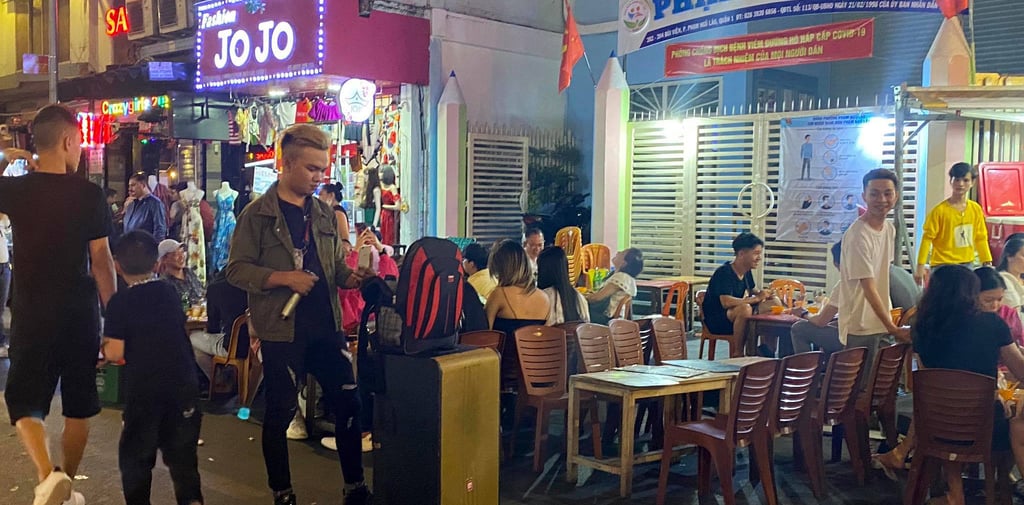
For the international observer, Karaoke is a universal phenomenon, yet its adoption and integration into Vietnamese social life have given it a unique, profound cultural weight. In Việt Nam, Karaoke is far more than a casual pastime; it is a mandatory, high-stakes social ritual—an essential mechanism for business networking, familial bonding, and, most critically, the sanctioned, public expression of deep, often hidden, emotion. The Karaoke room functions as a temporary, intense sociological laboratory where the rigid formal codes of conduct (lễ phép) are temporarily suspended, allowing for unvarnished honesty and emotional catharsis through song.
As specialists in Vietnamese heritage and profound cultural analysis at Vietnam Charm, we embark on an essential, detailed exploration to decode this dynamic phenomenon. We will meticulously analyze the sociological function of the ritual as a necessary pressure release valve, the economic imperative that makes the Karaoke room a crucial venue for high-level business negotiation, the psychological safety provided by the private, enclosed space, and the profound way this culture articulates the core values of collectivism, emotional honesty, and the democratic desire for self-expression. Understanding Karaoke is essential to grasping the emotional depth and the complex social dynamics of contemporary Vietnamese life.
1. The Sociological Mandate: The Pressure Release Valve and Collective Cohesion
The intense popularity and ritualistic mandate of Karaoke in Việt Nam are rooted in a deep sociological necessity—its function as a crucial pressure release valve for a society that traditionally values rigid politeness, emotional restraint, and strict adherence to hierarchy (tôn ti trật tự).
Vietnamese social protocols demand that individuals maintain composure and conceal negative emotions (giữ thể diện or saving face) in most public and professional settings. Karaoke provides the sanctioned, ritualistic space for the temporary suspension of this emotional restraint. Inside the darkened, private room, individuals are permitted, and often expected, to express profound, uninhibited emotion through the lyrics of a song—sadness, loneliness, patriotic fervor, or romantic yearning. The communal act of sharing this emotional vulnerability strengthens the bonds of the group. The intense feeling expressed is channeled through the music, allowing the individual to return to their formal role with their emotional slate temporarily cleansed.
Furthermore, Karaoke is a powerful tool for collective cohesion (đoàn kết). It is typically a mandatory group activity (đi hát) used to celebrate, mourn, or socialize. The shared performance—the collective cheering, the applause, the shared singing of a patriotic or popular ballad—is a physical, audible affirmation of the group's unity. The ritual demands that all participate, reinforcing the belief that the individual's joy and contribution are inseparable from the collective experience. The room is transformed into a sanctuary of shared, intense, emotional experience.
2. The Economic Imperative: Networking, Trust, and the Business Deal
Beyond the social function, the Karaoke room holds a highly significant economic and professional function, serving as a non-traditional, high-stakes venue for business networking, client entertainment, and the establishment of profound, personal trust.
In Vietnamese business culture, high-level negotiation and deals are rarely concluded over a simple, formal lunchtime. They require the establishment of a deep, personal bond (quan hệ) and a sense of shared vulnerability that formal settings prohibit. The Karaoke room provides the perfect, unique environment for this trust-building process. By drinking together, witnessing a partner's uninhibited emotional expression through song, or joining in the performance, participants transition from mere professional acquaintances to personal allies. The willingness to drop one's professional "face" and sing a deeply personal or passionately felt song is interpreted as a sign of honesty and sincerity—a non-verbal guarantee of trustworthiness that is far more valuable than a signed contract.
The ritual performance of the song itself acts as a social currency. A well-chosen song, delivered with passion (even if technically poor), or a sincere show of enthusiasm for a client's performance is interpreted as a sign of respect and dedication. The Karaoke room is thus a crucial, secondary economic engine, where the real, essential negotiations of trust are concluded through the shared, intimate language of popular music, securing business success through profound personal connection.
3. The Psychological Safety: The Private Room and the Suspension of Scrutiny
The efficacy of the Vietnamese Karaoke ritual is entirely dependent on the psychological safety provided by the private, enclosed, and visually insulated room (phòng hát). This architectural feature facilitates the necessary emotional release and the temporary suspension of external social scrutiny.
The room is the sacred boundary that separates the intense, private emotional performance from the rigid, controlling judgment of the outside world. Once the door is closed and the lights are dimmed, the normal rules of giữ thể diện (saving face) are understood to be momentarily relaxed. The darkness, the alcohol, and the unifying power of the music collectively create an environment where vulnerability is sanctioned. Participants feel psychologically safe to display emotions—grief, sadness, passion—that would be considered profoundly improper or shameful in a public restaurant or office setting.
This private space also facilitates a unique form of social democracy. Inside the room, the rigid vertical hierarchy (boss/employee, senior/junior) is softened, replaced by a fluid hierarchy based on emotional participation and contribution to the shared fun. The most powerful boss is expected to sing with the same uninhibited passion as the youngest intern, reinforcing the idea that in this emotional space, all are equal in their humanity. The enclosed room is thus the architectural guarantor of the ritual's effectiveness, making the performance possible by controlling the context.
4. The Repertoire: Emotional Anchors, Nostalgia, and Shared Patriotism
The Karaoke repertoire functions as a shared emotional and cultural anchor for the entire nation, utilizing songs that tap into deep, collective memories and core national values.
The most popular songs are often pre-revolutionary ballads, songs of intense nostalgia (nhạc trữ tình), and popular patriotic anthems. These songs transcend generational and political divides, providing a shared, accessible language for emotional expression. Singing a song about the beauty of the homeland, the tragedy of separation, or the pain of lost love allows the individual to tap into a profound, collective well of shared experience that unites the entire group. The music becomes a tool for communal remembrance and shared identity.
Furthermore, the choice of song is often a subtle form of non-verbal social signaling. A person who chooses a difficult, classic revolutionary song demonstrates cultural commitment and respect for history. A person who chooses a modern, high-energy pop song signals youth and dynamism. The deliberate selection and performance of the repertoire are themselves intricate layers of the social game, where individuals subtly define their persona and their loyalty within the collective. The music is the vocabulary of the ritual.
5. Conclusion: The Vibrant Heart of Social Cohesion
Vietnamese Karaoke culture is the ultimate, enduring testament to the nation's profound commitment to collective cohesion and disciplined emotional release. It is a social ritual that transforms popular music into an essential tool for maintaining both social harmony and economic trust. By decoding its sociological function as a pressure release valve, the economic necessity of its role in business networking, the psychological safety provided by the private room, and the shared, nostalgic power of its repertoire, the observer gains access to a core truth: Karaoke is far more than entertainment. It is the vibrant, beating heart of social cohesion—a powerful, democratic declaration that asserts the cultural value of emotional honesty, collective vulnerability, and the belief that the strongest, most enduring bonds are those forged when individuals temporarily shed their social "face" and sing their deepest truths together. The applause is the sound of the contract being sealed.
We are on social media
Vietnam Charm belongs to Vietpearl Travel., JSC
Contact:
Email: info@vietnamcharm.top
© 2026. by Vietnam Charm. All rights reserved
Travel license number: 01-827/2020
Refund Policy