Giảm giá hấp dẫn cho tour du lịch!



THE DRAGON'S REALM: HA LONG BAY — DECODING THE GEOLOGICAL TIME SCALE, THE PHILOSOPHY OF LIMESTONE SILENCE, AND THE ENDURING CULTURAL ANCHORIs this conversation helpful so far?
More than islands: exploring Ha Long Bay as Việt Nam’s ultimate natural masterpiece, analyzing its profound geological history, the spiritual mythology of the Dragon founders, and its role as the sacred, silent anchor of maritime identity and resource management.
VIETNAMESE CULTURETHE WATER CIVILIZATIONLOCAL EXPERIENCES
Tobin Nguyen
11/8/20255 phút đọc
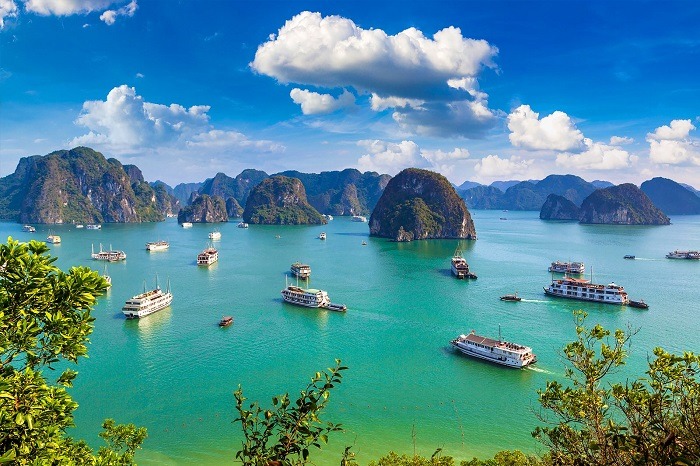
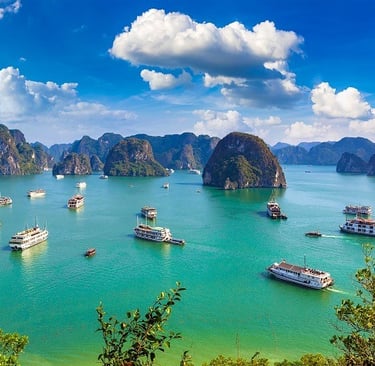
For the international traveler, the image of Vịnh Hạ Long (Descending Dragon Bay)—where thousands of dramatic, emerald limestone karsts erupt vertically from the calm, jade waters—is often the single most iconic, ethereal, and unforgettable scene of Việt Nam. Recognized by UNESCO as a World Heritage Site, this vast marine landscape is far more than a beautiful vista; it is a masterpiece of geological time, a crucible of ancient mythology, and the profound, enduring spiritual anchor for the maritime communities of the Northern Coast. The bay is defined by a unique philosophy of limestone silence—a natural chaos that has settled into an immense, quiet, and sacred order.
As specialists in Vietnamese heritage and profound cultural analysis at Vietnam Charm, we embark on an essential, detailed exploration to decode this serene wonder. We will meticulously analyze the geological mandate that sculpted the towering karsts, the spiritual mythology of the Dragon's defense that gives the bay its name, the economic resilience of the fishing and floating communities who call the bay home, and the profound way this unique seascape articulates the core values of endurance, spiritual continuity, and the deep, abiding respect for the power of the primal elements. Understanding Ha Long Bay is essential to grasping the emotional depth and the historical resilience of the Northern maritime soul.
1. The Geological Mandate: Karst, Water, and the Sculpture of Time
The visual splendor and unique topography of Ha Long Bay are the direct, dramatic result of a profound geological mandate—a relentless, slow-motion sculpture by water, limestone, and time, spanning hundreds of millions of years. This history dictates the bay's serene yet formidable character.
The foundation of the bay's landscape is limestone (karst), a rock type formed from ancient marine sediments deposited millions of years ago when the area was a deep, submerged ocean. The emergence of the karsts began millions of years later, when tectonic forces lifted the ocean floor, exposing the limestone to the atmosphere. The most crucial phase was the subsequent sculpting process, known as karst erosion. Over millennia, the tropical climate’s heavy rainfall, coupled with the persistent presence of the sea, dissolved the soluble limestone along its natural fissures. This process created the unique topography: deep, hollowed-out caves and the iconic, sheer-sided, vertical towers rising dramatically from the sea.
The key to the bay’s final aesthetic—its serene, submerged beauty—was the post-glacial sea-level rise. As the sea level increased, it flooded the lower portions of the karst valleys, leaving only the towering, isolated peaks visible above the water. This process transformed a dense, jagged mountain landscape into an aquatic labyrinth of islands, creating the visual drama of the vertical stone emerging from the calm, horizontal water. The bay thus stands as a living museum of geological time, where the immense scale of deep history is made immediately visible in the quiet strength of the stone.
2. The Spiritual Mythology: The Dragon’s Defense and the Birth of Sovereignty
The profound spiritual resonance of the bay is rooted in its founding mythology, which transcends simple folklore to serve as a powerful, ancient narrative of national defense and the birth of sovereignty. The name Ha Long—"Descending Dragon"—is a permanent, sacred declaration of this origin.
The central legend recounts that when Việt Nam was threatened by foreign invaders approaching from the sea, the Jade Emperor sent a Dragon Mother (Mẹ Rồng) and her children (Rồng Con) to assist the people. The dragons descended from heaven and spat out jewels and jade, which immediately transformed into the immense limestone islands and karsts now scattered across the bay. These stone fortresses shattered the invading fleet’s advance, securing the nation’s independence and establishing the bay as the ultimate, natural Great Wall of the Sea.
This mythology does not merely explain the bay's name; it imbues the entire landscape with spiritual sanctity and patriotic purpose. The islands are seen as the solidified, permanent remnants of the Dragon’s protective action, transforming the entire bay into a vast, sacred Temple of National Defense. This belief mandates a profound respect for the sea, as the environment is both beautiful and fiercely protective. The existence of the more isolated Bái Tử Long Bay ("Adoring Dragon's Children Bay") further reinforces the family narrative, symbolizing the children's reverence for their mother's primary, heroic defense. This mythology is a constant cultural anchor, asserting that the nation’s stability is eternally linked to the natural power of its landscape.
3. The Economic Resilience: Floating Villages and the Maritime Life
Beyond its geological and mythical beauty, Ha Long Bay is a dynamic environment that supports a unique culture of economic resilience—the intricate, self-contained life of the floating villages and the traditional fishing communities.
The people who traditionally inhabit the bay are masters of the maritime environment, living almost exclusively in floating villages (làng chài) nestled in sheltered, quiet coves between the massive karsts. Their homes are built on floating pontoons, allowing them to remain completely fluid, moving their entire village with the tides or the seasons, a profound adaptation that ensures their self-reliance. Their economy is built upon the fishing and aquaculture that thrive in the calm, nutrient-rich waters between the islands. The entire logistical system—from commerce to education—is water-based, utilizing simple boats as the primary means of transport.
This lifestyle fosters a strong sense of community interdependence and environmental literacy. The physical isolation of the islands necessitates that the communities are highly cohesive, relying on shared knowledge for fishing techniques, weather prediction, and navigation through the intricate labyrinth. The inhabitants possess an intimate, generations-long knowledge of the bay's geography, the location of the best fishing grounds, and the safe havens during storms—a knowledge that is the most crucial form of local, intangible heritage. The enduring life of these floating communities stands as a testament to the human capacity to thrive in a landscape defined by water and towering stone.
4. The Aesthetic Philosophy: Silence, Stillness, and the Contemplative Gaze
The unique aesthetic power of Ha Long Bay is rooted in its profound sense of silence, stillness, and the contemplative awe induced by the scale of the karsts. The landscape functions as a natural, grand space for meditation and spiritual reflection.
The immense scale of the islands forces a profound shift in the observer’s perspective. The towering, sheer stone walls dwarf the human presence, inducing a feeling of humility and awe that is central to many Eastern spiritual philosophies. The stillness of the water, which perfectly reflects the limestone towers, doubles the visual grandeur and enhances the sense of profound, quiet order within the perceived chaos. The bay's beauty is therefore not fleeting; it is meditative and enduring.
The countless caves and grottoes (hang động) found within the karsts—such as the famous Sửng Sốt (Surprise Cave)—add a layer of spiritual mystery. These vast, cathedral-like chambers, sculpted over geological time, function as natural temples, evoking a sense of the sublime and connecting the visitor to the deep, silent history of the Earth. The act of navigating the bay is a continuous act of contemplation—a deliberate pause in the high-speed rhythm of modern life, allowing the immensity of nature to dictate the observer's pace and psychological state.
5. Conclusion: The Permanent Testament to National Endurance
Ha Long Bay is the ultimate, enduring natural masterpiece and the geological and mythical heart of the Northern Coast. It is a landscape that transforms the slow, relentless forces of nature into a structure of dramatic, visible beauty. By analyzing the profound geological time scale that sculpted the karsts, the spiritual narrative of the Dragon's defense, the resilient life of the floating communities, and the aesthetic philosophy of limestone silence, the observer gains access to a core truth: the bay is far more than a scenic wonder. It is the permanent physical testimony to national endurance—a powerful, quiet declaration that asserts the cultural value of spiritual protection, deep respect for nature, and the belief that the strongest, most enduring legacies are those written into the silent, unyielding heart of the Earth.
We are on social media
Vietnam Charm belongs to Vietpearl Travel., JSC
Contact:
Email: info@vietnamcharm.top
© 2026. by Vietnam Charm. All rights reserved
Travel license number: 01-827/2020
Refund Policy