Giảm giá hấp dẫn cho tour du lịch!


THE ELITE CHAMBER: CA TRÙ — DECODING THE RHYTHMIC COMPLEXITY, INTELLECTUAL SOUL, AND POETIC DISCIPLINE OF VIETNAMESE SONG
More than performance: exploring Ca Trù as Việt Nam's ultimate intellectual and rhythmic art form, analyzing its intricate, demanding time signatures, its profound role as a dialogue between singer and scholar, and its embodiment of poetic discipline and spiritual refinement.
LOCAL EXPERIENCESHERITAGE & SPIRITTHE SOUNDSCAPEVIETNAMESE CULTURE
Tobin Nguyen
11/6/20256 phút đọc
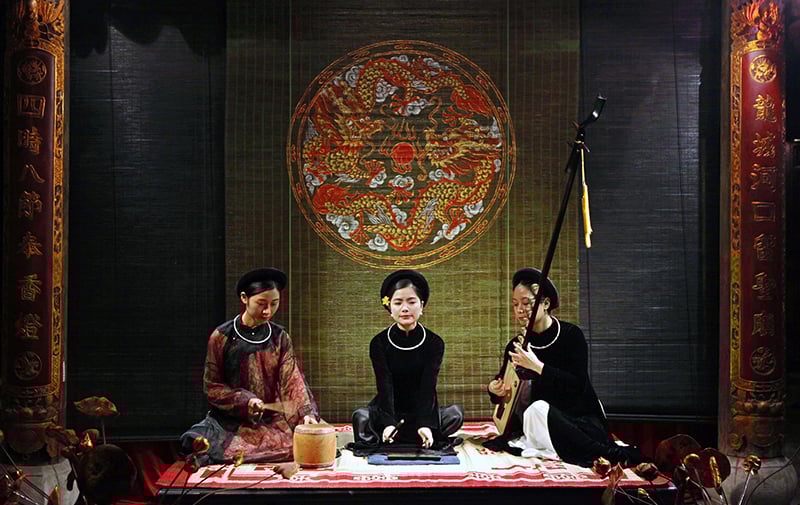
For the international musicologist, the literary critic, and the seeker of profound cultural complexity, Ca Trù (Ceremonial Singing or Chamber Music) presents itself as one of the most intellectually demanding and aesthetically refined musical traditions in the world. Recognized by UNESCO as an Intangible Cultural Heritage in Need of Urgent Safeguarding in 2009, Ca Trù is far more than a simple folk song; it is a masterpiece of rhythmic sophistication, poetic discipline, and intimate artistic dialogue. Its unique structure—involving a female singer, a unique lute, and a sophisticated time-keeper—transcends the role of mere entertainment, functioning instead as a ritualistic performance that demands deep concentration, intellectual wit, and spiritual grace from both the performer and the highly discerning audience.
As specialists in Vietnamese heritage and profound cultural analysis at Vietnam Charm, we embark on an essential, detailed exploration to decode this elite chamber art. We will meticulously analyze the structural genius of its three essential performance roles, the complex rhythmic mandate that distinguishes it from all other Vietnamese music, the intellectual and poetic tradition embedded in its demanding repertoire, and the profound way Ca Trù articulates the core values of artistic discipline, literary refinement, and the quiet pursuit of spiritual perfection. Understanding Ca Trù is essential to grasping the core aesthetic restraint and the high value placed on intellectual mastery in Northern Vietnamese culture.
1. The Historical Genesis and Social Mandate: From Ritual to Elite Salons
The genesis and enduring exclusivity of Ca Trù are rooted in a complex historical trajectory that elevated it from a simple ritual performance to the most revered musical art form of the Northern intellectual elite, demanding specific venues and patrons.
The earliest origins of Ca Trù are traced back to the cửa đình (communal house entrance) and hát cửa quyền (singing before the authorities), where it was initially performed as a ritualistic, formalized singing dedicated to the local Thành Hoàng (Tutelary God) or high-ranking mandarins. The music was a form of structured offering, used to invoke blessings, secure protection, and entertain the powerful. This early connection to spiritual and political authority immediately established Ca Trù as an art form demanding solemnity and precision.
The art form reached its apex during the imperial and post-imperial era as the preferred, sophisticated entertainment of the scholarly and intellectual elite (giới trí thức) in Northern Việt Nam. The performance shifted from the public spaces of the Đình to the intimate, contemplative setting of the Ca Quán (Singing Salon or Chamber). These salons were not merely entertainment venues; they were intellectual laboratories where scholars, poets, and discerning patrons gathered to appreciate the music's complexity, its demanding poetic repertoire, and the mastery of the singer. The art was preserved and refined by this elite patronage, ensuring its sophisticated structure and intellectual demands remained intact, physically isolating it from the broader, simpler folk music traditions.
2. The Structural Genius: The Trinity of Performance and Rhythmic Complexity
The unique structural genius of Ca Trù lies in its absolute reliance on an intimate, ritualistic trinity of performers, each fulfilling a precise, non-negotiable artistic role that dictates the rhythmic and melodic complexity of the entire piece.
The performance requires three essential actors:
The Ca Nữ (Female Singer): The central figure and absolute artistic focus of the performance. The singer uses the most demanding vocal technique in Vietnamese music—a highly controlled, delicate tremolo (giọng rung) and a unique method of breath control that allows for the sustainment of notes and the precise articulation of the poetic text. The singer's instrument is the Phách (Bamboo Clappers)—a small box of bamboo pieces that she strikes with two sticks, setting the fundamental rhythm and providing self-accompaniment. The singer is the custodian of the melody (giai điệu) and the poetic content.
The Đàn Đáy Player (Male Lutenist): The accompanying instrumentalist, playing the unique Đàn Đáy (Three-stringed Lute). This instrument has a long, slender neck, an unusual trapezoidal soundbox, and often no frets, giving it a distinct, deep, and haunting tone. The Đàn Đáy does not simply follow the singer; it performs a sophisticated counter-melody and ornamentation, improvising and reacting to the singer's vocal line, creating a complex, intimate musical conversation.
The Quan Viên (The Time Keeper/Observer): The third, most unique, and most crucial actor is the educated, discerning audience member—often the patron or the most knowledgeable scholar—who plays the Trống Chầu (Small Drum). The Trống Chầu is the sole source of critical and rhythmic judgment. The Quan Viên uses specific drum strokes—tiếng chát (praise) or tiếng buông (critique)—to mark the singer's excellence, her emotional delivery, and her adherence to the demanding rhythm. The drum acts as a continuous, audible critical feedback loop, demanding perfection and confirming the mastery of the performance.
This trinity—Singer, Accompanist, and Judge—creates an intensely concentrated artistic environment, where the rhythm is fractured and complex. The music often adheres to non-standard, demanding time signatures (like 5/4 or 7/4) and utilizes intricate, subtle rhythmic variations (phách) that require both performers and listeners to possess immense concentration and knowledge to follow the delicate, shifting pulse.
3. The Poetic Mandate: Literary Discipline and the Elite Repertoire
The artistic and intellectual integrity of Ca Trù is entirely dependent on its demanding poetic repertoire—a body of complex, formalized literary forms that are structured to challenge and elevate both the singer and the audience.
The repertoire is vast, but the majority of the content utilizes highly structured poetic forms that impose strict rules on meter, rhyme, and linguistic register, such as Hát Nói (Singing Dialogue) and Tứ Tuyệt (Four-line Quatrains). The texts are often derived from classical Chinese and Nôm literature, focusing on themes of spiritual contemplation, scholarly frustration, appreciation of nature, and philosophical reflection on destiny and time. The linguistic and literary standard is exceptionally high, demanding that the singer not merely sing the words, but interpret and embody the profound philosophical meaning within the text.
The Hát Nói form is the pinnacle of this poetic discipline. It combines fixed metrical lines with sections of improvisational "speaking" or "dialogue," allowing the singer to showcase their vocal mastery, rhythmic control, and deep literary knowledge simultaneously. The performance is fundamentally an intellectual challenge; the appreciation of Ca Trù requires the audience to possess a mastery of the same literary forms and philosophical contexts, ensuring that the art remains an exclusive, elite form of communication and mutual intellectual admiration between the performer and the patron. The complex music is the vehicle; the refined poetic text is the soul.
4. The Spiritual and Emotional Function: Contemplation and Restraint
The profound emotional function of Ca Trù is rooted in its ability to foster spiritual contemplation and disciplined emotional restraint, serving as a quiet, essential counterpoint to the boisterous public culture of the village.
The art is fundamentally intimate and atmospheric. It is not designed to evoke immediate, explosive public emotion, but rather a subtle, internalized, and controlled sense of profound sadness, philosophical reflection, or quiet appreciation. The unique vocal style—delicate, high-pitched, and filled with micro-tonal shifts—is deliberately restrained, forcing the listener to lean in and concentrate, drawing them into a shared space of stillness and intellectual communion. The atmosphere of the Ca Quán (Chamber) was often one of solemn, concentrated focus, where the outside chaos of the street was entirely neutralized by the rhythmic and melodic discipline of the performance.
In its original ritualistic context, the music acted as a form of high-level spiritual mediation. By adhering to the complex, difficult rhythmic mandate, the singers and performers were engaging in a profound act of self-discipline, offering their precision and focus as a spiritual tribute. The music, therefore, acted as a clean, moral conduit for communication with the heavens and the ancestral spirits, ensuring the purity and sincerity of the offering.
5. Conclusion: The Permanent Tone of Intellectual Refinement
Ca Trù is the ultimate, enduring testament to the Vietnamese spirit's capacity for high intellectual discipline, rhythmic mastery, and profound artistic sophistication. It is an art form that transforms complex, stylized poetry into a demanding, ritualistic musical performance. By analyzing the structural genius of its performance trinity, the complex rhythmic mandate that defines its unique sound, the high literary standards of its repertoire, and its historical role as the chosen art of the intellectual elite, the observer gains access to a core truth: Ca Trù is far more than music. It is the permanent, unwavering tone of intellectual refinement—a demanding artistic statement that asserts the high cultural value of discipline, poetic complexity, and the quiet, collective pursuit of spiritual and aesthetic perfection. The delicate, controlled sound of the Ca Nữ's voice remains the most profound whisper of the Northern Vietnamese intellectual soul.
We are on social media
Vietnam Charm belongs to Vietpearl Travel., JSC
Contact:
Email: info@vietnamcharm.top
© 2026. by Vietnam Charm. All rights reserved
Travel license number: 01-827/2020
Refund Policy