Giảm giá hấp dẫn cho tour du lịch!



THE ENDURING KILN: BÁT TRÀNG POTTERY — DECODING THE CRAFTSMANSHIP, COMMERCIAL HISTORY, AND THE LEGACY OF VIETNAMESE CERAMICS
More than clay: exploring Bát Tràng as Việt Nam’s ultimate artistic crucible, analyzing the enduring technical ingenuity, the meticulous ritual of the kiln, and its profound role as the historical anchor of the nation's ceramic trade and domestic aesthetic.
VIETNAMESE CULTUREGASTRONOMY & TRADITIONLOCAL EXPERIENCES
Tobin Nguyen
11/6/20256 phút đọc
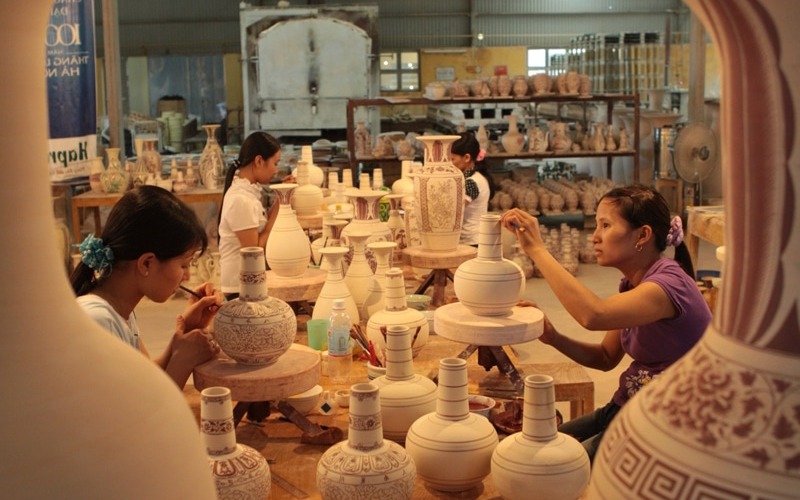
For the cultural historian and the artisan, the name Bát Tràng—a venerable village nestled beside the Red River near Hà Nội—does not merely denote a geographical location; it signifies the unwavering historical and artistic center of Vietnamese ceramics. This village is the oldest continuously operating craft village in the nation, its legacy stretching back over seven centuries. Bát Tràng pottery is far more than a collection of domestic ware or religious vessels; it is a tangible chronicle of Vietnamese ingenuity, a product defined by its robust utility, its distinctive glazes, and its profound spiritual connection to the earth and the fire. The creation of a Bát Tràng piece is a meticulous, generations-long ritual that embodies artistic mastery, commercial pragmatism, and unyielding patience.
As specialists in Vietnamese heritage and profound cultural analysis at Vietnam Charm, we embark on an essential, detailed exploration to decode this enduring art. We will meticulously analyze the historical mandate that established Bát Tràng as a commercial powerhouse, the technical ingenuity of its distinctive glazes and firing methods, the spiritual geometry embedded in its forms, and the profound role this silent art plays in articulating the aesthetic tradition, commercial resilience, and material memory of the Northern Vietnamese people. Understanding Bát Tràng is essential to grasping the core values of durability, artistic modesty, and the enduring connection between craft and community.
1. The Historical Mandate: The Red River and the Genesis of Commercial Power
The genesis and enduring commercial supremacy of Bát Tràng are directly tied to its strategic geographical position on the banks of the Red River (Sông Hồng) and the early imperial need for standardized, high-quality ceramic goods.
Bát Tràng's location was an ultimate logistical advantage. The Red River provided the essential artery for commerce, allowing finished goods to be transported easily to the capital of Thăng Long (Hà Nội) and, crucially, downriver to the sea for export to Southeast Asian and East Asian markets. This river connection transformed Bát Tràng from a local workshop into an international commercial hub, exporting its wares across the region for centuries. The primary raw material—the rich, fine white clay essential for high-quality ceramics—was sourced from the nearby riverbanks, ensuring a continuous, reliable supply that solidified the village’s competitive advantage.
The village's rise was formalized by the Imperial Court. Recognizing the quality and utility of Bát Tràng's products, the court often patronized the village for official vessels, ritual wares, and gifts, elevating the status of its artisans and ensuring a stable demand for its high-quality goods. This imperial endorsement cemented Bát Tràng’s reputation as the definitive source of Vietnamese ceramics. This continuous, generations-long trade fostered a culture defined by commercial pragmatism, high-volume production, and a disciplined commitment to utilitarian quality. The historical mandate of Bát Tràng was to produce ceramics that were both beautiful and fundamentally functional.
2. The Technical Ingenuity: Glazes, Fire, and the Alchemy of the Earth
The artistic distinction of Bát Tràng pottery is rooted in its technical ingenuity, particularly its mastery of specific, unique Vietnamese glazes and its sophisticated firing processes. The creation of these pieces is a controlled act of chemical and thermal alchemy.
While early Bát Tràng pieces drew influence from Chinese ceramic traditions, the local artisans rapidly developed indigenous glazes that gave their work a distinct Vietnamese identity. The most famous of these is the men rạn (crackle glaze), a technically demanding glaze that produces a controlled network of minute cracks across the surface. This effect, achieved through precise temperature control and cooling rates, transforms a functional piece into a unique, living work of art, reflecting the aesthetic appreciation for things that are perfectly imperfect and naturally aged. Another signature is the màu nâu da lươn (eel-skin brown glaze), a rich, dark hue prized for its depth and solemnity, often used on ritual vessels and symbolic objects.
The mastery of the kiln (lò gốm) is equally critical. Bát Tràng utilized large, sophisticated kilns, often of the lò bầu (gourd-shaped kiln) type. The firing process is the most unpredictable and spiritual step in the entire ritual. It demands the collective knowledge of the entire community, as the placement of the pottery inside the kiln and the precise, manual feeding of the fire (often wood or coal) for hours determines the final color, glaze quality, and structural integrity of the pieces. The firing is not just a thermal process; it is a communal ritual of patience and hope, as the long, anxious wait for the kiln to cool is often accompanied by prayers for a successful outcome. The piece that emerges from the fire is seen as a collaboration between the artisan's skill and the spiritual will of the fire itself.
3. The Spiritual Geometry: Form, Function, and the Altar
Bát Tràng pottery is deeply integrated into the spiritual and domestic life of the nation, with specific forms designed not merely for aesthetics but for essential ritualistic and familial functions. The pottery reflects a spiritual geometry that anchors the home.
The village produced a vast array of domestic goods, but its most profound contributions are its ritual vessels. Pieces like the hương án (incense burners), the large, decorated lọ hoa (flower vases), and the miniature teacups used on the Bàn Thờ (Ancestral Altar) are foundational to Vietnamese spiritual practice. These vessels are crafted with a deliberate modesty of form, ensuring that the piece enhances the ritual without overpowering it. The designs often incorporate classical Vietnamese motifs—stylized dragons, phoenixes, cranes, and lotus flowers—symbols of prosperity, longevity, and purity. The vessels are designed to be durable, reflecting the enduring nature of the family and the continuity of the ancestral bond.
In the domestic sphere, the functional durability of Bát Tràng pottery is its most prized asset. The thick, robust clay is highly resistant to heat and daily wear, making the cups, bowls, and storage jars essential to the agrarian household. This emphasis on utilitarian resilience reflects a cultural appreciation for things that are sturdy, honest, and long-lasting—qualities valued both in ceramics and in human character. The beauty of Bát Tràng is thus defined by its humble functionality.
4. The Commercial Resilience: Adaptation and the Global Market
The endurance of Bát Tràng as a continuous craft village for over seven centuries is a testament to its profound commercial resilience and its ability to continually adapt its products and processes to meet evolving demand.
The village has survived imperial shifts, colonial disruptions, and periods of war by mastering the art of adaptable production. When the export market demanded specific shapes or glazes, Bát Tràng artisans learned to incorporate them while retaining the core quality of the clay and the strength of the firing. When the internal domestic market surged, the village shifted production to high-volume utilitarian items. This commercial genius ensures that Bát Tràng is not merely a historical relic; it is a dynamic, living industry that constantly negotiates the space between strict tradition and modern economic necessity.
Today, the challenge is defined by mass production and standardization. While the traditional wood-fired kilns still exist, much of the production utilizes modern kilns for efficiency. The core challenge for the village is preserving the high-quality, meticulously hand-painted, and individually fired pieces that represent its intangible heritage, while continuing to produce the accessible, functional ware that sustains its economy. The preservation effort is focused on documenting the specific, delicate techniques of the traditional glazes and ensuring that the knowledge of the centuries-old firing process is transferred to the next generation of artisans. The continuation of the craft is a continuous act of honoring the ancestral founders who first mastered the local earth and fire.
5. Conclusion: The Silent, Earthen Anchor
Bát Tràng pottery is the enduring, silent testament to the material and artistic resilience of the Northern Vietnamese spirit. It is an art form that transforms the simple dust of the Red River earth into complex, durable vessels that anchor the nation’s homes and altars. By analyzing the strategic brilliance of its riverbank location, the technical mastery of its signature glazes, the spiritual geometry of its forms, and the commercial pragmatism that ensures its survival, the observer gains access to a profound truth: Bát Tràng is more than a craft village. It is the earthen heart of Vietnamese material culture—a continuous, enduring source of artistic excellence that embodies the core values of functional beauty, patience, and the powerful, humbling connection between human skill and the transformative power of fire.
We are on social media
Vietnam Charm belongs to Vietpearl Travel., JSC
Contact:
Email: info@vietnamcharm.top
© 2026. by Vietnam Charm. All rights reserved
Travel license number: 01-827/2020
Refund Policy