Giảm giá hấp dẫn cho tour du lịch!


THE ENDURING KILN: BÁT TRÀNG POTTERY — DECODING THE CRAFTSMANSHIP, COMMERCIAL HISTORY, AND THE LEGACY OF VIETNAMESE CERAMICS
More than clay: exploring Bát Tràng as Việt Nam’s ultimate artistic crucible, analyzing the enduring technical ingenuity, the meticulous ritual of the kiln, and its profound role as the historical anchor of the nation's ceramic trade and domestic aesthetic.
VIETNAMESE CULTURELOCAL EXPERIENCESTHE SOUNDSCAPE
Tobin Nguyen
11/6/20255 phút đọc
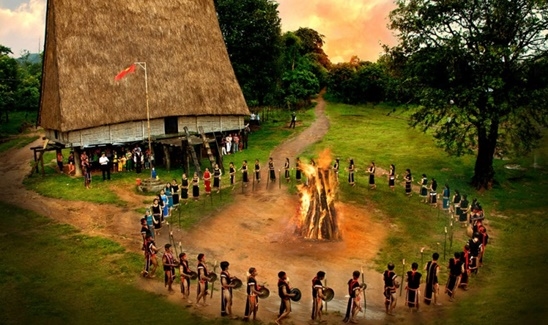
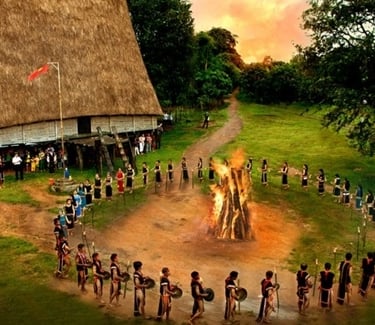
For the international musicologist, the anthropologist, and the seeker of unmediated cultural power, the Culture of the Gong (Văn hóa Cồng Chiêng)—unique to the ethnic groups (Gia Rai, Ba Na, Ê Đê, Xê Đăng) of Việt Nam’s rugged Central Highlands (Tây Nguyên)—offers one of the world's most ancient, powerful, and structurally complex musical experiences. Recognized by UNESCO as a Masterpiece of the Oral and Intangible Heritage of Humanity in 2005, the gong is far more than a musical instrument; it is a sacred entity—a repository of immense spiritual power, generational wealth, and collective memory. The sound of the gongs is not mere music; it is the compulsory, ancient language used to communicate with the Giàng (Sky Gods), the Ancestors, and the powerful spirits of the mountain and the water, defining the rhythm and purpose of communal life.
As specialists in Vietnamese heritage and profound cultural analysis at Vietnam Charm, we embark on an essential, detailed exploration to decode this spiritual soundscape. We will meticulously analyze the cosmological hierarchy that dictates the gongs' sacred material value, the structural genius of the interlocking (hocket) performance technique, the ritualistic necessity of the Gong House (Nhà Rông), and the profound way this powerful sonic tradition articulates the core values of collectivism, spiritual discipline, and the deep, abiding connection between the Highland people and their majestic, challenging environment. Understanding the gong culture is essential to grasping the emotional honesty, collective spirit, and spiritual rigor of the Central Highlands soul.
1. The Cosmological Hierarchy: Gongs as Spiritual Currency and Material Wealth
The value and function of the gongs (cồng - gongs with a boss; chiêng - flat gongs) are rooted in a deep cosmological hierarchy that elevates them far beyond their material composition, transforming them into the ultimate form of spiritual and physical wealth.
In the belief systems of the Central Highlands, gongs are considered living, sacred entities—vessels that house powerful, protective spirits. They are often classified by age, size, and spiritual potency, and are given names related to the family or the ancestor they represent. The most ancient, large, and spiritually potent gongs are the most highly revered, commanding immense respect and often being treated with the same ritualistic care as an elder, receiving daily offerings and blessings. The creation of a gong, typically forged from bronze, involves complex rituals to invite the spirits into the metal.
This spiritual value translates directly into their unprecedented material wealth. Historically, gongs were the highest form of transactional currency—used to pay for dowries, settle major debts, purchase valuable livestock (like the water buffalo used for sacrifice), and compensate victims of grave injustice. A family’s social status, wealth, and power were directly and visibly measured by the number, size, and age of the gong sets they possessed. The collective ownership of the grandest gong sets by the village and their prominent display within the Nhà Rông (Communal House) is the ultimate, non-verbal declaration of the community's collective prosperity and spiritual authority. The gong is thus the physical embodiment of the tribe's accumulated spiritual and economic capital.
2. The Structural Genius: Interlocking (Hocket) and the Collective Sound
The most profound, unique technical achievement of the Central Highlands Gong Culture is its complete reliance on the Interlocking Technique (Hocketing), a structural genius that fundamentally codifies the value of collectivism within the musical performance.
Unlike Western orchestration, where a single musician plays a full melody, in the gong ensemble, the melody is never played by a single person. Instead, a typical piece is fragmented into its constituent notes, and each musician in the circle is responsible for playing only one or two specific, assigned notes in a precise rhythmic sequence. The full, complex melody is created only when all musicians strike their assigned notes in the correct, perfect temporal sequence. The music is thus collective and interdependent. If one musician fails to strike their single note at the exact right moment, the entire melodic structure collapses.
This technique is a profound sociological mandate. It physically and audibly enforces the supreme value of đoàn kết (collective unity) and disciplined contribution. The musical performance is a direct metaphor for the functioning of the society: no single individual can achieve the collective goal (the melody); success demands that every person subordinate their individual desire for expression to the precise, disciplined execution of their small, assigned part. The resulting sound is a complex, dense, and emotionally resonant tapestry—the literal, audible representation of the community's cohesive, singular soul.
3. The Ritual Axis: The Gong as Spiritual Mediator in the Lễ Hội
The gong's true purpose is realized during the Lễ Hội (Communal Festival), where it functions as the non-negotiable spiritual mediator between the mortal world and the spiritual hierarchy—the Ancestors, the Mountain Spirits, and the ultimate Giàng (Sky Gods).
The festivals—such as the Lễ Bỏ Mả (Leaving the Tomb Ritual), the Lễ Cúng Nước (Water Worship), or the Lễ Hội Mùa Màng (Harvest Festival)—are moments of intense spiritual vulnerability and profound social communion. The music is the essential catalyst that transforms the ordinary space into a sacred one. The powerful, penetrating sound of the gongs serves to summon the spirits, announcing the beginning of the ceremony and inviting the celestial entities to descend and participate in the ritual. The sound is often sustained for hours or days, maintaining the necessary spiritual energy (Khí) throughout the complex ritual sequence.
The gongs' sound also serves a vital psychological function. The immense, complex soundscape, often accompanied by the consumption of Rượu Cần (rice wine consumed communally through long straws), induces a state of collective ecstasy or spiritual trance. This shared psychological state is necessary for the community to shed the burdens of daily life, address collective trauma, and achieve spiritual renewal. The music guides the dancers, directs the sacrificial rituals, and provides the continuous, rhythmic backdrop for the collective spiritual catharsis. Without the sound of the gongs, the ritual cannot achieve its purpose—the spiritual contract between Man and Giàng would remain broken.
4. The Aesthetic and Emotional Language: Earth, Power, and Emotional Honesty
The aesthetic and emotional language of gong music is characterized by its Earth-centered power, its density, and its direct, unvarnished emotional honesty, reflecting the rugged environment and spiritual clarity of the Highlands.
The sound is naturally profoundly dense and resonant, emphasizing low-frequency, deep vibrations that feel rooted in the earth itself. The music is often performed in a pentatonic scale, giving it a haunting, ancient, and deeply spiritual quality that is immediately recognizable. Unlike the refined, emotionally restrained music of the court (Nhã Nhạc), gong music is emotionally direct and intense. It communicates grief, triumph, fear, and joy with an unvarnished, primal force, allowing the entire community to collectively process and express their core emotional truths through the sheer, physical power of the sound. The music is a form of collective therapy.
The gong culture also dictates the artistic geography of the village. The gongs are often stored and displayed in the Nhà Rông, the village's vertical spiritual axis, affirming that this collective music is the ultimate statement of communal identity. The skill of the gong player is highly revered, but it is a communal skill—a testament to the individual's ability to perfectly execute their part for the collective whole. The preservation of the unique tuning and the immense, complex repertoire of rhythms is the highest form of intangible heritage, passed down orally and through disciplined practice from master to apprentice.
5. Conclusion: The Permanent Resonance of the Collective Soul
The Gong Culture of the Central Highlands is the ultimate, enduring acoustic testament to the discipline, spiritual depth, and fierce collectivism of its ethnic groups. It is an art form that transforms heavy metal into a sacred, living spiritual medium. By analyzing the cosmological value that renders gongs the highest form of wealth, the structural genius of the interlocking performance technique, the ritualistic necessity of the Lễ Hội, and the dense, Earth-centered emotional honesty of its sound, the observer gains access to a core truth: the gong is far more than an instrument. It is the permanent, resonant soul of the collective—a sound that demands disciplined unity, spiritual reverence, and the profound, shared belief that the community's fate is eternally intertwined with the powerful, unyielding spirits of the mountain and the sky.
We are on social media
Vietnam Charm belongs to Vietpearl Travel., JSC
Contact:
Email: info@vietnamcharm.top
© 2026. by Vietnam Charm. All rights reserved
Travel license number: 01-827/2020
Refund Policy