Giảm giá hấp dẫn cho tour du lịch!



THE FORGOTTEN CAPITAL OF THE LÊ AND THE GHOST RELICS OF THE EARLY DYNASTY
A tale of two empires: One is the celebrated legend of the Dinh, the other is the strategic, blood-stained transition of the Early Lê. Discover the hidden tombs, the ancient sutra pillars, and the "Second Capital" sites that lie buried beneath the rice fields of Hoa Lư.
NINH BINHLOCAL EXPERIENCES
Tobin Nguyen
1/23/20263 phút đọc
Most travelers think they have seen the "Capital" once they visit the two main temples in Hoa Lư. But the real Hoa Lư—the living, breathing administrative heart of the 10th century—extended far beyond those red-lacquered gates. While the Dinh Dynasty gave the nation its name, it was the Early Lê Dynasty (Nhà Tiền Lê) that gave it its survival. As a journalist digging through the layers of Ninh Bình, I’ve found that the most haunting stories aren't in the restored temples, but in the "Ghost Relics" scattered through the villages—places where the stones are original, the air is heavy with unsolved mysteries, and the tourists are non-existent.
1. The Sutra Pillar of Nhất Trụ: 1,000 Years of Silent Prayer
Just a stone's throw from the main tourist path sits the Nhất Trụ Pagoda, a temple that holds one of Vietnam's most significant National Treasures: a stone sutra pillar from the year 973. Unlike the reconstructed temples nearby, this pillar is a raw, physical survivor of the 10th century.
Carved from monolithic bluestone, the octagonal pillar is inscribed with Buddhist sutras meant to protect the kingdom. Standing before it, you can feel the "Mineral Weight" of the past. This isn't a replica; these are the actual words that King Đinh Liễn (the son of the Emperor) ordered to be carved to repent for his sins. It is a "Visual Slap" of authenticity—a cold, hard piece of the 10th century that has stood in the same spot while empires rose and fell around it.
2. The Grave of King Lê Đại Hành: A Soldier’s Rest
While the temples are for the spirit, the tombs are for the man. Tucked away at the foot of Mã Yên Mountain is the actual burial site of King Lê Hoàn (Lê Đại Hành). Most people climb the mountain to see the panoramic view, but they walk right past the humble stone enclosure at the base.
The tomb is strikingly simple for a man who defeated the Song Dynasty and the Champa Kingdom. It is a place of absolute, stoic silence. There are no golden statues here, only the gray limestone and the sound of the wind. This is where the "Dual Heritage" feels most intimate—the King who used the mountains to defend his land is now eternally cradled by those same mountains. Standing here, you realize that the Early Lê kings weren't about vanity; they were about utility and survival.
3. The Palace Foundations: The Invisible City
Near the current temples, archaeologists have uncovered the vast foundations of the original Forbidden City (Cấm Thành). For the "Insider," this is the most exciting part of Hoa Lư. Beneath the layers of silt and rice paddies lie thousands of "Phoenix" and "Lotus" roof tiles, intricate drainage systems, and the post-holes of massive ironwood columns.
These ruins tell a story of a "Floating City" of wood and lacquer that once stood where the cows now graze. It was a capital that looked toward the mountains for its walls and the rivers for its roads. When you look out over the fields near the Sao Khê River, you have to use your imagination to see the "Shadow Capital"—the bustling markets, the military barracks, and the diplomatic halls that once made this quiet valley the most important coordinates in Southeast Asia.
4. The Temple of Princess Phất Kim: A Tragedy in Stone
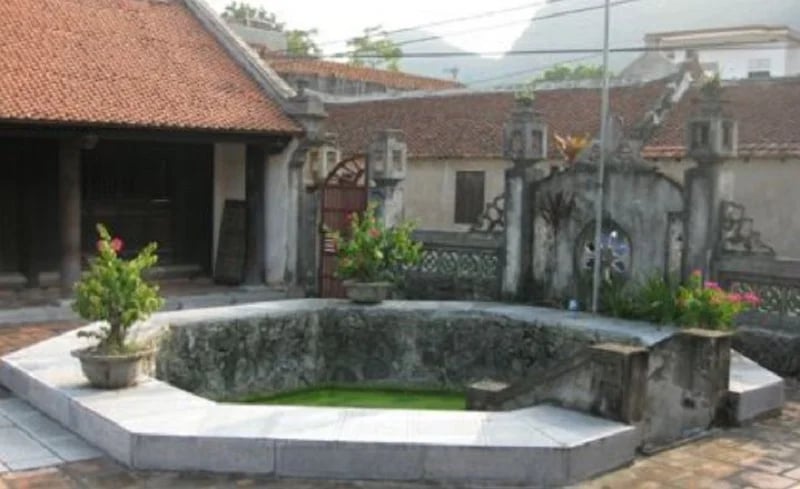
Every empire has its tragedies, and in Hoa Lư, that story belongs to Princess Phất Kim. Her temple is a quiet, mournful sanctuary dedicated to the daughter of King Đinh who suffered a life of political betrayal and eventually took her own life in a well at the Nhất Trụ Pagoda.
Her temple is small, often overlooked, and filled with a lingering sadness. It serves as a reminder that the "Great Viet" was built on personal sacrifice as much as military victory. It is the "Other Side" of the heroic narrative—a place to reflect on the human cost of building a nation. For the traveler who wants to feel the true pulse of history, a few minutes of silence in this temple is worth more than a thousand photos of the larger monuments.
The Journalist's Epilogue:
The Forgotten Capital of the Lê is a journey into the "Underground History" of Ninh Bình. it is a reminder that the most durable parts of a civilization aren't the things we build, but the places we choose to stand our ground.
Next time you visit Hoa Lư, don't just follow the crowd to the main altars. Look for the stone pillar, find the humble tomb at the base of the mountain, and listen for the echoes of the "Invisible City." The Early Lê kings may have vanished, but their strategic soul is still etched into every grain of Ninh Bình limestone.
We are on social media
Vietnam Charm belongs to Vietpearl Travel., JSC
Contact:
Email: info@vietnamcharm.top
© 2026. by Vietnam Charm. All rights reserved
Travel license number: 01-827/2020
Refund Policy