Giảm giá hấp dẫn cho tour du lịch!


THE GENTLE PATH: VIETNAMESE BUDDHISM — DECODING THE SYNcretic SOUL, SOCIAL COMPASSION, AND THE UNWAVERING ANCHOR OF THE NATIONAL PSYCHE
More than faith: exploring Đạo Phật Việt Nam (Vietnamese Buddhism) as the nation's spiritual bedrock, analyzing its profound, unyielding syncretic integration with Ancestral Worship and Folk Beliefs, its ethical mandate of Từ Bi (Compassion) in daily life, and its ultimate role as the guarantor of cosmic tolerance and inner stability.
VIETNAMESE CULTURELOCAL EXPERIENCESTHE COSMIC TOLERANCE
Tobin Nguyen
11/8/20256 phút đọc
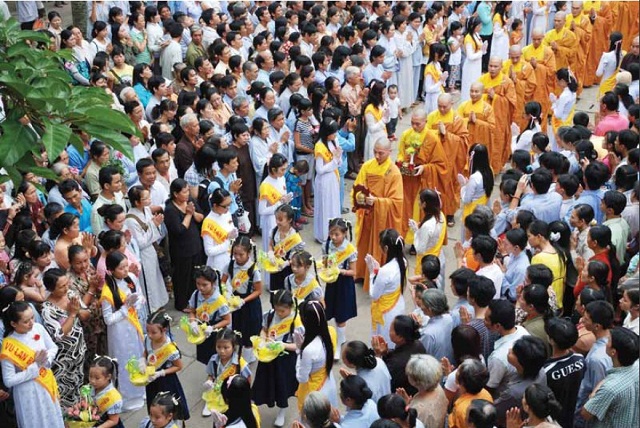
For the international theologian, the sociologist of ethics, and the seeker of the nation’s deepest spiritual anchor, Vietnamese Buddhism is not a rigid, imported doctrine; it is the nation’s most pervasive, compassionate, and fluid spiritual philosophy—a continuous, gentle presence that has seamlessly absorbed and harmonized the core belief systems of the populace for two millennia. Buddhism in Việt Nam asserts an ultimate, profound truth: the path to enlightenment is practical, immediate, and accessible—it resides not in intellectual dogma, but in the disciplined cultivation of Từ Bi (Compassion), the reverence for the ancestors, and the continuous practice of Tâm (Mind) cultivation. The Chùa (Pagoda), therefore, is not merely a place of worship; it is the ultimate sanctuary of social unity and spiritual tolerance, where the chaotic energy of the external world yields to the quiet, persistent rhythm of inner peace.
As specialists in Vietnamese heritage and profound cultural analysis at Vietnam Charm, we embark on an essential, detailed exploration to decode this lyrical, flowing spiritual philosophy. We will meticulously analyze the historical mandate that forged the unique Tam Giáo Đồng Nguyên (Three Religions, One Source) syncretism, the philosophical centrality of Từ Bi as the moral engine of the faith, the architectural genius of the Chùa as the ultimate communal and spiritual axis, and the profound way this gentle path articulates the core national values of compassionate pragmatism, spiritual tolerance, and the unyielding stability of the inner self. Understanding Vietnamese Buddhism is essential to grasping the emotional depth and the moral clarity that anchors the modern Vietnamese soul.
1. The Historical Mandate: Syncretism and the Tam Giáo Đồng Nguyên Covenant
The foundation of Vietnamese Buddhism is defined by a unique, historical syncretic mandate: the early and continuous integration with existing indigenous beliefs and the seamless co-existence with Confucianism and Taoism under the philosophy of Tam Giáo Đồng Nguyên (Three Religions, One Source). This fluidity is the ultimate source of its resilience.
Integration with Ancestral Worship: Unlike many national forms of Buddhism, the Vietnamese Pagoda rarely exists in spiritual isolation. It is perpetually integrated with the Tín Ngưỡng Thờ Cúng Tổ Tiên (Ancestral Worship). The Buddha statue (symbolizing the universal ideal of enlightenment) often shares the sacred space with the hương án (altar) dedicated to the local Thành Hoàng (Tutelary God) or the tablets of the communal ancestors. This structural integration asserts a fundamental truth: spiritual practice is inseparable from familial and communal duty. The pursuit of individual salvation must be harmonized with the non-negotiable duty to honor the past and the family lineage. The Pagoda thus became the ultimate spiritual melting pot, affirming that the various paths to moral clarity and cosmic understanding are simply different expressions of the same ultimate truth.
Zen (Thiền Tông) and Imperial Rule: The early embrace of Thiền Tông (Zen Buddhism), particularly during the powerful Lý and Trần Dynasties, provided a crucial political and psychological anchor. Zen, with its focus on meditation, self-mastery, and the immediate experience of enlightenment, resonated deeply with the Vietnamese spirit. Emperors became Zen masters (notably Trần Nhân Tông who founded the Trúc Lâm Zen School), asserting that political leadership and moral wisdom were inseparable from disciplined introspection. This historical precedent consecrated inner stillness (tĩnh tâm) as an essential national virtue, capable of guiding the nation through turbulent times.
2. The Philosophical Core: Từ Bi, Tạo Phước, and the Practical Path to Merit
The philosophical and ethical engine of Vietnamese Buddhism is the absolute centrality of Từ Bi (Compassion)—the active, practical, and pervasive empathy for all sentient beings—which transforms spiritual practice into a non-stop series of Tạo Phước (Merit-Making) acts in daily life.
Compassion in Action: Từ Bi is not a passive emotion; it is a mandate for active, selfless social engagement. The ethical framework emphasizes the immediate alleviation of suffering, transforming the lay practitioner's life into a continuous effort to accumulate phước đức (spiritual merit). This manifests in visible, practical actions: charity (bố thí), communal service, the maintenance of the pagoda, and adherence to Không Sát Sinh (Non-Violence), most visibly expressed through ăn chay (temporary or continuous veganism). The accumulation of merit, driven by compassion, is understood to be the only reliable way to improve one's Nghiệp (Karma) and secure a better future (or rebirth).
Pragmatism and Accessibility: Vietnamese Buddhism is profoundly pragmatic and accessible. Unlike highly monastic or academic forms of Buddhism, the focus is on the immediate spiritual needs of the common person. The sermons, rituals, and teachings are often simple, direct, and universally applicable, emphasizing the moral conduct of the family and community over complex philosophical debate. The spiritual reward is not abstract; it is tangible: improved fortune, familial stability, and reduced suffering in this life. This practical focus has ensured the faith's deep, enduring resonance across all social strata.
3. The Architectural Genius: The Pagoda as the Sanctuary of Social Unity
The Chùa (Pagoda) serves as the ultimate architectural genius of social cohesion and spiritual tolerance, functioning as the unwavering spiritual axis and communal heart of the village or urban district.
The Pagoda as Social Hub: The Pagoda's function extends far beyond spiritual ceremony. Historically and presently, it serves as a crucial social and logistical hub: a place of refuge during floods or conflict, a communal center for festivals and meetings, and a site for free education and charitable activities. The Pagoda is the non-negotiable space where the spiritual hierarchy (the Sư Thầy/Venerable Monks and Nuns) engages directly and continuously with the secular community (the Phật Tử/Lay Followers).
The Spiritual Topography: The internal design of the Pagoda reflects the complex, syncretic spiritual topography. The main hall is dominated by the statues of the Tam Thế Phật (Buddhas of the Past, Present, and Future) and the imposing, serene figure of A Di Đà Phật (Amitābha Buddha). But critically, the side altars or dedicated halls often house the compassionate Quan Thế Âm Bồ Tát (Avalokitesvara Bodhisattva), the fearsome Hộ Pháp (Dharma Protectors), and the sacred altars for Tổ Tiên (Ancestors) and sometimes the Tín Ngưỡng Thờ Mẫu (Mother Goddesses). This deliberate architectural pluralism physically embodies the philosophy of tolerance, providing a sacred space for all essential aspects of the Vietnamese spiritual life.
4. The Aesthetic and Emotional Anchor: Quan Âm and the Lý-Trần Smile
The emotional and aesthetic power of Vietnamese Buddhism is anchored by two crucial visual figures: the compassionate Quan Âm and the transcendent serenity of the Lý-Trần Smile.
The Universal Mother (Quan Âm): Quan Âm is arguably the most beloved and universally worshipped figure in the Vietnamese pantheon. As the Bodhisattva of Compassion, she embodies Từ Bi in its purest, most accessible feminine form. She is revered as the ultimate, empathetic listener—the divine figure who delays her own Nirvana to stay and hear the cries and suffering of the world. Her image—often standing on a lotus, sometimes holding a willow branch and a vase of purifying water—is the ultimate psychological anchor for solace, providing unconditional, maternal comfort and hope during times of personal crisis. Her pervasive image asserts that the highest spiritual ideal is gentle, active, and profoundly empathetic.
The Lý-Trần Smile: The distinct aesthetic of the Lý and Trần dynasty Phật statues is characterized by the subtle, serene, and inward-looking smile—the Nụ Cười Lý Trần. This profound sculptural gesture embodies the ideal of tĩnh tâm (spiritual stillness) and Giác Ngộ (Enlightenment). It is the smile of one who has seen the absolute truth of suffering and transcended it, offering a visual lesson in disciplined, quiet acceptance and inner mastery. This aesthetic reinforces the belief that true strength comes from controlled, internal peace, not external display.
5. Conclusion: The Permanent, Gentle Anchor of the National Soul
Đạo Phật Việt Nam (Vietnamese Buddhism) is the ultimate, enduring, and flowing spiritual philosophy of the nation. It is a gentle path that transformed an ancient doctrine into a compassionate, pragmatic, and highly integrated spiritual guide for daily life. By analyzing the historical mandate that forged the Tam Giáo Đồng Nguyên covenant, the philosophical centrality of Từ Bi and merit-making, the architectural genius of the Pagoda as the communal sanctuary, and the emotional anchor provided by Quan Âm and the Lý-Trần Smile, the observer gains access to a core, luminous truth: Vietnamese Buddhism is far more than a faith. It is the permanent, unwavering, gentle anchor of the national soul—a powerful, compassionate assertion that asserts the cultural value of spiritual tolerance, practical ethics, and the belief that the purest, most resilient form of peace is continuously achieved through the patient, disciplined, and unified pursuit of enlightenment and compassion in the heart of the world.
We are on social media
Vietnam Charm belongs to Vietpearl Travel., JSC
Contact:
Email: info@vietnamcharm.top
© 2026. by Vietnam Charm. All rights reserved
Travel license number: 01-827/2020
Refund Policy