Giảm giá hấp dẫn cho tour du lịch!



THE GRANITE LABYRINTH: LẠNG SƠN & CAO BẰNG — DECODING BORDERLAND RESILIENCE, WATERFALLS OF SOVEREIGNTY, AND THE HIDDEN TRAILS OF HISTORY
More than mountains: exploring the Lạng Sơn and Cao Bằng Borderlands as Việt Nam’s ultimate archive of historical and natural defense, analyzing the profound journey through granite karsts and ancient trails, the awe of the Thác Bản Giốc (Bản Giốc Waterfall) as a symbol of sovereignty, and its embodiment of hidden resilience and strategic memory.
VIETNAMESE CULTURELOCAL EXPERIENCESVIETNAM'S VERTICAL SOUL
Tobin Nguyen
11/8/20255 phút đọc
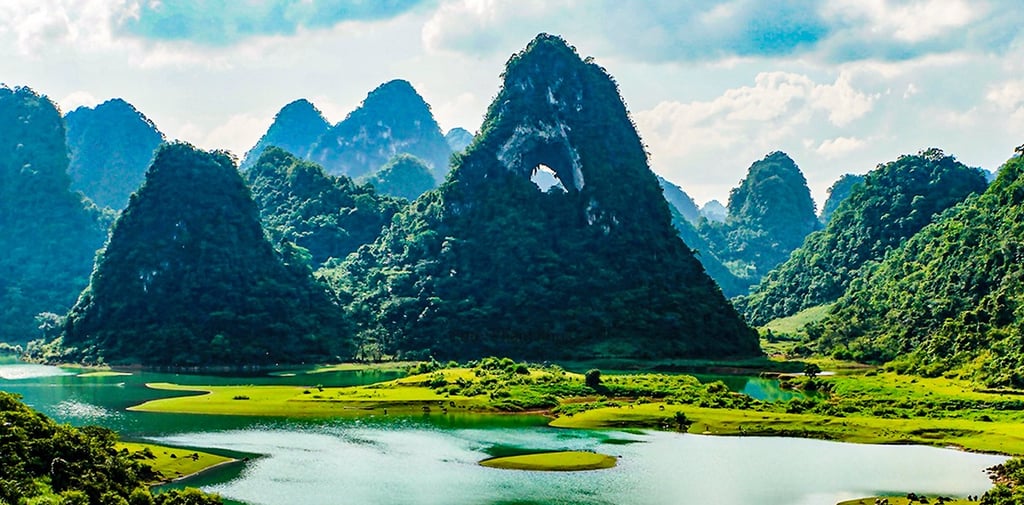
For the international strategic historian, the dedicated borderland trekker, and the seeker of the nation’s deepest strategic cunning, Lạng Sơn and Cao Bằng—the rugged, immense provinces marking the crucial Northern frontier with China—are not mere geographical regions. They are the nation’s most explicit, tangible, and unmoving fortress—a vast, sprawling labyrinth of towering granite and limestone karsts, secret caves, and flowing rivers that have served for millennia as the ultimate battleground and archive of Vietnamese self-determination. The experience of trekking here asserts an ultimate, non-negotiable truth: sovereignty is defended by the geometry of the land, history is hidden within the rocks, and the greatest power resides in the disciplined mastery of the complex terrain. The journey is a high-stakes dialogue with memory, resilience, and the fierce spirit of the borderland people.
As specialists in Vietnamese vertical exploration at Vietnam Charm, we invite the global adventurer on an essential, detailed journey to decode this profound, historical epic. We will meticulously analyze the geological mandate that sculpted the strategic karst labyrinth, the historical mandate that consecrated its caves as sanctuaries of revolution, the spiritual geometry of the Bản Giốc Waterfall as a symbol of the nation's flowing power, and the profound way this frontier articulates the core national values of strategic resourcefulness, unyielding vigilance, and the fierce, quiet pride of ancestral guardianship. Understanding Lạng Sơn and Cao Bằng is essential to grasping the emotional depth and the unshakeable will that defines Việt Nam’s strategic soul.
1. The Geological Mandate: Granite, Karst, and the Architecture of Defense
The unique character and the profound challenge of trekking in Lạng Sơn and Cao Bằng are defined by a clear geological mandate: the fusion of ancient, rigid granite formations with the sculpted, porous architecture of Karst Limestone. This fusion creates a landscape perfectly engineered for defense and concealment.
The Labyrinthine Fortress: The terrain is a dense, repetitive structure of towering, isolated karsts and deep, winding valleys, making large-scale mechanized movement virtually impossible. This environment mandated a military strategy based on fluidity, asymmetry, and local knowledge. The trekking trails—often narrow, steep, and winding paths used historically by smugglers, traders, and soldiers—are the living arteries of this defensive labyrinth. Navigating the peaks and troughs of the Karst demands absolute physical and mental vigilance, ensuring the trekker is constantly engaging with the sheer difficulty of the defense that the land itself provides.
Caves as Sanctuaries: The Karst geology has created a vast network of caves and subterranean passages. These caves are not merely natural features; they are sacred, hidden sanctuaries that have been transformed by history into essential refuges. They provided shelter during ancient conflicts and, crucially, served as the command centers, logistical hubs, and living quarters for the Vietnamese revolutionary movement during the mid-20th century. Trekking to sites like Hang Pác Bó is a pilgrimage to the literal womb of the nation’s modern political will, asserting the profound historical truth that the Earth itself was the greatest ally in the fight for independence.
2. The Historical Mandate: Revolution, Resistance, and the Silent Archives
The memory and emotional resonance of the Lạng Sơn and Cao Bằng trails are dictated by an absolute historical mandate: the region served as the initial, non-negotiable staging ground and sanctuary for the Vietnamese Revolution, transforming every cave and peak into a silent, essential archive of patriotic resistance.
The Return of the Leader: Cao Bằng is consecrated as the sacred ground where Hồ Chí Minh returned to Việt Nam in 1941 after 30 years of exile. His subsequent time spent living, teaching, and working in the simple, hidden caves of the region—integrating intimately with the local Tày and Nùng people—is the foundational myth of the modern state. Trekking these quiet, unassuming trails offers a visceral, powerful sense of historical proximity—walking the same paths that forged the revolutionary strategy, witnessing the environment that nurtured the movement's early ideology, and understanding the self-reliance that was demanded by the borderland's isolation.
The Resilience of the Local People: The local Tày and Nùng communities are the living custodians of this strategic history. Their villages and way of life—characterized by their deep knowledge of the terrain, their resilience in enduring conflict, and their unwavering loyalty to the cause—are the ultimate testament to the people's warfare strategy. The simplicity of their stilt houses (nhà sàn) and the arduous nature of their farming are constant, silent reminders of the difficult, enduring sacrifice required to safeguard the national frontier. The trek becomes a pilgrimage of ancestral gratitude and historical fidelity.
3. The Spiritual Geometry: Bản Giốc Waterfall and the Flow of Sovereignty
The emotional and spiritual climax of the Cao Bằng trek is the confrontation with the immense Thác Bản Giốc (Bản Giốc Waterfall), which functions as the ultimate spiritual geometry—a powerful, flowing symbol of the nation’s sovereignty and the relentless energy of nature.
The Water's Declaration: Bản Giốc is one of the largest and most majestic waterfalls in Asia, located directly on the border river. Its immense power, the sheer volume of water cascading over the tiers of rock, and the constant, overwhelming roar transform the site into a sanctuary of awe and sublime power. The waterfall is the physical, continuous, and non-negotiable declaration of the land's life-giving energy. The water itself, eternally flowing and dividing the terrain, is the most powerful symbol of the unyielding flow of sovereignty—a natural, visible boundary that transcends man-made lines.
The Ritual of Awe: Standing before the waterfall is a ritual of forced humility. The sheer scale and volume of the water compel the trekker to release the small anxieties of the self and submit to the overwhelming power of the cosmos. The trek to the falls is a journey toward the purity and overwhelming energy of the water element, offering a cleansing experience that reminds the soul of the enduring power contained in the natural world.
4. The Challenge of the Borderland Trails: Unpredictability and the Code of the Mountain
Trekking in the borderlands is characterized by a unique physical and psychological challenge—the relentless demand for adaptability, high stamina, and respect for the code of the mountain.
The Terrain's Demand: The trails are often extremely technical, steep, and exposed, winding over loose granite scree, slick karst formations, and dense brush. The altitude, combined with the often-dramatic weather shifts, demands disciplined management of breath and internal energy (Khí). The terrain is a filter, requiring the trekker to move with the precision and agility of the local guides, embodying the practical wisdom of the Tày and Nùng people who view the mountain not as an obstacle, but as a living, demanding partner.
The Hidden Path: The border trails often move between the villages and the deeper wilderness, emphasizing the philosophy of tàng ẩn (concealment). The trails are deliberately hidden, weaving through the forest to avoid detection—a legacy of the revolutionary era. The trekker is walking a hidden, sacred path, experiencing the landscape not as an open vista, but as a secret, complex labyrinth that demands attention, reverence, and silence.
5. Conclusion: The Permanent Testament to Strategic Resilience
Lạng Sơn and Cao Bằng are the ultimate, enduring, and historically magnificent testament to the Vietnamese spirit's capacity for strategic resilience, historical fidelity, and unyielding self-determination. It is a landscape that transforms jagged stone and flowing water into the nation's ultimate, unmoving fortress. By analyzing the geological mandate that sculpted the defensive karst labyrinth, the historical mandate that consecrated its caves as the sanctuary of the revolution, the spiritual geometry of the Bản Giốc Waterfall as a declaration of flowing sovereignty, and the physical challenge of the hidden border trails, the observer gains access to a core, luminous truth: these borderlands are far more than beautiful. They are the permanent, unwavering declaration of strategic will—a powerful, fierce assertion that asserts the cultural value of disciplined vigilance, resourceful adaptation, and the belief that the nation's integrity is eternally secured by the unbowed spirit and the intimate, practical mastery of the sacred land.
We are on social media
Vietnam Charm belongs to Vietpearl Travel., JSC
Contact:
Email: info@vietnamcharm.top
© 2026. by Vietnam Charm. All rights reserved
Travel license number: 01-827/2020
Refund Policy