Giảm giá hấp dẫn cho tour du lịch!


The Iconic Journey: The Entire North–South Route (The Reunification Express) — A Journey Against the Current of Time
More than a railway line, it is the spine of the nation: a 40-hour moving museum and an engineering marvel that connects Việt Nam’s diverse landscapes and two historical halves.
SHORE EXCURSIONLOCAL EXPERIENCES
Tobin Nguyen
11/5/20257 phút đọc
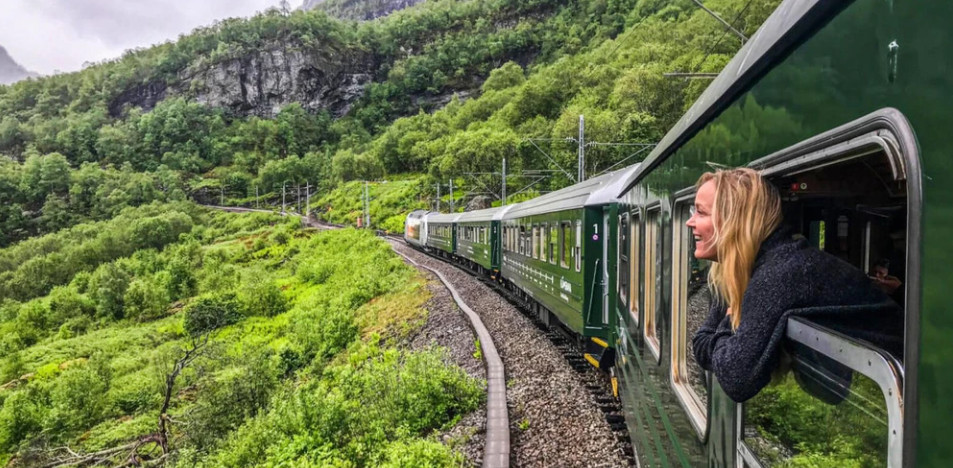
The journey across Việt Nam should not be mistaken for a mere two-hour domestic flight; it is, fundamentally, the legendary North–South railway, affectionately and deeply symbolically known as The Reunification Express (Tàu Thống Nhất). This is far more than a 35-to-40-hour train ride; it is a profound act of slow travel, a moving museum, and a deliberate, methodical experience that allows you to fully absorb the absolute geographical, cultural, and human diversity of the country, stretching from the lush Red River Delta in the north to the vibrant edge of the Mekong Delta in the south. This deliberate route teaches the traveler about patience, the resilience of history, and the often-overlooked truth that the true, lasting beauty of Việt Nam is found in the journey itself, not solely in the destination.
As specialists in cultural deep dives and logistical mastery at Vietnam Charm, we invite you to leave the urgency of the modern world behind. Board this train to truly understand why its measured, slow pace is not a drawback, but a deeply cherished and essential part of the Vietnamese travel experience, providing a connection to the nation’s soul that no airplane or highway can replicate. The journey offers a unique lens through which to view the nation's struggle for unity and its persistent cultural rhythm.
I. The Engineering Legacy: Why the Train Moves Slowly and the Meaning of the Meter Gauge
To truly appreciate the unique character and operational rhythm of The Reunification Express, one must first delve into its fundamental engineering reality: the track gauge.
The Meter Gauge: A Colonial Inheritance
This railway operates almost entirely on the 1000mm (Meter Gauge), a resilient engineering legacy that dates back to the French colonial era (early 20th century). This narrow gauge, a standard chosen for initial cost savings and navigating rough, mountainous terrains, is the core, unchangeable reason why the train cannot travel at the hyper-speeds common in modern global lines (which typically use standard gauge, 1435mm). The narrower gauge, combined with older track sections that necessitate regular maintenance and the tight, dramatic curves along the Central coast (especially around the Hải Vân Pass), limits the average operating speed to just 30–50 km/h.
Slowness as the Greatest Advantage
In the context of modern efficiency, this slowness might be perceived as a flaw. However, on the Reunification Express, it is the greatest advantage and the key to its charm. As the train traverses complex mountainous regions and hugs the breathtaking coastlines, the reduced speed is a safety necessity that simultaneously opens up unparalleled, slow-motion panoramic views unmatched by any other mode of transport.
The experience is defined by sensory details: the rhythmic, persistent "clack-clack-clack" of the heavy steel wheels meeting the narrow rails, the gentle, hypnotic rocking motion of the older carriages, and the steady hum of the diesel engine. These elements are all part of the deep nostalgia, evoking a Việt Nam of decades past—where life was still tied to a slow, persistent, and natural rhythm, unhurried by the digital age. The slowness forces the traveler to observe, reflect, and genuinely connect with the landscape unfolding just outside the window.
The Infrastructure and Resilience
The existence of this meter gauge system itself is a testament to national resilience. Much of the track was severely damaged or outright destroyed during the wartime periods. The re-laying and rehabilitation of this line, culminating in the line’s full re-opening on December 31, 1976 (marking the "Reunification Express"), was an immense national effort achieved with limited resources. Every mile of track carries the weight of history and the collective will to unify the country physically. The train is, therefore, a symbol of perseverance moving on the rails of memory.
II. The Emotional Map: The Dramatic Shift in Landscape and History
The Reunification Express is fundamentally a 40-hour moving documentary film showcasing the gradual, profound transformation of the nation—geographically, climatically, and culturally—from North to South.
The Northern Delta and the Central Ascent
Departing from the historical capital of Hà Nội, you first witness the peaceful, intensely managed rural life of the Northern Delta, submerged in the brilliant, reflective green of rice fields. This landscape is dense, traditional, and characterized by low-lying villages and intricate irrigation systems—a visual legacy of the Red River civilization.
The scenery then shifts dramatically as the train enters the Central region. Here, the land becomes narrower, the terrain rockier, and the railway begins its climb, hugging the coast and weaving through steep limestone mountains. The change in architecture, dialect, and vegetation is palpable, marking the transition from the distinct northern culture to the more austere, historically profound central heartland.
The Climax: Conquering the Hải Vân Pass
The absolute climax of the entire landscape journey is reached when the train begins its ascent and ultimately conquers the Hải Vân Pass (The Ocean Cloud Pass). This section of the railway is globally recognized as both a monumental French engineering marvel and arguably one of the most breathtaking coastal railway segments on the entire planet.
The train laboriously winds through the high mountains with sheer, raw rock cliffs pressing in on one side, while the deep, crystalline blue ocean of Lăng Cô Bay stretches out on the other. This visual tension—rock and sea—is electrifying.
This is the precise moment when the slow pace becomes most valuable. The reduced speed ensures that the panoramic views are savored, not glimpsed. You are afforded the luxury of time to fully immerse yourself in the scenery, where heavy layers of mist (the 'Cloud' in Hải Vân) often shroud the mountain peaks, evoking a powerful sense of history, romance, and mystery. The slow traverse allows for deep personal reflection on the geographical divide that the railway itself was built to bridge. The train here does more than just connect two cities; it connects two distinct regions and two historical halves that were once fiercely divided, offering the traveler a profound, spiritual connection to the concept of national unity itself.
The Southern Approach
As the train progresses southward through Nha Trang, Phan Thiết, and finally towards its terminus in Sài Gòn (Ho Chi Minh City), the climate becomes hotter, the vegetation denser and more tropical (coconuts, dragon fruit), and the architecture transitions again, becoming more modern, sprawling, and commercially focused, reflecting the bustling energy of the South. The journey provides an unparalleled education in the nation's diverse regional identities.
III. The Living Culture: The Mobile Museum and Platform Rituals
Life aboard The Reunification Express is far more than just transportation; it is an entry point into a unique mobile subculture—a long, narrow community on wheels.
The Social Experience
You receive more than just a comfortable sleeper berth; you gain the rare opportunity to interact authentically with Vietnamese people from all walks of life—from large extended families returning home to visit distant relatives, to university students making their long journey back to school, and local merchants transporting goods. The continuous, steady rocking of the carriages and the periodic, nostalgic train whistle become the consistent heartbeat of this nostalgic experience, binding the travelers together in shared time and space. Conversations flow easily over simple meals, offering true insight into local lives, dialects, and aspirations—a social experience impossible to find on a plane.
The Unique Rituals of Train Cuisine
Regarding cuisine, the experience demands exploration beyond the basics. While standard onboard meals are available (often a simple rice platter with meat), an indispensable part of the culture of long-haul travel is exploring the train's dining car. Though the food is simple, enjoying a hot rice plate or a cup of instant noodles while watching the Vietnamese countryside stream past is an authentic, nostalgic experience that every traveler must undertake.
More importantly, the true culinary highlight requires you to participate in the vivid, urgent ritual of platform food vendors. When the train pauses at major stations (such as Huế, Đà Nẵng, Nha Trang, and Tháp Chàm), local vendors, often women balancing baskets or carrying trays, rush along the windows and doors, offering fresh, regional specialties for quick purchase. This is your thrilling opportunity to sample authentic, often hyper-local flavors quickly and experience the uniquely urgent, vibrant hospitality of the Vietnamese people.
Offerings include: Piping hot Bánh Mì sandwiches, savory Bánh Giò (steamed pork rice parcels wrapped in banana leaves), fresh seasonal tropical fruits (like dragon fruit or lychee), local sticky rice treats (Xôi), and traditional iced drinks. This rapid, chaotic exchange is a cultural highlight.
IV. Expert Advice: Optimizing the Long Journey
To ensure this 40-hour journey remains a profound, enriching experience rather than an overwhelming source of fatigue, implement the following specialized strategies:
Prioritize Soft Sleeper Cabins (First Class): For maximum privacy, quiet, and comfort—especially essential on the full 40-hour route—opt for the 4-berth soft sleeper cabin. These cabins offer comfortable mattresses, fresh linens, individual reading lights, access to power outlets, and more space than hard sleepers, ensuring a restful journey. Booking a full four berths for your group guarantees privacy.
Segment Your Journey for Depth (If Time is Limited): If you cannot dedicate the full 40 hours, choose the most scenic, daylight-traversed segments. The Huế – Đà Nẵng route over the Hải Vân Pass is mandatory for the coastal views. Alternatively, take the overnight train from Hà Nội to Đồng Hới or Vinh to access the remote mountainous regions while saving travel time. Never rush the Hải Vân section.
Connectivity and Power: Be prepared for inconsistent Wi-Fi connectivity. View this as a positive opportunity to disconnect. Bring portable power banks, as power outlets in older carriages can be scarce or shared.
Embrace Meditation and Slow Media: Accept the slow pace as a gift. View this journey as an opportunity to disconnect from the world of digital speed and distraction. Indulge in reading a physical book, journaling your observations, or simply contemplating the continuous, mesmerizing flow of the Vietnamese landscape outside your window. The journey is the destination.
Conclusion: The Journey That Teaches You About Việt Nam
The entire North–South train journey is a significant, profound investment of time, but the reward it offers the reflective traveler is invaluable. It is a deep, embodied understanding of the nation's unique engineering heritage, its breathtaking geographical diversity, and the indomitable, persistent spirit of its people. The Reunification Express teaches you that patience is not just a virtue—it is rewarded with unparalleled access to the soul of the country. It proves that true beauty and deep insight often lie in traveling not at the frantic speed of the present, but at the measured, nostalgic rhythm of the past.
If you are ready to accept this challenge and wish for a thoroughly organized Reunification Express itinerary, from securing premium soft sleeper tickets to detailed route guidance, contact Vietnam Charm today.
We are on social media
Vietnam Charm belongs to Vietpearl Travel., JSC
Contact:
Email: info@vietnamcharm.top
© 2026. by Vietnam Charm. All rights reserved
Travel license number: 01-827/2020
Refund Policy