Giảm giá hấp dẫn cho tour du lịch!


THE IMPERIAL SYMMETRY: HUẾ CITADEL — WHERE FENG SHUI GOVERNS KINGS, RITUALS, AND THE GEOGRAPHY OF POWER
More than palaces: exploring the Quần Thể Di Tích Cố Đô Huế as Việt Nam’s ultimate political and cosmological masterpiece, analyzing how the Nguyễn Dynasty codified absolute power, ancestral devotion, and the strict science of Phong Thủy into the very structure of the Imperial City and its Royal Tombs.
VIETNAMESE CULTURELOCAL EXPERIENCESTHE ARCHITECTURAL SOUL
Tobin Nguyen
11/6/20255 phút đọc
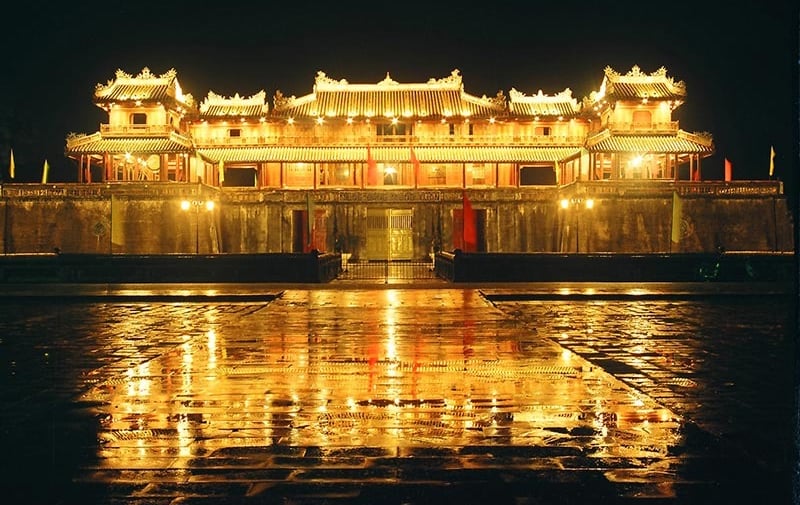
For the cultural observer, the UNESCO World Heritage site of Huế—the last imperial capital of Việt Nam—is a city defined by its profound stillness, its subtle elegance, and its solemn sense of history. The Imperial Citadel (Đại Nội) and the surrounding Royal Tombs (Lăng Tẩm) are not merely palaces and mausoleums; they represent the ultimate, masterful application of Southeast Asian imperial philosophy—a deliberate, meticulous attempt by the Nguyễn Dynasty (1802–1945) to use architecture, geometry, and the strict science of Phong Thủy (Feng Shui) to secure eternal stability, political legitimacy, and generational prosperity. The entire complex functions as a physical diagram of the relationship between the Emperor, Heaven, Earth, and the Ancestors.
As specialists in Vietnamese heritage and profound cultural analysis at Vietnam Charm, we embark on an essential, detailed exploration to decode this imperial axis. We will meticulously analyze the cosmological principles that dictated the city’s orientation and placement, the architectural hierarchy that structured absolute power within the Forbidden Purple City, the sacred duality of the Imperial Citadel and the Royal Tombs, and the profound way this ancient, complex system articulates the Nguyễn Dynasty's commitment to ritual, order, and the enduring power of the bloodline. Understanding Huế’s architecture is essential to grasping the core values of centralized power, ancestral obligation, and the aesthetic of solemn grandeur.
1. The Cosmological Mandate: Phong Thủy and the City’s Orientation
The genesis of the Huế Imperial Citadel is rooted in the meticulous, absolute adherence to the principles of Phong Thủy (Feng Shui), ensuring that the capital city was constructed in perfect alignment with the benevolent forces of Khí (Cosmic Energy). This adherence was not an option; it was a political and spiritual mandate to secure the longevity of the dynasty.
The site for the capital was chosen precisely because of its auspicious geography, embodying the ideal configuration of Tựa Sơn, Hướng Thủy (Backed by Mountain, Facing Water). The citadel is strategically located on the banks of the Hương Giang (Perfume River). The river provides the necessary water flow, symbolizing prosperity (Tài Lộc), and the flow was strategically managed to ensure the benevolent Khí was collected and guided toward the city gates. Crucially, the city is backed by the low, gentle slope of Núi Ngự (Ngự Bình Mountain). This mountain serves as the essential "screen" or protection, known as the Minh Đường or Thanh Long in the complex diagram of Phong Thủy, symbolizing stability, security, and the enduring nature of the throne.
The entire complex is rigidly aligned along a perfect North-South axis. The main entrance, the Ngọ Môn (Meridian Gate), faces South—the direction associated with Yang, Fire, and the Emperor (the Son of Heaven). This orientation affirmed the Emperor’s divine right to rule and positioned the throne at the center of the celestial and terrestrial order. The entire architectural layout is thus a physical, measurable diagram of the Nguyễn Dynasty's conviction that the integrity of the state was inseparable from the harmonious balance with the cosmos.
2. The Architecture of Power: Hierarchy, Seclusion, and the Forbidden Purple City
The internal structure of the Huế Citadel is a masterpiece of architectural hierarchy, designed to physically enforce the absolute power of the Emperor and the strict protocol of the court. The journey from the outer walls to the Emperor’s private chambers is a deliberate, ritualistic progression into increasing levels of sanctity and seclusion.
The complex is organized into three distinct, nested layers, each symbolizing a reduced, more exclusive circle of power:
Kinh Thành (The Outer Citadel): The massive, defensive outer walls, protecting the entire city, including civil administration, common citizens, and military units. This layer represents the broadest level of governance and protection.
Hoàng Thành (The Imperial City): The central, imposing defensive core, containing all major governmental offices (Lục Bộ), the major ritual halls, and the residences of the high-ranking mandarins. This area required strict official access and was the center of political life.
Tử Cấm Thành (The Forbidden Purple City): The innermost, most sacred core, strictly reserved for the Emperor, the imperial family, and their immediate, trusted eunuchs and servants. The term "Purple" (Tử) refers to the North Star, which was believed to be the unmoving, absolute center of the heavens. By naming his private compound the "Forbidden Purple City," the Emperor asserted his position as the unmoving, absolute center of the Vietnamese cosmos. Access here was punishable by death, affirming the Emperor’s supreme, isolated authority.
This spatial hierarchy ensured that the Emperor's privacy, safety, and symbolic status as the ultimate ruler were structurally guaranteed, making the architecture itself an active agent of imperial control and ritual protocol.
3. The Ritual Axis: The Lăng Tẩm (Royal Tombs) and Generational Prosperity
The political and spiritual stability of the Nguyễn Dynasty did not end with the reign of a king; it extended beyond death, mandating the complex, philosophical necessity of the Lăng Tẩm (Royal Tombs). These tombs, located along the Hương River, are arguably the most profound architectural statements of the era.
The Royal Tombs are not merely burial sites; they are immense, self-contained philosophical landscapes built by the Emperor during his own lifetime, designed to serve as his final, eternal palace. The architecture of each tomb (such as the sprawling complex of Lăng Tự Đức or the disciplined geometry of Lăng Minh Mạng) reflects the deceased Emperor's personality, aesthetic preference, and political vision, transforming the site into a permanent biography.
Crucially, the tombs are built with the most meticulous adherence to Phong Thủy principles, serving as a vital spiritual generator for the entire bloodline. The location is selected after years of deliberation to secure the most benevolent flow of Sinh Khí (Life-giving Energy) for the descendants. The architecture is arranged to ensure the tomb is backed by a commanding hill (Sơn) and fronted by collecting water (Thủy), guaranteeing that the ancestor's spirit is peaceful and perpetually channeled wealth, health, and success to the living descendants for generations to come. The tomb is thus the ultimate, permanent inter-generational investment and the supreme affirmation of the continuity of the Nguyễn bloodline.
4. The Aesthetic of Solemnity: Color, Carving, and the Art of Reserve
The aesthetic of Huế imperial architecture is defined by solemn grandeur, reserve, and symbolic color, contrasting sharply with the fluid, organic aesthetic of popular Vietnamese architecture.
The primary color palette is dominated by Yellow/Gold (Hoàng), the color of the Emperor, symbolizing the Earth element and the absolute center. This is contrasted with Red (Đỏ), symbolizing fire and vitality, used extensively in gates and pillars, and Blue/Green (Xanh), symbolizing the Wood element, found in the traditional tiled roofs (mái ngói). Every color choice is deliberate, rooted in the Ngũ Hành system, and politically coded.
The carvings (chạm khắc) found on the pillars, beams, and furniture are masterpieces of intricate detail, often depicting the Tứ Linh (Four Sacred Animals: Dragon, Phoenix, Turtle, Qilin), which symbolize imperial protection, fortune, and longevity. The craftsmanship is designed to be elegant, disciplined, and repetitive, projecting an image of stable, orderly, and eternal power. Even in its current state of partial ruin, the architecture maintains an overwhelming sense of thâm nghiêm (solemnity and profound respect), enforcing a deep sense of historical gravity upon the observer. The aesthetic choice was always to project enduring power through meticulous order and symbolic wealth.
5. Conclusion: The Masterpiece of Codified Power
The Huế Imperial Citadel and its Royal Tombs stand as the ultimate, enduring masterpiece of codified imperial power and cosmological belief. It is an architectural library chronicling the Nguyễn Dynasty’s ambition, discipline, and profound commitment to ancestral continuity. By analyzing the rigid adherence to Phong Thủy, the strict spatial hierarchy of the Forbidden Purple City, the ritualistic function of the Royal Tombs as spiritual generators, and the aesthetic of solemn, coded grandeur, the observer gains access to a core truth: the architecture of Huế is far more than historical ruin. It is the permanent physical testimony of a powerful dynasty’s conviction that their political fate, their personal identity, and the prosperity of their entire bloodline were ultimately governed by the precise, meticulous alignment with the powerful, invisible forces of the cosmos.
We are on social media
Vietnam Charm belongs to Vietpearl Travel., JSC
Contact:
Email: info@vietnamcharm.top
© 2026. by Vietnam Charm. All rights reserved
Travel license number: 01-827/2020
Refund Policy