Giảm giá hấp dẫn cho tour du lịch!


THE INDELIBLE EPIC: THE HISTORY OF VIETNAMESE WARS — DECODING RESILIENCE, NATIONAL MEMORY, AND THE UNYIELDING SPIRIT
More than history: exploring The History of Vietnamese Wars as the nation’s ultimate psychological ledger, analyzing its role in forging patriotism, preserving tragic memory, and the embodiment of an enduring, unbowed creative spirit.
VIETNAMESE CULTURERESILIENCE & MEMORYLOCAL EXPERIENCES
Tobin Nguyen
11/6/20255 phút đọc
For the international historian, the philosopher of conflict, and the seeker of the source of national fortitude, the History of Vietnamese Wars—a continuous, existential struggle for independence and unification across the 20th century—is far more than a chronicle of tragic events. It is the nation’s greatest spiritual journey, a historical crucible that forged and defined the modern Vietnamese spirit: a spirit characterized by fierce resilience, strategic innovation, and an unparalleled capacity for enduring immense hardship. War, in the national consciousness, is not merely loss; it is the sacred wellspring of sovereignty, the ultimate measure of patriotism, and the eternal material that feeds the belief in unity and the future.
As specialists in Vietnamese heritage and profound cultural analysis at Vietnam Charm, we embark on an essential, detailed exploration to decode this enduring force. We will meticulously analyze the historical mandate that forced the nation to transform war into a war of wills, the psychological function of conflict in forging collective heroism, the crucial role of memory in maintaining moral integrity, and the profound way this military history articulates the core values of courage, sacrifice, and the unyielding national will. Understanding this history is essential to grasping the emotional roots and the spiritual integrity of the Vietnamese identity.
1. The Historical Mandate: War as the Crucible of Will and Patriotism
The fundamental structure of Vietnamese War History is defined by a non-negotiable historical mandate: the conflicts were not strategic choices but a compulsory reaction to relentless foreign invasion and intervention. This mandate transformed the material struggle into a war of wills and the most powerful catalyst for the formation of modern, unifying patriotism.
Across decades, the fight was less about seizing territory and more about reclaiming national self-determination and human dignity. Historical circumstances forced the development of a total people's warfare strategy—a military philosophy that mandated the participation of every social class, transforming every citizen (farmer, student, artisan) into an active part of the front line. This mandate solidified a core, existential belief: sovereignty is indivisible, and it must be defended at any cost, regardless of the disparity in weaponry or economic might.
The immense, universal cost of this struggle—the painful sacrifice exacted from every family—was transformed into a sacred spiritual capital. Patriotism was elevated beyond an abstract concept; it became a blood covenant with the ancestors, an absolute moral commitment to the future generations. War, therefore, served as the ultimate forge of the national will, where individual courage and collective endurance were raised to a sacred duty, ensuring the survival and absolute dignity of the people.
2. The Psychological Function: Forging Collective Heroism and Unity
Transcending the limits of the battlefield, the history of war assumed a profound psychological function in forging collective heroism and establishing the emotional bedrock for national unification.
In a deeply collective society, the conflicts created a profound new model of heroism: not the singular genius of an individual, but the unseen, enduring strength of millions of ordinary people. The stories of the extraordinary endurance of the populace on the Trường Sơn Trail (Ho Chi Minh Trail), the resourcefulness of the villagers in the Củ Chi Tunnels, and the anonymous sacrifice of the peasant in the rice field were elevated into symbols of national strength. This established a deep collective consciousness that victory was not the achievement of an elite few, but the shared triumph of every citizen.
Psychologically, the war provided a necessary unifying emotional code. The memory of shared loss, profound suffering, and eventual, hard-won pride became a common language that transcended regional, religious, or ethnic differences. This collective heroism serves as the spiritual cement, allowing a diverse nation to find internal cohesion in a shared identity: a people characterized by resilience and the ability to convert adversity into profound motivation. The war memory becomes the emotional heart that perpetually reminds the populace of the absolute value of independence and the critical necessity of unity.
3. The Art of Adaptation: Military Creativity and Environmental Synthesis
Vietnamese success in war was not solely about spiritual will, but about military creativity—an extraordinary art of adaptation that transformed the natural environment (rivers, mountains, terrain) into a strategic weapon.
Vietnamese military philosophy mandated utilizing material inferiority to achieve strategic and topographical superiority. Famous tactics like guerrilla warfare and people's warfare are the zenith of this creativity:
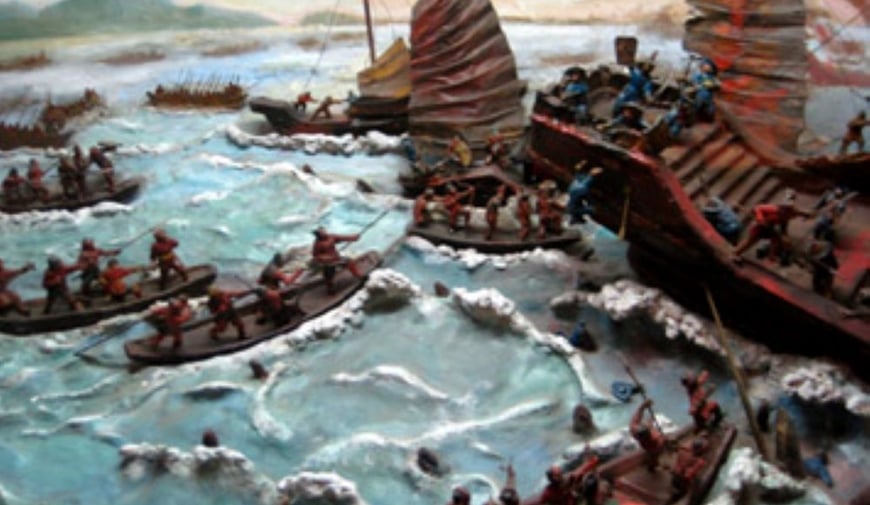
Mastery of Water: Generals transformed rivers into naval traps (e.g., Bạch Đằng), utilizing the tide to neutralize the enemy's naval advantage.
Mastery of the Mountains: The Trường Sơn Trail strategy transformed the challenging mountain range into a virtually invisible logistical artery, a masterpiece of engineering and human endurance.
Mastery of the Earth: The Củ Chi Tunnels system converted the soil itself into an underground city, a living fortress that demonstrated extraordinary psychological and architectural ingenuity.
This creativity is more than tactical; it is a philosophical declaration asserting that humanity, armed with deep love and profound understanding of the land (tình yêu đất nước), can translate material weakness into absolute strategic strength. The natural environment, intimately understood and utilized, became the nation's greatest silent ally.
4. The Tragic Memory: Maintaining Moral Integrity and the Ancestral Covenant
The history of conflict is maintained and passed down not to nurture hatred, but to serve a core spiritual and moral function: the preservation of moral integrity and the sacred covenant with those who fell.
The tragic memory of the war—preserved in museums, memorials, and on every anonymous grave—is a moral archive. It reminds the current generation of the absolute value of peace and the incalculable sacrifice made by the previous generation. Pilgrimages to sacred historical sites (such as the Thành Cổ Quảng Trị, Địa đạo Củ Chi) are not acts of tourism; they are rituals of gratitude (lễ tri ân)—spiritual acts where the current generation reaffirms their covenant with the ancestors: not to squander the peace bought with blood and tears.
The preservation of this memory safeguards a crucial contemporary social value: gratitude (lòng biết ơn). This culture of gratitude, fueled by war memory, is the foundation for contemporary social unity and stability. It reinforces the conviction that today's success and prosperity are a collective historical achievement, rather than the fortune of any individual or political entity. War memory becomes the moral compass that ensures the core values of sacrifice and unity are never forgotten in the relentless momentum of economic development.
5. Conclusion: The Unwavering Declaration of the Unbowed Spirit
The History of Vietnamese Wars is the indelible, powerful, and tragic epic of the nation's profound resilience. It is a journey that converted imposition and loss into an inexhaustible source of moral and spiritual power. By analyzing the historical mandate that transformed war into a battle of will, the psychological function of forging collective heroism, the strategic art of environmental adaptation, and the role of memory in maintaining moral integrity, the observer accesses a core truth: conflict is not just the past; it is the unbowed, enduring heart of the national identity. This history is the eternal declaration of dignity—a fierce affirmation that the cultural values of sacrifice, strategic creativity, and the belief in unity are perpetual.
We are on social media
Vietnam Charm belongs to Vietpearl Travel., JSC
Contact:
Email: info@vietnamcharm.top
© 2026. by Vietnam Charm. All rights reserved
Travel license number: 01-827/2020
Refund Policy