Giảm giá hấp dẫn cho tour du lịch!


THE IRON FURNACE OF MEMORY: HỎA LÒ PRISON — DECODING THE ARCHITECTURE OF CRUELTY, THE NARRATIVE OF DEFIANCE, AND THE TRIUMPH OF THE UNBOWED SPIRIT
More than a relic: exploring Nhà Tù Hỏa Lò (Hỏa Lò Prison), known historically as the "Hanoi Hilton," as the ultimate architectural monument to suffering and spiritual resilience, analyzing the profound symbolism of its walls, its function as a psychological battleground, and its enduring role as a permanent archive of national defiance and human dignity.
LOCAL EXPERIENCESVIETNAMESE CULTURERESILIENCE & MEMORY
Tobin Nguyen
11/6/20255 phút đọc
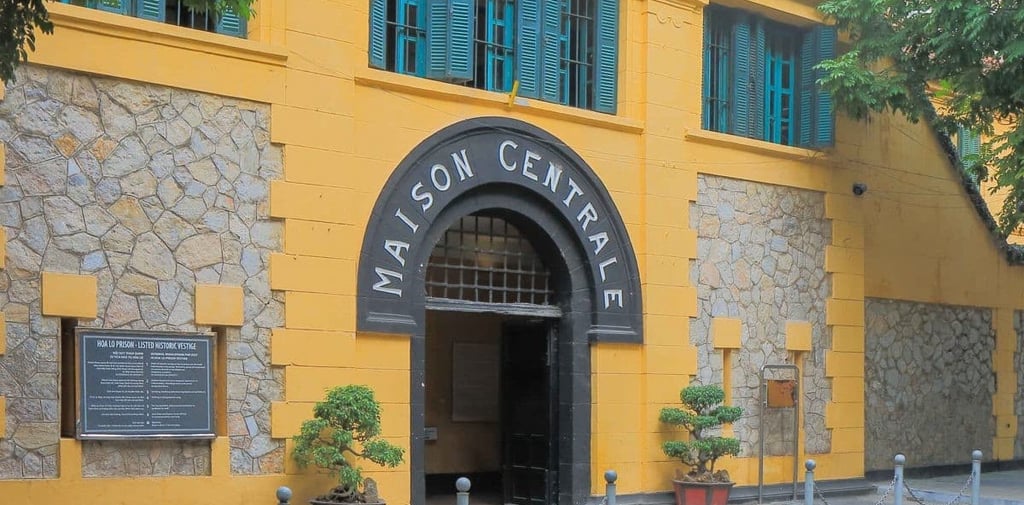
For the international historian, the student of human rights, and the seeker of the most profound limits of human endurance, Nhà Tù Hỏa Lò (Hỏa Lò Prison), situated in the heart of Hà Nội, is not merely a historical site; it is a chilling, absolute architectural monument to the limits of human cruelty and the unyielding, transcendent power of the human spirit. Constructed by the French colonial regime in the late 19th century and repurposed during subsequent conflicts, Hỏa Lò—meaning "Fiery Furnace" or "Stove"—was deliberately engineered to crush the physical body and annihilate the spiritual will of its political prisoners. Yet, paradoxically, it became the ultimate forge of the Vietnamese revolutionary spirit, a silent, iron-clad testimony to disciplined resistance, unity, and the final, beautiful triumph of hope over despair.
As specialists in Vietnamese heritage and profound cultural analysis at Vietnam Charm, we embark on an essential, detailed exploration to decode this emotionally charged archive. We will meticulously analyze the architectural mandate that designed the space for psychological annihilation, the sociological alchemy that transformed suffering into unbreakable collective unity, the profound duality of its historical narrative (French oppression vs. American captivity), and the enduring way this structure articulates the core national values of unbowed defiance, spiritual integrity, and the sacred, absolute memory of sacrifice. Understanding Hỏa Lò is essential to grasping the emotional depth and the moral clarity that defined the nation’s struggle for sovereignty.
1. The Architectural Mandate: Engineering Annihilation and the Prison's Cruelty
The genesis and the rigid structure of Hỏa Lò Prison were dictated by an unambiguous, cold architectural mandate of the French colonial power: to engineer a space for the systematic annihilation of the political, physical, and spiritual life of the Vietnamese revolutionary elite. The very geometry of the prison was an instrument of oppression.
Modeled after the most rigid, centralized French penal architecture, Hỏa Lò was designed for maximum isolation, surveillance, and psychological deprivation. The high, thick, imposing stone walls, often topped with broken glass and barbed wire, were the visible declaration of the colonial regime’s absolute control, acting as an impassable barrier between the life of the free city and the living death within. The space was deliberately overcrowded, unventilated, and subjected to the relentless, humid heat of the Northern climate, ensuring continuous physical suffering.
The design featured specific architectural tools for psychological destruction: the cachot (isolation cell) and the infamous guillotine area. The cachot was engineered for sensory deprivation and profound solitude, its darkness and confinement intended to break the mental fortitude of the most resolute political prisoner. The guillotine, displayed prominently and operated publicly for certain executions, was the ultimate symbol of the regime's unfettered power over life and death, designed to inflict terror and extinguish any hope of defiance among the remaining captives. Hỏa Lò was not just a jail; it was a laboratory of despair, an absolute, non-negotiable rejection of human dignity built from iron, stone, and the cold arithmetic of power.
2. The Sociological Alchemy: Transforming Suffering into Collective Will
The most profound historical irony of Hỏa Lò is the sociological alchemy that occurred within its walls: the very architecture designed for isolation and annihilation became the crucible for forging an unbreakable collective will and the ultimate school for revolutionary unity.
The Vietnamese political prisoners—often intellectuals, future leaders, and high-ranking revolutionaries—refused to be isolated. They systematically transformed the physical confinement into a network of intellectual and spiritual resistance. The cells, separated by thick stone, became clandestine classrooms, where leaders used tapping codes, whispered lectures, and tiny, smuggled scraps of paper (truyền đơn) to maintain political education, share revolutionary theory, and organize future resistance efforts. The shared, relentless suffering, rather than leading to fragmentation, established a deep, sacred covenant of mutual loyalty and unbreakable purpose.
This collective spirit ensured that the prison itself became a training ground for disciplined leadership and moral fortitude. The prisoners collectively found ways to share food, care for the sick, maintain hygiene, and resist the psychological terror of the guards, demonstrating that spiritual and moral unity were ultimately more powerful than the physical constraints of iron and stone. Hỏa Lò inadvertently became the proving ground for the future leadership of the nation, its walls serving as the silent, awe-inspiring testament to the profound, spiritual strength of đoàn kết (unity) forged in the deepest darkness.
3. The Dual Narrative: Hỏa Lò vs. The "Hanoi Hilton"
The history of Hỏa Lò is defined by a complex, intense dual narrative that reflects the turbulent history of the 20th century: the original colonial mandate (Hỏa Lò) and its later, highly publicized role during the Vietnam War (the "Hanoi Hilton"). This duality complicates its emotional legacy.
Hỏa Lò (Colonial Era): The Archive of National Pain. This period focused on the suffering of Vietnamese political prisoners under French rule, emphasizing the brutality, the sacrifice, and the revolutionary spirit that endured the cachot and the guillotine. This is the core, most painful, and politically crucial narrative for the Vietnamese nation—the physical site of the fight for national self-determination. The suffering here symbolizes the fundamental injustice of colonial rule and the moral righteousness of the anti-colonial cause.
The "Hanoi Hilton" (Vietnam War Era): The Archive of American Captivity. During the American conflict, the prison was used to hold captured American pilots (phi công) and military personnel. The name "Hanoi Hilton" was sarcastically coined by the American POWs themselves, often referring to the irony of the brutal conditions in contrast to the luxury hotel nearby. This period created a distinct, separate narrative focused on endurance, military resistance, and the geopolitical conflict. The prison, in the hands of the Vietnamese government, became a powerful propaganda tool, showcasing the treatment of the captives and asserting the moral legitimacy of the Northern state's defense. The contrast between the severe suffering of the Vietnamese under the French and the often politically motivated care given to the American captives forms a crucial, complex layer in the prison's memory, ensuring that the site remains a continuous, powerful subject of historical debate and interpretation.
4. The Enduring Symbolism: The Sacred Duty of Remembering
The preserved portions of Hỏa Lò stand today as an absolute, non-negotiable symbolic duty—a physical mandate to remember the price of freedom and to honor the sacred, immeasurable sacrifice that guaranteed national sovereignty.
The museum’s curated narrative focuses intensely on the themes of martyrdom, spiritual defiance, and the ultimate triumph of justice. The physical relics—the preserved cells, the chains, the documents smuggled by the revolutionaries—are treated not merely as artifacts, but as sacred tokens embodying the courage and suffering of the founding generation. Visitors, particularly young Vietnamese students, undertake a pilgrimage to Hỏa Lò as an essential act of ancestral and patriotic reverence (lễ tri ân). The act of walking through the narrow cells and standing beneath the towering walls is a physical, profound confrontation with the gravity of the past, reinforcing the contemporary commitment to national unity and moral discipline.
Hỏa Lò embodies the fierce, quiet loyalty of the nation to its memory. It asserts that the moral clarity of the past—the absolute distinction between the oppressor and the freedom fighter—must be preserved, ensuring that the present generation understands that their prosperity is built directly upon the agonizing, disciplined endurance of their revolutionary ancestors. The silence of the prison walls is a constant, solemn command: Never forget the iron furnace that forged the spirit of freedom.
5. Conclusion: The Final Triumph of the Unbowed Spirit
Hỏa Lò Prison is the ultimate, enduring, and heartbreaking monument to human suffering, creative ingenuity, and the unyielding power of the disciplined spirit. It is an architectural contradiction that transformed the tools of annihilation into the cradle of revolution. By analyzing the cold architectural mandate of cruelty, the sociological alchemy that forged collective unity from shared despair, the complex duality of its historical narratives, and the profound, sacred duty of its memory, the observer gains access to a core, fierce truth: Hỏa Lò is far more than history. It is the permanent, unwavering testimony to the final, beautiful triumph of the unbowed spirit—a powerful, structural declaration that asserts the cultural value of disciplined resistance, intellectual integrity, and the belief that the moral courage of a unified people can, and must, overcome the technological and architectural might of any external force. The walls of the iron furnace stand not as a monument to suffering, but as an eternal symbol of absolute, luminous defiance.
We are on social media
Vietnam Charm belongs to Vietpearl Travel., JSC
Contact:
Email: info@vietnamcharm.top
© 2026. by Vietnam Charm. All rights reserved
Travel license number: 01-827/2020
Refund Policy