Giảm giá hấp dẫn cho tour du lịch!



THE LYRICAL CODE: QUAN HỌ FOLK SONGS — DECODING THE RITUAL OF DIALOGUE, COURTESY, AND SOCIAL HARMONY
More than singing: exploring Quan Họ as Việt Nam's ultimate social and philosophical art form, analyzing its intricate lễ nghi (ritual) of communal exchange, the demanding kết chạ (sworn brotherhood) contract, and its profound role as a mechanism for maintaining social courtesy and emotional restraint.
HERITAGE & SPIRITLOCAL EXPERIENCESTHE SOUNDSCAPEVIETNAMESE CULTURE
Tobin Nguyen
11/6/20255 phút đọc
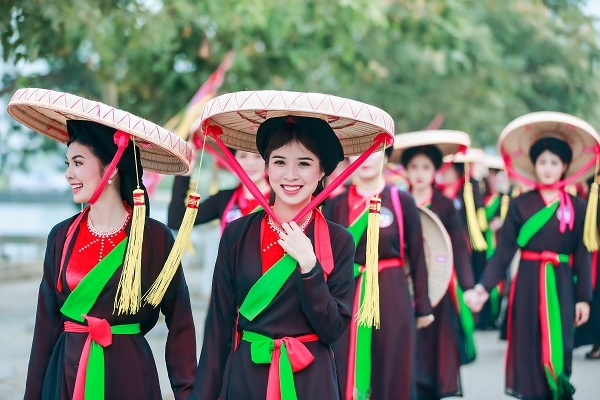
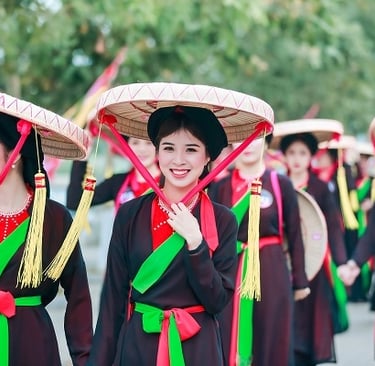
For the international musicologist, the social historian, and the seeker of profound cultural elegance, Quan Họ Folk Songs (Dân ca Quan Họ)—unique to the Bắc Ninh and Bắc Giang provinces of Northern Việt Nam—presents a truly unique form of musical artistry. Recognized by UNESCO as a Masterpiece of the Oral and Intangible Heritage of Humanity in 2009, Quan Họ is far more than a repertoire of songs; it is a highly formalized, structured, and profoundly spiritual social contract enacted through music. The performance is a ritual of elegant dialogue, demanding immense vocal skill, poetic wit, and absolute adherence to strict social protocols that dictate everything from the seating arrangement to the final farewell.
As specialists in Vietnamese heritage and profound cultural analysis at Vietnam Charm, we embark on an essential, detailed exploration to decode this lyrical code. We will meticulously analyze the structural genius of the required duets (hát đối), the social philosophy embedded in the kết chạ (sworn village brotherhood) system, the spiritual necessity of the canh hát (singing sessions) rituals, and the profound way Quan Họ articulates the core values of courtesy, disciplined wit, and the peaceful maintenance of social harmony in the Red River Delta. Understanding Quan Họ is essential to grasping the core mechanisms of social discipline and aesthetic refinement in Northern Vietnamese village life.
1. The Sociological Genesis: Custom, Caste, and the Ritual of the Village
The genesis and rigorous structure of Quan Họ music are rooted in the specific sociological and ceremonial needs of the Northern Vietnamese village—a society defined by Confucian hierarchy, agricultural cycles, and the absolute necessity of maintaining lệ làng (village custom) and peaceful relations with neighboring communities.
Quan Họ originated within a highly defined social structure. It was practiced by specialized groups known as liền anh (sworn brothers) and liền chị (sworn sisters), who were chosen for their exceptional vocal talent, poetic memory, and deep knowledge of the vast repertoire. These singers held a unique, respected social caste within the village, acting as the custodians of musical and social etiquette. The music was intrinsically linked to the annual Lễ Hội (Communal Festivals), serving as the primary, high-stakes form of entertainment and spiritual offering during the spring and autumn rituals.
The core function of Quan Họ was social diplomacy and structural maintenance. The intricate rules surrounding the singing—who sings first, how to receive a guest, how to offer a gift—were designed to enforce courtesy and respect (tôn trọng và lễ phép). By adhering to this complex ritual structure, the community affirmed its commitment to order and civilized behavior, transforming spontaneous performance into a controlled social spectacle. The music was the primary tool used to prevent verbal arguments, settle small disputes, and affirm the hierarchical structure of the community with grace and elegance.
2. The Structural Genius: Hát Đối and the Demands of Poetic Wit
The artistic core of Quan Họ music lies in the structural genius of its duet form, hát đối (responsive singing). This technique is not simply call-and-response; it is a demanding, competitive, and highly refined poetic duel that requires both immense memory and immediate, disciplined wit.
The hát đối performance is structured as a complex, four-part ritual:
The Challenge (Hát Ra - Singing Out): One pair (say, the liền chị) performs a song, often a highly stylized piece of poetry, that subtly contains a rhetorical question or a specific challenge related to love, life, or philosophy.
The Response (Hát Trả - Singing Back): The opposing pair (the liền anh) must immediately respond by performing a different song from the immense Quan Họ repertoire that perfectly answers the subtle challenge or question posed in the first song. The response must be contextually and poetically accurate, demonstrating their repertoire knowledge and intellectual agility.
The Variation (Hát Lại - Repeating): The pairs often repeat the same melodies with subtle, micro-tonal variations to demonstrate vocal skill and control.
The Final Exchange (Hát Chào - Farewell): The final, ritualistic exchange, marked by specific songs of formal, polite farewell.
This competitive structure demands absolute mastery of a repertoire containing hundreds of songs. The aesthetic is one of poetic precision and restraint. Unlike the spontaneous improvisation of Southern music, Quan Họ improvisation is limited to the choice of song and the subtlety of the lyrical response, not the melody itself. The true genius lies in the ability to select the one, perfect, previously composed song that serves as the most elegant, witty, and complete answer to the opponent's lyrical challenge, all while maintaining vocal perfection.
3. The Social Contract: Kết Chạ and the Philosophy of Sworn Kinship
The Quan Họ tradition is anchored by a unique, profound social contract known as kết chạ (sworn brotherhood/sisterhood) or kết nghĩa (sworn kinship). This contract defines the ethical framework of the performance and the relationship between the participating villages.
Kết Chạ is the act of two villages—or, more commonly, two pairs of liền anh and liền chị from different villages—formally swearing an eternal, non-romantic bond of respectful kinship. This spiritual contract is sealed through a formal ceremony, involving offerings to the ancestors and the exchange of significant gifts (like betel quid and silver jewelry). Once sworn, the liền anh and liền chị must maintain a relationship of absolute spiritual purity, platonic respect, and mutual support. The bond prohibits any romantic or marital involvement, ensuring that the relationship remains a pure, high-minded ideal of spiritual and artistic connection, transcending simple physical desire. This restraint is a profound philosophical statement: the art form elevates spiritual and poetic harmony above the mundane needs of the flesh.
The kết chạ contract also extends the relationship between the entire làng chạ (sworn villages). Through the musical bond, the villages formally agree to maintain peaceful relations, offer mutual aid during times of hardship, and respect each other's customs. Quan Họ thus serves as the ultimate mechanism for regional diplomacy, ensuring that social stability is maintained through the lyrical exchange and the solemn contract of music.
4. The Ritual Environment: The Canh Hát and the Aesthetic of Intimacy
The performance environment and ritual schedule of Quan Họ are meticulously structured to enhance the intimacy and concentration required for the musical duel. The singing often takes place over several hours in sessions known as canh hát (singing watches).
These sessions often begin in the late afternoon and can continue well into the night, sometimes lasting until dawn. The location is typically intimate: a quiet boat on a river, a local temple courtyard, or, most famously, the Đình (Communal House). The environment is designed for focused, low-volume concentration. The performance is almost entirely a cappella, with minimal instrumental accompaniment (sometimes a soft Đàn Nhị or Sáo), placing absolute focus on the vocal purity, the poetic delivery, and the singer's control.
The unique aesthetics of the performance—the formal dress (Áo Tứ Thân for the women and formal robes for the men), the meticulous presentation of gifts, and the specific songs of greeting and farewell—transform the event into a visual and auditory masterpiece of social decorum. The final, poignant ritual—often the Hát Giã Bạn (Farewell Song)—is conducted with immense, gentle sadness, as the contract demands the singers must part with formal grace, even though their bond remains eternal. The music thus allows for the sincere, formal expression of deep emotion while maintaining absolute adherence to the rules of social politeness.
5. Conclusion: The Permanent Tone of Courtesy and Harmony
Quan Họ Folk Songs are the ultimate, enduring social and musical achievement of the Northern Vietnamese spirit. It is an art form that transforms disciplined singing into a complex, ethical contract. By analyzing the structural genius of the hát đối duet, the profound purity and diplomacy mandated by the kết chạ contract, the high poetic demands of its repertoire, and the serene intimacy of the canh hát ritual, the observer gains access to a core truth: Quan Họ is far more than music. It is the permanent, unwavering tone of social harmony and disciplined courtesy—a ritualistic declaration that asserts the cultural value of intellectual wit, profound elegance, and the belief that the strongest, most enduring bonds are those forged through spiritual respect and the shared, precise language of song.
We are on social media
Vietnam Charm belongs to Vietpearl Travel., JSC
Contact:
Email: info@vietnamcharm.top
© 2026. by Vietnam Charm. All rights reserved
Travel license number: 01-827/2020
Refund Policy