Giảm giá hấp dẫn cho tour du lịch!



THE MANDARIN HERITAGE – PROSPERITY VS. DEFENSE
"A coin with two sides: The gilded halls of merchant princes and the iron gates of a royal fortress. Explore the frontier where prosperity met defense in the heart of the Vietnamese Southward expansion."
NHA TRANGSHORE EXCURSIONLOCAL EXPERIENCES
Tobin Nguyen
1/17/20263 phút đọc
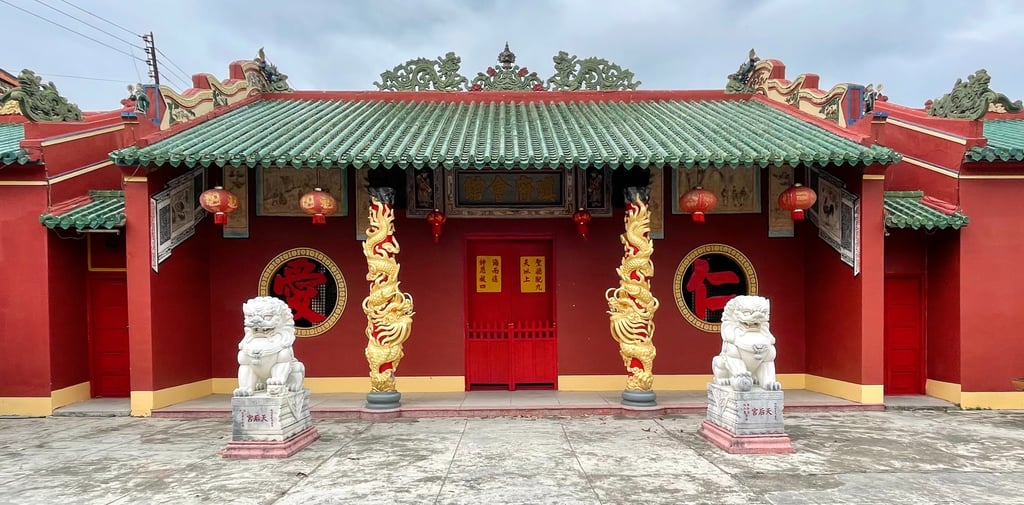
If the Champa towers represent the ancient, spiritual DNA of this land, then the heritage of the Ninh Hoa and Dien Khanh districts represents its political and commercial muscle. To understand Nha Trang, you must leave the coastline and head 10 to 30 kilometers inland. Here, the landscape shifts from sapphire bays to emerald rice paddies, and the stories shift from Mother Goddesses to the bold expansion of the Vietnamese Empire.
History here is a tale of two philosophies. In Ninh Hoa, you find the opulent legacy of Chinese maritime trade—a story of Prosperity. In Dien Khanh, you find the stern, moss-covered walls of a royal citadel—a story of Defense. Together, they form the "Mandarin Heritage" of the region.
1. Ninh Hoa: The Pulse of Global Prosperity
Long before Nha Trang became a tourist mecca, Ninh Hoa was a thriving hub on the "Maritime Silk Road." During the 18th and 19th centuries, merchant guilds from the Fujian and Guangdong provinces of China arrived on these shores, bringing with them not just silk and ceramics, but a sophisticated culture of trade and communal organization.
The Assembly Halls (Hội Quán): Walking into a Chinese Assembly Hall in Ninh Hoa is like stepping into a lacquered jewelry box. These structures served as temples, community centers, and business headquarters.
The Visual Language: Notice the intricate porcelain mosaics on the roof ridges—dragons chasing flaming pearls and phoenixes rising from the eaves. These aren't just decorations; they are symbols of status and cosmic balance.
The Living Connection: These halls are not dead museums. They are still the beating heart of the local ethnic Chinese (Hoa) community. The air is perpetually thick with the scent of massive incense spirals hanging from the rafters, some designed to burn for weeks, carrying the prayers of business success to the heavens.
The "Umami" Wealth: Ninh Hoa’s prosperity was built on more than just shipping. It was a culinary powerhouse. This is the birthplace of Nem Nướng (grilled fermented pork) and the region’s finest fish sauces. The wealth of the "Mandarin" era wasn't just in gold; it was in the mastery of flavor and the control of the interior trade routes.
2. Dien Khanh: The Shield of the Frontier
About 10 kilometers west of Nha Trang, the atmosphere changes. Here, the architecture is not about beauty or trade, but about survival. The Dien Khanh Citadel is one of the oldest and best-preserved royal fortresses in Southern Vietnam.
The Vauban Mystery: Built in 1793 by the Nguyen Dynasty, Dien Khanh is a rare architectural hybrid. It was designed using the Vauban style—a sophisticated European military design introduced by French advisors to the Emperor.
The Geometry of War: The citadel was built as an elongated hexagon with high earthen walls and a deep, defensive moat. It was the "Shield of the South," designed to protect the frontier from the Tay Son rebels and other encroaching forces.
The Gates of Time: Today, the most striking features are the massive arched brick gates. Moss-covered and weathered by two centuries of monsoons, they stand as silent sentinels. To walk through the Western Gate is to feel the weight of royal authority; the acoustics change, and the modern world suddenly feels very far away.
3. The Contrast: Merchants vs. Soldiers
The brilliance of exploring these two districts is the contrast.
Ninh Hoa is fluid, colorful, and noisy—the world of the merchant where everything is for sale and every god is a god of wealth.
Dien Khanh is rigid, grey, and silent—the world of the soldier and the scholar-official (Mandarin) where duty and defense were the only currencies that mattered.
To see both is to see the complete picture of how Vietnam integrated this "New Land." The Vietnamese took the defensive military structures of Europe and combined them with the commercial energy of the Chinese diaspora to create a stable, thriving province.
4. Navigating the Interior: Tactical Advice
Unlike the beach, the "Mandarin Heritage" sites require a bit more effort to reach and decode.
The Village Loop: Don't just look at the Citadel gates. Take a bicycle or a slow motorbike through the surrounding villages. You will find 100-year-old communal houses (Đình) and "Garden Houses" that belonged to the scholar-officials of the past.
The Morning Market Factor: The area around the Dien Khanh gates transforms into a vibrant local market at dawn. This is the best time to visit; you get the "Living Heritage" of the people interacting with the "Dead Heritage" of the bricks.
THE MANDARIN HERITAGE TOOLKIT
Ninh Hoa & Dien Khanh Private Discovery: Explore the fortress and the assembly halls with a history expert. 👉 [Insert Link Here]
Vietnamcharm’s "Frontier" Bike Tour: A slow-motion journey through the rice paddies and ancient gates. 👉 [Insert Link Here]
We are on social media
Vietnam Charm belongs to Vietpearl Travel., JSC
Contact:
Email: info@vietnamcharm.top
© 2026. by Vietnam Charm. All rights reserved
Travel license number: 01-827/2020
Refund Policy