Giảm giá hấp dẫn cho tour du lịch!



THE MATERIAL VOICE: DECODING THE VIETNAMESE ORCHESTRA — THE PHILOSOPHY AND CRAFTSMANSHIP OF UNIQUE TRADITIONAL INSTRUMENTS
More than sound: exploring the profound narrative, philosophical, and ecological function of Việt Nam's diverse instrumental family, analyzing how instruments like the Đàn Bầu and Đàn Đá embody the landscape, chronicle history, and articulate the nation's unique musical grammar.
LOCAL EXPERIENCESVIETNAMESE CULTURETHE SOUNDSCAPE
Tobin Nguyen
11/8/20255 phút đọc
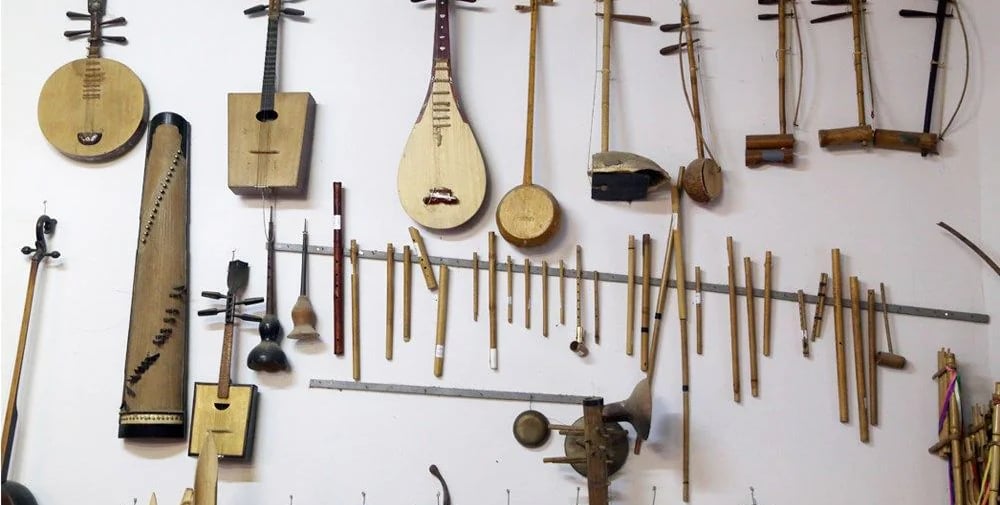
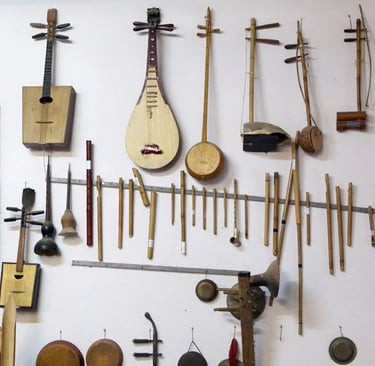
For the international musicologist, the artisan, and the seeker of indigenous sound, the sheer diversity and unique structural ingenuity of Việt Nam’s Traditional Musical Instruments (Nhạc Cụ Dân Tộc) present a sonic treasure trove. This instrumental family—ranging from the ancient, monolithic Đàn Đá (Stone Lithophone) to the intensely intimate, single-stringed Đàn Bầu (Monochord)—is far more than a collection of tools for performance. Each instrument is a material chronicle—a direct physical manifestation of the environment, the history, and the spiritual cosmology of the region from which it originates. The instruments are designed not just to play notes, but to tell a story, evoke a landscape, and express the deepest, most complex emotions of the Vietnamese soul.
As specialists in Vietnamese heritage and profound cultural analysis at Vietnam Charm, we embark on an essential, detailed exploration to decode this material voice. We will meticulously analyze the ecological imperative that dictates material choice (stone, bamboo, silk), the philosophical narrative embedded in the unique structure and timbre of instruments like the Đàn Bầu, the sociological function of specific instrumental ensembles, and the profound way this diverse orchestra articulates the national commitment to resourcefulness, emotional depth, and spiritual connection. Understanding these instruments is essential to grasping the emotional landscape and the profound sonic grammar of the Vietnamese spirit.
1. The Ecological Imperative: Materials as a Chronicle of Place
Vietnamese traditional instruments are defined by a fundamental ecological imperative: their raw material is sourced directly from the immediate natural environment, ensuring that the sound itself carries the acoustic signature of the land—the mountains, the river, and the forest. The choice of material is not accidental; it is a profound declaration of regional identity.
The most primal example is the Đàn Đá (Stone Lithophone), found primarily in the Central Highlands and Southern provinces. This instrument, considered one of the world's oldest, is composed of various lengths of naturally shaped stone slabs, often found in ancient riverbeds or mountain caves. When struck, the stone produces a clear, resonant, and ethereal tone. The Đàn Đá is the sound of the ancient earth and deep time—a permanent, immovable testament to the raw geological history of the region. Its material is the most profound possible link to the earth element.
Conversely, instruments like the Đàn Tranh (Zither) and the Đàn Bầu (Monochord) rely heavily on bamboo, wood, and silk. Bamboo, the quintessential Vietnamese plant, symbolizes resilience and flexibility, and is used extensively for flutes (Sáo), clappers (Phách), and percussive devices. Silk is traditionally used for the strings, valued for its high tensile strength and its ability to produce a delicate, complex timbre. The use of these renewable, organic materials stands in profound contrast to the heavier metallic instruments of other traditions, emphasizing the Vietnamese aesthetic preference for delicacy, natural texture, and organic harmony. The instruments are designed to sound natural, not synthetic.
2. The Narrative of Intimacy: Decoding the Đàn Bầu (Monochord)
The Đàn Bầu (Single-Stringed Monochord) is, arguably, the most philosophically profound and emotionally expressive instrument in the Vietnamese orchestra. Its unique structure and melancholic timbre embody a deep cultural commitment to intimacy, solitude, and unadorned emotional honesty.
The instrument’s structural simplicity is its genius: a single string stretched over a soundbox, manipulated by a flexible bamboo rod (cần đàn) attached to a gourd resonator (bầu). The player uses a small plectrum to pluck the string while manipulating the bamboo rod to change the tension, thereby creating a continuous, fluid spectrum of microtones and pitch bends. This microtonal fluidity allows the instrument to mimic the nuanced, delicate inflections of the human voice and the subtleties of the Vietnamese language—the rising and falling of its tones—making it uniquely capable of expressing complex, often melancholy, human emotion.
The Đàn Bầu is philosophically linked to solitude and contemplation. It is traditionally the instrument of the blind street minstrel (hát rong) or the scholar in quiet reflection. Its single string symbolizes the singularity of the human soul—the focused, intimate expression of inner feeling that requires no external accompaniment to validate its truth. The instrument often plays highly melodic, emotionally penetrating lines that sound like a gentle, reflective whisper. The player’s skill lies in their ability to make the single string sound like a continuous, profound emotional dialogue, transforming physical simplicity into sonic complexity. The Đàn Bầu is the ultimate voice of the introspective Vietnamese soul.
3. The Structural Heart: The Đàn Tranh and the Aesthetic of Elegance
The Đàn Tranh (16-String Zither) serves as the rhythmic and harmonic heart of many Vietnamese chamber ensembles, embodying a high aesthetic commitment to elegance, disciplined complexity, and refined beauty.
The instrument is characterized by its long, curved soundbox and its 16 metal strings, which are tuned to a pentatonic scale and supported by movable bridges. The player uses long picks (often plastic or metal) attached to their fingers to pluck the strings, while the left hand is used to press and bend the strings behind the bridges, creating the characteristic vibrato and microtonal ornamentation that defines Vietnamese music. The sound is bright, clear, and shimmering, often used to depict scenes of natural beauty, courtly life, or complex narrative events.
The Đàn Tranh is structurally and stylistically linked to the highest classical arts, serving as a primary instrument in the Ca Trù ensemble and the more refined Đờn Ca Tài Tử groups. Its repertoire is vast and technically demanding, requiring years of disciplined practice to master the complex plucking techniques and the subtle use of vibrato. The elegance of its curved frame, often intricately decorated with mother-of-pearl inlay, visually matches the elegance of its sound, reinforcing the cultural aesthetic that form and function must achieve unified, disciplined beauty.
4. The Ensemble and Dialogue: The Rhythm of Collective Sound
Vietnamese instruments rarely perform in isolation; their true function is realized within the ensemble (hợp tấu), where they engage in a sophisticated, fluid musical dialogue that reflects the social fluidity and collective nature of Vietnamese life.
Unlike the rigid harmonic structure of Western orchestras, Vietnamese ensembles (such as those playing Đờn Ca Tài Tử or Nhã Nhạc) rely on heterophony—a style where all instruments play variations of the same melody simultaneously, ornamenting and improvising around the core structure. This creates a dense, fluid, and complex texture where no single instrument completely dominates, symbolizing the collective voice of the community over the singular dominance of the individual.
The core rhythmic discipline is often maintained by simple, traditional percussion: the Song Loan (Wood Block/Clapper) or the Trống (Drum). These percussive instruments do not simply keep time; they act as the sonic signals for transitions, emotional shifts, and ritualistic cues, ensuring the ensemble maintains its internal cohesion and synchronizes its movement to the deeper, underlying rhythm of the custom. The musical dialogue is thus a constant, audible reaffirmation of the social contract—listening, yielding, and contributing to the collective sonic whole.
5. Conclusion: The Unwavering Voice of the Land
The traditional instruments of Việt Nam are the ultimate, enduring material testimony to the nation's profound connection to its landscape, its history, and its innermost emotional life. They transform the simple materials of the forest and the earth into complex, expressive voices. By analyzing the ecological integrity of the Đàn Đá and Sáo, the narrative intimacy of the single-stringed Đàn Bầu, the aesthetic elegance of the Đàn Tranh, and the collective social dialogue of the ensembles, the observer gains access to a core truth: these instruments are far more than tools for performance. They are the unwavering, lyrical voices of the land—a rich, diverse orchestra that articulates the resilience, the disciplined artistry, and the deep, abiding emotional honesty of the Vietnamese spirit.
We are on social media
Vietnam Charm belongs to Vietpearl Travel., JSC
Contact:
Email: info@vietnamcharm.top
© 2026. by Vietnam Charm. All rights reserved
Travel license number: 01-827/2020
Refund Policy