Giảm giá hấp dẫn cho tour du lịch!


THE MICRO-COSMOS: VILLAGE COMMUNAL BELIEFS — DECODING THE SPIRITUAL SOVEREIGNTY, THE CULT OF THE THÀNH HOÀNG, AND THE LỆ LÀNG CONTRACT
More than local faith: exploring Tín ngưỡng Làng Xã as the defining spiritual, political, and social self-governance system of traditional Việt Nam, analyzing how the Đình became the nation’s democratic heart, and how the Thành Hoàng maintains moral order.
HERITAGE & SPIRITLOCAL EXPERIENCES
Tobin Nguyen
11/6/20257 phút đọc

For the cultural historian and the anthropologist, the traditional Vietnamese village (Làng hay Xã) is the fundamental, most critical unit of civilization—a highly complex, self-sufficient, and spiritually sovereign micro-cosmos. Its operational code is defined not by the edicts of the distant imperial court, but by an intricate, ancient web of Tín ngưỡng Làng Xã (Communal Village Beliefs). This belief system is the spiritual infrastructure that precedes and often supersedes the centralized state, dictating social hierarchy, economic obligations, and the very moral fabric of the community. The famous, defiant adage, "Phép vua thua lệ làng" (The Emperor's law yields to the village's custom), is the ultimate philosophical declaration of this local, spiritual, and political autonomy, asserting the sacred authority of the local collective over all external powers.
As specialists in Vietnamese heritage and profound cultural analysis at Vietnam Charm, we embark on an essential, detailed exploration to decode this ancient sovereignty. We will meticulously analyze the spiritual and political function of the Đình (Communal House), the identity and immense power of the Thành Hoàng (Tutelary God), the mechanism of social control embedded in the Customary Law (Lệ Làng), and the profound role the annual Lễ Hội (Communal Festival) plays in regenerating social cohesion and spiritual vitality. Understanding Tín ngưỡng Làng Xã is essential to grasping the core value of local self-reliance, the sacred authority of history, and the deep commitment to collective identity that has defined the Vietnamese psyche for millennia.
1. The Architectural Center: The Đình as Spiritual and Political Nexus
The physical and spiritual heart of the communal belief system is the Đình (Communal House). The Đình is not simply a temple or a town hall; it is the unifying spiritual, administrative, and cultural nexus of the entire village, often standing as the most imposing and beautifully maintained piece of architecture within its domain.
Its architectural design profoundly reflects its multi-functional sanctity. Typically built with massive, sturdy wooden pillars, intricate carvings, and an imposing, curved roof adorned with stylized symbols of the dragon and phoenix, the Đình visually communicates the village's prosperity, its aesthetic pride, and its deep spiritual roots. The Đình must perform three essential, overlapping, and equally vital functions. Firstly, it is the Spiritual Sanctuary, serving as the sacred dwelling place of the Thành Hoàng (Tutelary God), the invisible protector who holds supreme authority over the village's land and destiny. The most sacred spot is the Hậu Cung (Back Chamber), where the spirit tablet or a veiled image of the Thành Hoàng resides in solemn stillness. Secondly, it is the Administrative Center, serving as the official meeting place for the Hương Chức (Village Elders/Council) who gather to deliberate on village affairs, collect taxes, organize necessary corvée labor, and crucially, enforce the Lệ Làng (Customary Law). All political and economic decisions affecting the local populace are made under the direct, watchful, spiritual authority of the Thành Hoàng. Lastly, it is the Cultural Hub, the expansive stage for communal events, performances of traditional arts (Hát Chèo, Rối Nước), and the immense annual Lễ Hội. It is the physical space where the village's collective identity is actively and joyously regenerated. The fact that spiritual, political, and cultural life all converge in one singular architectural space powerfully demonstrates that in traditional Việt Nam, spiritual belief is fundamentally inseparable from social governance.
2. The Spiritual Sovereign: Decoding the Cult of the Thành Hoàng
The central, most active figure in the village's belief system is the Thành Hoàng (Tutelary God). This figure is the supreme, invisible, and deeply personalized protector of the village, holding spiritual sovereignty over its specific land, inhabitants, and ultimate destiny.
The identity of the Thành Hoàng is remarkably flexible and diverse across the nation, serving as a powerful mechanism to integrate unique local histories and ancestral memories. Unlike the universal deities of Buddhism or Taoism, the Thành Hoàng is a localized, personalized spiritual hero. This spiritual patron might be a powerful Historical Figure, such as a heroic general, a righteous mandarin, or a scholar who performed an extraordinary, documented service for the nation or the region, such as defending the territory or establishing the village's original structure. Alternatively, the Thành Hoàng can manifest as a Nature Spirit, such as a benevolent animal, a powerful ancient tree, or a spirit of the mountain or river that predates human settlement, symbolizing the village's intimate, ecological connection to its specific geographical environment. In many cases, the figure is the very Pioneer Founder (Tổ Tiên Khai Canh) who first cleared the land and founded the village, symbolizing the primacy of the bloodline and the immense effort of the original settlers. Regardless of their origin, the Thành Hoàng's spiritual authority is absolute within the boundaries of the village. The villagers hold the unwavering belief that the Thành Hoàng actively oversees the daily lives and moral conduct of the residents, granting protection (phù hộ) and prosperity when they adhere to the Lệ Làng, and inflicting misfortune or spiritual sickness (trừng phạt) when they violate the social and moral code. The Thành Hoàng is thus the ultimate moral enforcer, ensuring communal stability and discipline through the pervasive threat of spiritual authority. The highest, most sacred duty of the village is the continuous, meticulous worship of its Thành Hoàng.
3. The Social Contract: Customary Law and the Power of Lệ Làng
The practical, day-to-day application of the communal beliefs is manifested in the Lệ Làng (Customary Law). This unwritten, ancient, and occasionally codified set of rules, established by the ancestors and vigilantly enforced by the council of elders (Hương Chức), is the genuine, deeply revered constitution of the village.
The power of Lệ Làng stems from its comprehensive nature, governing virtually every aspect of social life that the distant imperial law could not effectively manage, providing stability and predictable order. The law dictates Resource Management, determining the fair distribution and shared management of communal land (ruộng đất công), water for critical irrigation, and access to communal forests. It rigorously defines Moral and Social Conduct, establishing acceptable behavior and imposing precise penalties for social transgressions such as domestic disputes, gambling, public indecency, and, most severely, blatant disrespect toward elders or the sacred Thành Hoàng. Furthermore, it formalizes Ritual Obligations, mandating the financial and labor contributions required of every single household for the annual Lễ Hội and the necessary upkeep of the sacred Đình. Crucially, the system vests the greatest social authority in the hands of the Elders (Cao Niên)—those closest to the ancestors and deemed the wisest, most experienced interpreters of the Thành Hoàng's will and the village's history—ensuring that governance is deeply rooted in respect, experience, and tradition. The power of Lệ Làng ultimately rested on its social enforceability and profound spiritual legitimacy. Violation of Lệ Làng resulted not just in temporal fines or public social ostracization (tẩy chay), but the ultimate, terrifying threat: spiritual punishment from the Thành Hoàng, which could affect the entire family's fortune and stability.
4. The Regeneration Cycle: The Lễ Hội as Communal Catharsis
The annual Lễ Hội (Communal Festival) is the high, celebrated climax of the village calendar—a mandatory, magnificent event that serves as the essential mechanism for social and spiritual regeneration. The festival is a temporary, joyous suspension of normal rigid order, deliberately designed to re-energize the spiritual contract and dissolve accumulated social friction.
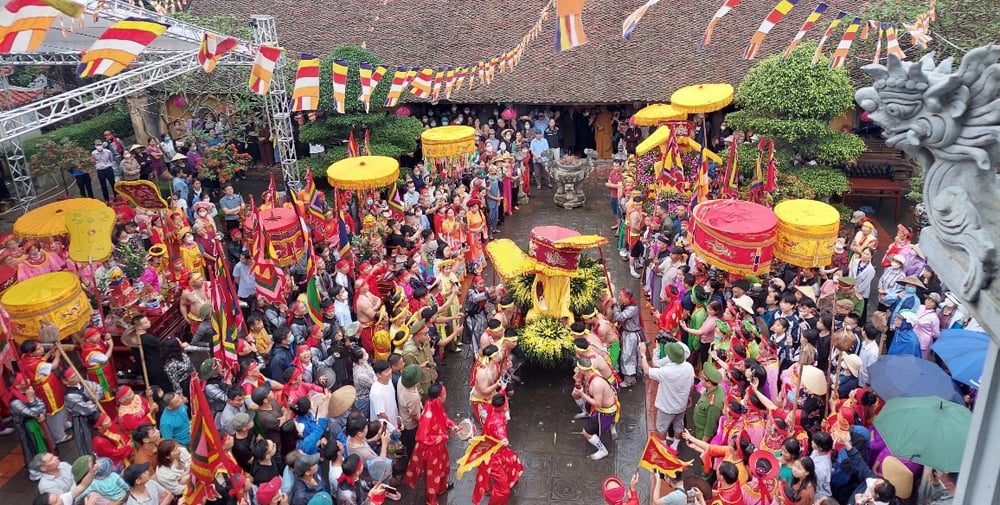
The Lễ Hội always begins with a solemn, meticulous Lễ Tế (Sacrificial Ritual) conducted inside the sacred Đình. The council of elders formally offers thanks, presents a detailed report of the past year's conduct, and seeks renewed blessings from the Thành Hoàng for the cycle ahead. This opening ritual is highly formalized and rigid, affirming the profound seriousness of the spiritual bond. The solemnity is then dramatically released into the Hội (Festival)—a several-day period of collective catharsis, joyous celebration, and symbolic inversion of the social order. The Hội features unique, highly competitive traditional games (wrestling, human chess, stylized boat races) and theatrical performances, all designed to showcase the village's collective physical strength, artistic talent, and spiritual vitality. The intense physical and emotional engagement serves a core function of social cohesion and identity affirmation. Every resident, regardless of their social rank or personal wealth, must participate. The communal feasting, the shared laughter, and the joint pride in the village's history and performances regenerate the collective identity, ensuring that the necessary tensions and minor disputes accumulated over the past year are dissolved in a shared wave of spiritual energy and renewed belonging. The festival ensures the village remembers who it is, where it came from, and why it must remain united under the powerful, protective gaze of the Thành Hoàng.
5. The Resilience in Modernity: The Enduring Local Spirit
Despite the immense political and economic changes of the 20th and 21st centuries, the core essence of Tín ngưỡng Làng Xã remains a potent, active force in contemporary Vietnamese life. While the overt administrative power of the Đình has been largely secularized and transferred to modern governance, its profound spiritual authority remains undiminished in the hearts of the people. Villages continue to meticulously restore and maintain their Đình as a matter of immense local pride and spiritual necessity, often petitioning local authorities to officially recognize and reinstate their specific Lễ Hội calendar. The pilgrimages to the major temples dedicated to the local Thành Hoàng still draw vast numbers, demonstrating that the spiritual sovereignty of the locality continues to provide a crucial, essential sense of belonging and historical continuity for millions. The legacy of Lệ Làng survives powerfully in the strong, internalized moral discipline observed by Vietnamese people, particularly in rural and semi-rural areas. The ingrained cultural habit of respecting the community's collective opinion, prioritizing the group's reputation over individual desire, and adhering to strict social protocols are direct, enduring products of this ancient system. Even in modern urban areas, Vietnamese citizens still frequently return to the ancestral village (quê hương) to participate in the Lễ Hội and pay respects at the Đình, affirming that their ultimate identity remains rooted in the micro-cosmos of the bloodline and the land.
Tín ngưỡng Làng Xã is the ultimate, masterful expression of local self-governance, spiritual sovereignty, and collective identity in Việt Nam. It transforms history into sacred law, architecture into a political forum, and a local hero into a cosmic protector. By meticulously analyzing the multifaceted role of the Đình, the personalized, profound power of the Thành Hoàng, the disciplined contract of the Lệ Làng, and the powerful regeneration of the Lễ Hội, the observer gains access to the core truth: the Vietnamese nation is built not on a single monolithic foundation, but on an endless, beautiful tapestry of vibrant, self-governing, and fiercely proud spiritual micro-cosmoses, eternally anchored to their land and their protective spirits.
We are on social media
Vietnam Charm belongs to Vietpearl Travel., JSC
Contact:
Email: info@vietnamcharm.top
© 2026. by Vietnam Charm. All rights reserved
Travel license number: 01-827/2020
Refund Policy