Giảm giá hấp dẫn cho tour du lịch!



THE MOMENTUM OF MODERNITY: URBANIZATION — THE BATTLE BETWEEN TRADITION AND THE RISE OF THE VIETNAMESE METROPOLIS
More than concrete and steel: decoding the profound, accelerating force of Vietnamese urbanization, exploring the sociological drama of rural-to-urban migration, the architectural layering of history, and the fierce competition for identity between Hà Nội and Sài Gòn.
LOCAL EXPERIENCESURBAN & DAILY LIFEVIETNAMESE CULTURE
Tobin Nguyen
11/6/20255 phút đọc
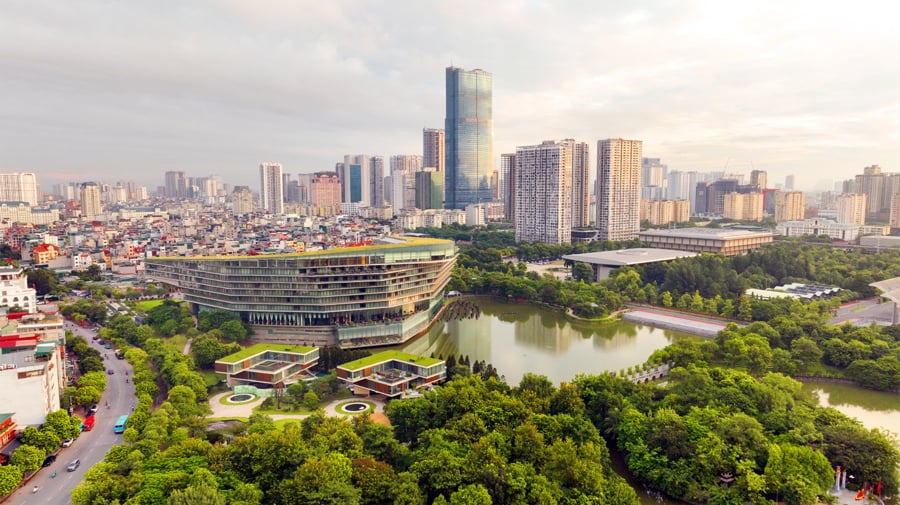
For the international observer, the sheer velocity of transformation is the most striking characteristic of modern Việt Nam. The ancient agricultural landscapes are giving way to dynamic, dense metropolitan centers, characterized by soaring skyscrapers, sprawling industrial zones, and a relentless commercial energy. This force, known as Đô Thị Hóa (Urbanization), is not merely a statistical trend; it is the central sociological drama of the 21st century Vietnamese experience—a seismic shift that is rapidly redefining familial structures, economic opportunity, and the very cultural identity of the nation. The cities act as immense, complex laboratories where tradition and global ambition clash, negotiate, and ultimately fuse.
As specialists in Vietnamese heritage and profound cultural analysis at Vietnam Charm, we embark on an essential, detailed exploration to decode this phenomenon. We will meticulously analyze the historical speed and economic drivers of this transformation, the architectural layering that reveals the cities’ complex pasts, the sociological drama of rural-to-urban migration, and the powerful, defining competition for national identity between the nation’s two immense urban hearts: the stately, ancient Hà Nội and the dynamic, commercial Sài Gòn (Ho Chi Minh City). Understanding urbanization is essential to grasping the core values of adaptability, ambition, and the future-forward momentum of the modern Vietnamese spirit.
1. The Historical Velocity: Economic Drivers and the Post-Đổi Mới Boom
The current speed of Vietnamese urbanization is a direct, measurable consequence of the nation’s economic and political transformation, starting most profoundly with the Đổi Mới (Renovation) policies initiated in 1986. This economic liberalization released an immense, pent-up force of entrepreneurial energy, immediately positioning the urban centers as the inevitable engines of growth.
The primary driver of urbanization is the massive shift from an agrarian economy to an industrial and service-based one. The creation of large-scale industrial parks (IPs) and foreign direct investment (FDI) concentrated around the two major metropolitan hubs—Hà Nội and Ho Chi Minh City—created a magnetic pull for labor. Millions of young, ambitious individuals left the rural quê hương (homeland)—the tranquil, but often economically constrained, ancestral villages—to seek economic opportunity and upward mobility in the cities. This rapid influx of population fueled an exponential demand for infrastructure, housing (notably the dense Tube Houses), and services, necessitating the continuous, aggressive expansion of the urban footprint into the surrounding agricultural lands. The economic promise of the city, driven by the intense competition for success, is the single most powerful force reshaping the Vietnamese landscape.
This velocity creates an architectural dichotomy. While the centers boast soaring skyscrapers and global hotel chains, the periphery remains a chaotic, fluid zone where half-built housing complexes and impromptu infrastructure violently abut ancient rice fields and traditional village structures. This continuous, visible clash of the past and the future is the physical signature of accelerated urbanization.
2. The Sociological Drama: Migration, Identity, and the Urban-Rural Divide
The most profound impact of urbanization is the sociological drama of migration, which creates intense pressures on traditional familial structures and personal identity.
The decision to migrate from the quê hương to the metropolis is inherently an act of calculated sacrifice. Young migrants leave the security of the ancestral village and the immediate support of the extended family to pursue economic gains that will ultimately support the family unit back home. This act generates a profound sense of psychological duality: the migrant is physically integrated into the chaos and anonymity of the city, yet remains spiritually and financially anchored to the traditional life of the village. The commitment to return for Tết Nguyên Đán (Lunar New Year) is the annual, non-negotiable spiritual affirmation of this unbreakable bond, providing a temporary release from the pressures of urban anonymity.
In the cities, this massive influx of temporary and permanent residents creates new, fluid urban identities. The traditional social contract of the village, defined by Lệ Làng (Customary Law) and the strict hierarchy of elders, dissolves in the vast anonymity of the metropolis. New social structures—based on shared provincial origin, academic networks, or professional specialization—emerge to provide necessary support, but the intense social pressure for individual material success remains overwhelming. This relentless pursuit of upward mobility is the energy that drives the urban economy, but it also creates a persistent, subtle tension between the traditional values of collective harmony and the modern demands of fierce individual competition.
3. The Urban Rivalry: Hà Nội vs. Sài Gòn — The Battle for the National Soul
The urbanization of Việt Nam is defined by the profound, eternal, and often humorous rivalry between the nation’s two major metropolitan centers. These cities represent two distinct, defining facets of the national identity, each fiercely asserting its cultural supremacy.
Hà Nội (The Timeless Capital): Represents the cultural anchor and the political heart. Its urbanization is marked by a deep respect for historical layers—the ancient 36 Phố Phường (36 Guild Streets), the solemn French colonial architecture, and the surrounding rice-growing villages of the Red River Delta. Hà Nội's pace is often perceived as more measured, more traditional, and more concerned with the preservation of cultural formality and the legacy of the past. The identity here is rooted in Thăng Long (Ascending Dragon)—the thousand-year axis of power.
Sài Gòn (The Commercial Engine): Represents unfettered dynamism and economic ambition. Its urbanization is characterized by relentless speed, architectural fusion, and a fierce, individualistic entrepreneurial spirit. Sài Gòn is a modern migrant city, less bound by the ancient social codes of the North. Its identity is forward-looking, flexible, and defined by the chaos, energy, and opportunity of the xe máy ecosystem and its high-velocity commerce.
This perpetual rivalry is not destructive; it is creative. It drives economic innovation, cultural production, and defines the ongoing, internal debate about what it means to be a modern Vietnamese citizen—a balance between tradition (Hà Nội) and relentless future momentum (Sài Gòn).
4. The Architectural Layering: History, Fusion, and the Vertical City
The process of urbanization creates a unique, powerful architectural layering in Vietnamese cities, revealing the entire history of the nation in a single, complex urban block.
The cities are characterized by the continuous juxtaposition of four distinct architectural eras:
The Ancient Layer: The temples (Đình), pagodas (Chùa), and relics of the pre-colonial era, often surviving as spiritual islands amidst the urban flood, affirming the continuity of local belief systems.
The Colonial Layer: The grand, stately French colonial buildings (the Opera House, the Post Office, old government quarters), which provide a visual sense of historical scale and formality, contrasting sharply with the structures built around them.
The Tube House Layer: The dense, pervasive, and functional Nhà Ống, symbolizing the economic constraints and the resilience of the family unit in high-density areas. This layer is the most honest representation of 20th-century urban necessity.
The Modern Layer: The soaring, glass-and-steel skyscrapers, the global commercial centers, and the massive highway interchanges, symbolizing the nation’s fierce ambition to integrate into the global economic landscape.
This architectural layering is a constant visual reminder that the past is not gone; it is simply built upon and integrated into the chaotic, living present. Urban planning, therefore, becomes a continuous, high-stakes negotiation between economic momentum and the sacred duty of preserving historical memory.
5. Conclusion: The Relentless Force of Adaptability
Urbanization in Việt Nam is the most profound and relentless force of change currently sweeping the nation. It is a phenomenon driven by the deepest human aspirations—the hope for economic security, the dream of upward mobility, and the fierce commitment to providing a better future for the next generation. By decoding the sociological drama of migration, the competitive energy of the two major cities, and the complex architectural layering of history, we understand that this transformation is fundamentally a testament to the Vietnamese spirit’s extraordinary adaptability and resilience. The chaotic yet functioning metropolis is the ultimate physical proof that the nation is capable of synthesizing the chaos of modernity with the profound, deep-rooted values of its past, ensuring that its journey towards the future is both rapid and culturally anchored.
We are on social media
Vietnam Charm belongs to Vietpearl Travel., JSC
Contact:
Email: info@vietnamcharm.top
© 2026. by Vietnam Charm. All rights reserved
Travel license number: 01-827/2020
Refund Policy