Giảm giá hấp dẫn cho tour du lịch!


THE MORTAR-LESS MYSTERY: CHĂM PA ARCHITECTURE — DECODING THE HINDU COSMOLOGY, UNSOLVED ENGINEERING, AND THE STONE SOUL OF MỸ SƠN
More than ruins: exploring the profound spiritual geometry and technical enigma of Chăm Pa temples, analyzing how these brick sanctuaries embodied Hindu cosmology, defied time through unknown construction methods, and articulated the tragic, enduring legacy of a lost maritime kingdom.
VIETNAMESE CULTURETHE ARCHITECTURAL SOULLOCAL EXPERIENCES
Tobin Nguyen
11/6/20255 phút đọc
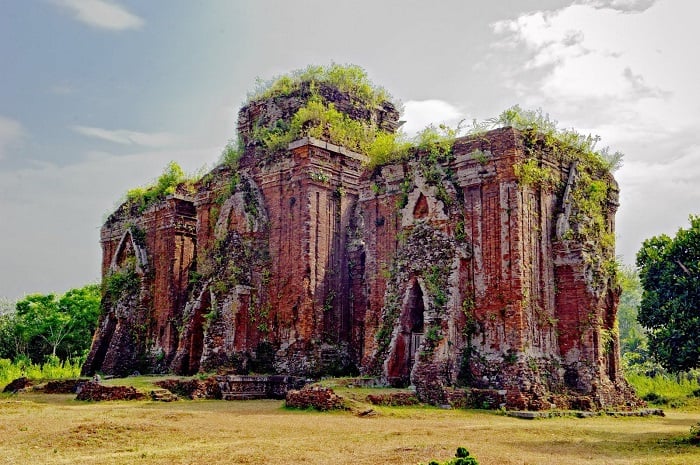
For the international traveler, the architectural sites of the ancient Chăm Pa Kingdom—especially the hallowed ground of Mỹ Sơn Sanctuary—present a unique, profound form of historical ruin. These are not the stone blocks of Roman or Greek antiquity, but towering, intricate structures built almost entirely from a rich, reddish-orange brick, standing in stark, passionate contrast to the lush, enveloping Vietnamese jungle. The Chăm Pa temples (tháp) are far more than historical relics; they are unsolved architectural enigmas and the physical, spiritual testament to a powerful, lost maritime civilization that once controlled the Central Coast. Their presence forces a contemplative silence, challenging modern understanding with the secrets of their construction and the solemn beauty of their Hindu cosmological intent.
As specialists in Vietnamese heritage and profound cultural analysis at Vietnam Charm, we embark on an essential, detailed exploration to decode this ancient mystery. We will meticulously analyze the spiritual geometry that governs the structure of the tháp, the unsolved engineering genius of the mortar-less brick construction, the cultural tragedy that defined the kingdom's gradual disappearance, and the profound way this brick architecture articulates the enduring legacy of Chăm artistic mastery, spiritual devotion, and resilience. Understanding Chăm Pa architecture is essential to grasping the deep, complex history of the Central Coast and the powerful, haunting beauty of a civilization built by the sea.
1. The Spiritual Geometry: The Kalan and the Hindu Cosmos
Chăm Pa architecture is entirely governed by a powerful spiritual geometry rooted in the profound principles of Hindu cosmology. The primary structure—the towering sanctuary known as the Kalan (Tháp)—is an attempt to physically manifest the universe and its divine hierarchy on Earth.
The Kalan is an architectural symbol of Mount Meru, the mythical home of the Hindu gods, particularly Shiva, the creator and destroyer. The structure is typically square or rectangular at the base, symbolizing the stability of the Earth, and rises upward in a series of layered, tapering tiers. This verticality is a deliberate, dramatic attempt to bridge the mortal world with the celestial realm, guiding the devotee's spiritual gaze toward the heavens. The tower is inherently an axis mundi—a sacred channel connecting all levels of the cosmos.
The internal design reinforces this cosmology. The main entrance, often elaborate and facing the auspicious East (the direction of the rising sun and the gods), leads into a dark, solemn inner chamber (Cella). This inner chamber is the sacred heart of the temple, the dwelling place of the Linga (the phallic symbol of Shiva's creative power) or the deity's image. The contrast between the brilliant light of the exterior carvings and the profound darkness of the interior is essential; it symbolizes the journey from the external world of illusion to the internal, hidden truth of the divine. The Kalan is thus a theological device, instructing the worshipper through stone and shadow.
2. The Unsolved Engineering: The Mystery of the Mortar-less Brick
The most challenging and enduring aspect of Chăm Pa architecture is the unsolved engineering enigma of its brick construction. The resilience and structural complexity of the Kalan, built almost entirely without visible mortar, continues to baffle modern scientists and architects.
The Chăm utilized a unique, locally produced reddish brick—often softer and more porous than modern varieties—which allowed for incredibly intricate, deep, and complex carvings directly onto the surface after the structure was assembled. The mystery lies in the binding agent. Modern analysis reveals only minimal traces of a mortar-like substance. The prevailing theory suggests that the bricks were laid tightly together, and then, using a proprietary technique, the builders applied a vegetable-based, natural adhesive or resin that was heated and absorbed by the porous bricks, effectively fusing them into a seamless, unified, massive structural unit. This technique allowed for an unparalleled level of structural stability and durability against seismic activity and the intense tropical climate.
This construction method allowed for the second great technical marvel: the carving after construction. Because the structure became a unified mass, the artisans could carve elaborate reliefs and complex deities (such as the graceful figures of Apsaras or the fierce masks of the protective Kala) directly into the assembled walls. This method created a visual seamlessness, making the structure appear to be carved from a single, giant, monolithic block of stone, rather than assembled from individual bricks. The longevity of these temples, enduring centuries of warfare and tropical decay, stands as a testament to the sophistication and unwritten ancestral knowledge of Chăm Pa engineers.
3. The Artistic Narrative: The Fluidity of Stone and the Beauty of Detail
Chăm Pa art is defined by its ability to imbue the static nature of brick and stone with an incredible sense of fluidity, motion, and intense emotional expression. The surviving carvings are masterpieces of Indianized South East Asian sculpture.
Unlike the disciplined, symmetrical serenity of much Vietnamese imperial art, Chăm Pa sculpture is often dynamic, passionate, and highly detailed. The carvings frequently depict dancing celestial maidens (Apsaras), fierce guardian deities, mythological creatures, and intense scenes from the Hindu epics. The aesthetic commitment was to narrative energy and high drama. The figures are often rendered with a profound, sensual grace—hips swaying, hands gesturing, and faces expressing deep, almost human emotion. This emphasis on fluid, narrative detail contrasts sharply with the stark, unadorned geometry of the main brick tower, creating a profound visual tension between the external structure and the internal artistic life.
The artistic narrative serves a vital spiritual function. By carving the stories and the pantheon onto the external surfaces, the temple became a continuous, visual instruction manual for the worshipper, guiding them through the complex world of Hindu theology before they entered the dark, contemplative silence of the inner sanctuary. The intricate stone work is thus the ultimate, lyrical declaration of the Chăm people's spiritual devotion.
4. The Legacy of Tragedy: Decline, Silence, and the Lost Kingdom
The Chăm Pa temples stand today as powerful, poignant memorials to a cultural tragedy—the slow, inexorable decline and eventual geopolitical absorption of a once-powerful maritime kingdom.
From the 4th to the 15th centuries, the Chăm Pa kingdom was a dominant force, controlling vital sea trade routes and maintaining sophisticated cultural connections with India, Java, and China. The kingdom was wealthy, powerful, and artistically vibrant, with its capital shifting geographically along the Central Coast. However, constant warfare with the Đại Việt (the predecessor state of modern Việt Nam) led to a gradual, centuries-long push southward, culminating in the decisive fall of its northern capitals. The temples that remain—many now in ruin due to war and natural decay—are the silent, enduring witnesses to this historical erasure.
The enduring image of Mỹ Sơn Sanctuary—where the remnants of over 70 temples stand in the quiet, isolated valley, surrounded by jungle—is one of profound solemnity and silence. The ruins are protected by UNESCO, but their fragility constantly reminds the visitor of the lost sovereignty and the profound mystery that still shrouds the details of Chăm life, language, and final disappearance. Visiting these sites is not just a study of architecture; it is an act of contemplation on the impermanence of empires and the enduring fragility of human civilization against the forces of time and conflict.
5. Conclusion: The Permanent Beauty of the Brick Soul
Chăm Pa architecture is the ultimate, profound testament to the power of spiritual belief, artistic mastery, and technical ingenuity. The temples, built with a unique, enduring brick and designed as models of the Hindu cosmos, stand as a permanent, haunting dialogue between human ambition and the limits of knowledge. By analyzing the spiritual geometry of the Kalan, the unsolved engineering mystery of the mortar-less brick, the fluid beauty of its dynamic sculpture, and the solemn tragedy of its political decline, the observer gains access to a core truth: the Chăm temples are far more than relics. They are the enduring brick soul of a lost kingdom—a beautiful, poignant reminder that the deepest expressions of a civilization’s identity can survive centuries of silence, standing proud and defiant against the jungle and the ceaseless flow of history.
We are on social media
Vietnam Charm belongs to Vietpearl Travel., JSC
Contact:
Email: info@vietnamcharm.top
© 2026. by Vietnam Charm. All rights reserved
Travel license number: 01-827/2020
Refund Policy