Giảm giá hấp dẫn cho tour du lịch!


THE PANTHEON OF TOLERANCE: MOTHER GODDESS WORSHIP — DECODING SYNCRETISM, DIVINE FEMININITY, AND THE ULTIMATE VIETNAMESE SPIRITUAL ANCHOR
More than belief: exploring Tín Ngưỡng Thờ Mẫu (The Worship of the Mother Goddess) as Việt Nam’s ultimate spiritual anchor and ethical crucible, analyzing its profound, unyielding syncretic structure, its elevation of divine femininity, and its role as the non-negotiable guarantor of cultural cohesion and ecological reverence.
VIETNAMESE CULTURETHE COSMIC TOLERANCELOCAL EXPERIENCES
Tobin Nguyen
11/6/20255 phút đọc
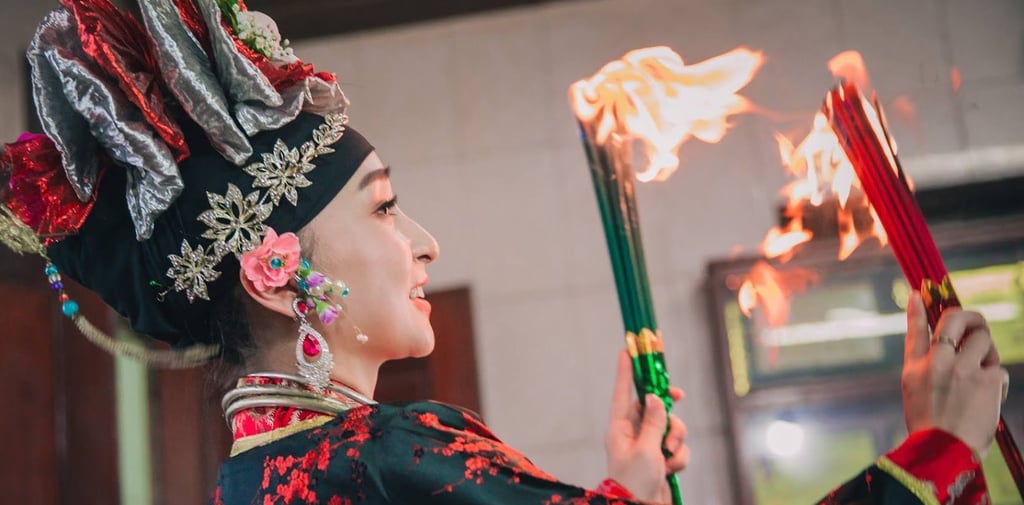
For the international theologian, the anthropologist of gender, and the seeker of the nation's deepest, most resonant spiritual pulse, The Worship of the Mother Goddess (Đạo Mẫu) is not merely a folk practice; it is the nation’s most vibrant, fluid, and powerful expression of indigenous spirituality—a vast, intricate, and dazzling pantheon that seamlessly integrates and harmonizes the seemingly disparate forces of Buddhism, Taoism, Ancestral Worship, and local Folk Deities. Đạo Mẫu asserts an ultimate, non-negotiable truth: the highest power is compassionate, feminine, and profoundly immanent—it resides not in distant male rigidity, but in the immediate, nurturing, and powerful forces of the natural world (Earth, Water, Sky, Mountains). The entire spiritual landscape is consecrated as a realm governed by the grace and protective energy of the Mothers and the Sages.
As specialists in Vietnamese heritage and profound cultural analysis at Vietnam Charm, we embark on an essential, detailed exploration to decode this lyrical, rhythmic spiritual philosophy. We will meticulously analyze the cosmological mandate that elevates the Mẫu (Mother) as the supreme creative force, the structural genius of syncretism that transforms the temple into the ultimate spiritual melting pot, the emotional power of the Hầu Đồng (Spirit Mediumship) as the central ritual of communion, and the profound way this belief system articulates the core national values of cosmic tolerance, environmental intimacy, and the spiritual sovereignty of the feminine principle. Understanding Đạo Mẫu is essential to grasping the deepest emotional heart and the continuous, dynamic energy that underpins Vietnamese spirituality.
1. The Cosmological Mandate: The Mother as the Supreme Creative Force
The foundation of Mother Goddess Worship is an absolute cosmological mandate: the belief that the universe, the land, and all living energy originate from and are perpetually governed by the compassionate, fertile power of the Mẫu (Mother), who is the supreme creative and protective force.
Mẫu is not a singular entity; she is the embodiment of the triune cosmos, manifested primarily in the Tam Phủ (Three Realms): Mẫu Thượng Thiên (Mother of the Celestial Realm - Red/Sky), Mẫu Thoải (Mother of the Water Realm - White/Rivers/Seas), and Mẫu Thượng Ngàn (Mother of the Forest/Mountain Realm - Green/Earth). This triune system asserts that the divine is utterly immanent and environmental—it is found in the sky above, the water that sustains, and the earth that nourishes. The worshipper does not seek the divine in an abstract void; they seek it in the immediate, living forces of the local landscape.
The Power of Femininity: The elevation of the feminine principle is a defining, crucial aspect. It asserts a spiritual truth that contrasts sharply with the male-dominated rigidity of classical Confucianism: the highest power is characterized by Từ Bi (Compassion), Lòng Khoan Dung (Tolerance), and Sức Sống Sinh Sản (Generative Fertility). The Mother is eternally accessible, empathetic, and fundamentally concerned with the immediate well-being and prosperity of her children (the human populace). This relationship transforms worship from a rigid duty into an intimate, personal, and profoundly emotional covenant with the divine.
2. The Structural Genius: Syncretism, Cohesion, and the Shared Altar
The Tín Ngưỡng Thờ Mẫu demonstrates an unparalleled structural genius of syncretism—the deliberate, seamless integration of deities and doctrines from seemingly disparate faiths into a single, cohesive, and unified spiritual architecture. This structural tolerance is the ultimate guarantor of cultural cohesion.
The Pantheon's Hierarchy: The Đạo Mẫu pantheon is organized into a vast, flexible hierarchy that includes the Mothers, the Tứ Phủ Công Đồng (The Council of the Four Palaces - adding Mẫu Địa/Earth to the Tam Phủ), and crucially, the Hàng Quan (Mandarin and Court Sages) and the Chầu Bà (Female Attendants). These figures often include historical heroes, powerful regional spirits, and local deities, ensuring that the spiritual system is perpetually localized and historically relevant.
The Shared Altar: The physical manifestation of this tolerance is the shared, multi-faith altar found in many Phủ (Mother Goddess temples) and Đền (Hero temples). On a single altar, the statue of the Mẫu (dressed in her royal robes) might stand alongside a representation of Quan Thế Âm Bồ Tát (Avalokitesvara Bodhisattva) from Buddhism, Lão Tử (Laozi) from Taoism, and the tablets for Tổ Tiên (Ancestors). The worshipper does not experience doctrinal conflict; they experience spiritual unity, accessing all necessary layers of cosmic protection and ethical guidance within one sacred space. This structural genius of tolerance is the most powerful psychological mechanism for ensuring that religious diversity never becomes a source of social fragmentation.
3. The Emotional Power: Hầu Đồng and the Ritual of Divine Communion
The emotional heart and the most dramatic expression of Mother Goddess Worship is the central ritual of Hầu Đồng (Spirit Mediumship)—a vibrant, theatrical, and intensely transformative performance that achieves direct, palpable communion between the human realm and the divine court.
The Ritual of Transformation: The Thanh Đồng (Medium), usually a respected man or woman, acts as the temporary, human vessel for the various deities (the Mothers, the Sages, the Courtiers) to descend (giáng đồng). Through the meticulous, rapid changing of elaborate costumes, music (chầu văn), dancing, and symbolic gestures, the Medium physically embodies the spirit's energy and character, transforming the Điện (Temple Hall) into a vibrant, moving spiritual court.
Emotional Catharsis and Guidance: The ritual serves a critical psychological and social function. As the deities descend, they offer Lộc (Spiritual Blessings)—rice wine, money, fruit—to the participants, symbolizing the divine generosity. Crucially, they offer spiritual advice and emotional guidance to the audience, addressing personal, familial, or communal problems. The intense energy, the ecstatic atmosphere, and the direct, personal advice provide profound emotional catharsis and spiritual reassurance to the faithful. Hầu Đồng is the ultimate visual and sensory affirmation of the Mothers' direct, empathetic involvement in the daily struggles of their children.
4. The Sociological Role: Gender, Authority, and the Locus of Hope
Mother Goddess Worship holds a unique and vital sociological role in Vietnamese society, acting as a profound source of spiritual authority for women, communal cohesion, and the locus of immediate, palpable hope for the populace.
Feminine Authority: Đạo Mẫu provides a powerful spiritual counterweight to the historical patriarchal structures of Confucianism. By establishing the Mẫu as the supreme authority, the religion elevates the spiritual and moral authority of women within the family and the community. The Thủ Nhang (Temple Custodians), the Mediums, and the vast majority of the devoted are women, transforming the temple into a sanctuary where female spiritual and managerial authority is absolute and revered. The Mẫu system is a continuous, quiet assertion of the enduring power and moral purity of the feminine spirit.
The Locus of Hope: Unlike philosophical systems that demand rigorous intellectual discipline, Đạo Mẫu offers a direct, immediate, and empathetic pathway to solace. Worshippers come to the Mẫu with their most immediate, existential problems—health, family, livelihood, financial security. The Mothers, being empathetic and maternal, are believed to offer direct intervention and comfort. This accessibility makes the temple the ultimate locus of hope and spiritual pragmatism for the common person, ensuring that the spiritual system remains profoundly relevant to the immediate, demanding struggles of daily life.
5. Conclusion: The Eternal Flow of Maternal Grace
Tín Ngưỡng Thờ Mẫu (Mother Goddess Worship) is the ultimate, enduring, and spiritually magnificent testament to the Vietnamese spirit's capacity for profound tolerance, spiritual synthesis, and unyielding reverence for the divine feminine. It is a philosophy that transforms the immense complexity of the cosmos into an intimate, accessible, and nurturing spiritual court. By analyzing the cosmological mandate that elevates the Mẫu as the triune creative force, the structural genius of syncretism on the shared altar, the emotional power of the Hầu Đồng ritual as divine communion, and the sociological role of affirming feminine spiritual authority, the observer gains access to a core, luminous truth: Đạo Mẫu is far more than religion. It is the permanent, unwavering declaration of cosmic tolerance and maternal grace—a powerful, lyrical assertion that asserts the cultural value of compassionate empathy, spiritual cohesion, and the belief that the strongest, most enduring form of divinity is the immanent, nurturing, and ever-present love of the Mother.
We are on social media
Vietnam Charm belongs to Vietpearl Travel., JSC
Contact:
Email: info@vietnamcharm.top
© 2026. by Vietnam Charm. All rights reserved
Travel license number: 01-827/2020
Refund Policy