Giảm giá hấp dẫn cho tour du lịch!


THE PATIENT NET: TRADITIONAL FISHING TECHNIQUES — DECODING SKILL, INTIMACY, AND THE LYRICAL COVENANT WITH THE WATER
More than catching: exploring Kỹ Thuật Đánh Bắt Cá (Traditional Fishing Techniques) as Việt Nam’s profound, multi-generational archive of water wisdom, analyzing the spiritual contract embedded in the Lưới (Net), the rhythmic mastery of the Chài (Throw Net), and its embodiment of disciplined patience and sustainable resourcefulness.
VIETNAMESE CULTURELOCAL EXPERIENCESTHE AGRARIAN HEART
Tobin Nguyen
11/8/20256 phút đọc
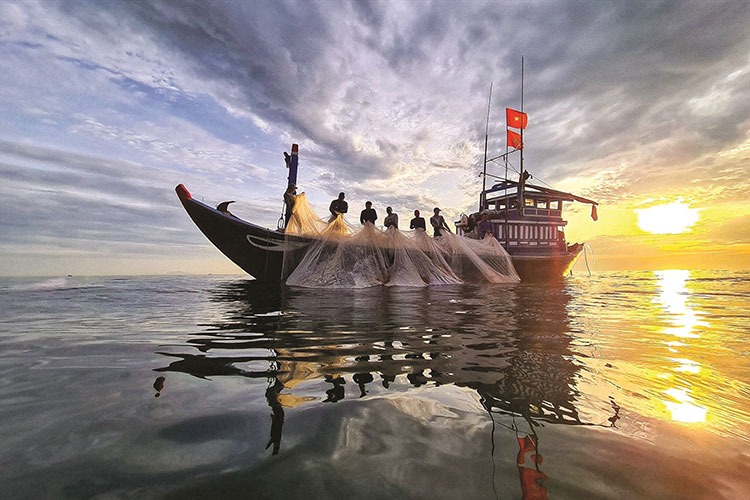
For the international ethnographer, the conservationist, and the seeker of profound human-environment intimacy, the vast, intricate world of Vietnamese traditional fishing techniques—spanning the coastal high seas, the estuarine shallows, and the inland river deltas—is far more than a collection of economic methods. It is a continuous, living archive of hydro-ecological wisdom, a testament to ancestral skill forged over millennia, where human ingenuity meets the immense, unpredictable power of the water. The art of fishing, in this culture, is defined by a primal patience, an intense environmental literacy, and a spiritual humility before the element that dictates life and death. Every cast of the net, every pull of the line, is a high-stakes, lyrical performance of the self-reliant soul.
As specialists in Vietnamese heritage and profound cultural analysis at Vietnam Charm, we embark on an essential, detailed exploration to decode this intimate, watery world. We will meticulously analyze the spiritual necessity that mandates offerings before launching the boat, the technical genius of specialized, localized gear (the vó or the rớ), the philosophical mandate of sustainability rooted in inherited knowledge, and the profound way this livelihood articulates the core national values of disciplined patience, environmental respect, and the self-reliant courage of survival. Understanding these fishing techniques is essential to grasping the emotional weight and the nuanced, patient soul of Việt Nam’s water civilization.
1. The Primal Literacy: Reading the Water, Sky, and the Unseen Language of the Deep
The survival and success of traditional Vietnamese fishing are entirely dependent on a form of primal environmental literacy—a complex, nuanced, and non-verbal knowledge set that allows the practitioner to read the unseen language of the water, the sky, and the subtle current with astonishing, inherited accuracy. This deep, intuitive wisdom is the ultimate tool of the trade.
The fisher's knowledge is an intense, accumulated science, forged in the relentless trial-and-error of generational experience. It encompasses the ability to read the stars, the phases of the moon, and the behavior of coastal birds to predict tidal cycles, weather shifts, and the location of migratory fish schools. It includes the capacity to read the color, the temperature, and the smell of the water to instantly determine salinity, the presence of specific species, or the approach of a storm front. Crucially, it involves the ability to read the subtle surface tension of the current to estimate depth, locate hidden underwater obstacles, and position the net or trap for maximum efficiency.
This literacy is born from absolute humility. The livelihood is built not on the arrogance of dominating the environment with technology, but on the disciplined humility of cooperating with its unpredictable, flowing rhythms. The traditional fisher is the quiet scientist of the sea and the river, understanding that true mastery lies in perfect adaptation and patient vigilance. This intense intimacy with the fluid element shapes a soul that is reflective, vigilant, and profoundly attuned to the constant, subtle shifts in the natural world—a defining psychological trait of the coastal and riverine communities.
2. The Spiritual Contract: Consecrating the Tools and the Ancestral Net
The economic act of taking life from the water is perpetually governed by a profound spiritual contract—a continuous, necessary series of rituals and beliefs that acknowledge the spiritual sovereignty of the water element and the necessity of seeking its blessing for every journey.
Every journey, every major launch, and every successful haul is preceded by ritual offerings (cúng). These offerings—incense, paper money, simple food, and solemnly poured rice wine—are directed toward the Thần Sông (River God), the Thần Biển (Sea God), or the revered, protective Cá Ông (Lord Whale). This ritual is a necessary act of spiritual negotiation: asking for safety, thanking the spirits for their provision, and seeking a measure of forgiveness for taking life from their domain. This respect transforms the economic act into a sacred, moral duty.
The tools of the trade themselves are consecrated. The boat, the net (lưới), and the line are often considered sacred, living extensions of the fisher’s life, imbued with ancestral spiritual energy. The net is especially revered; its creation is a meticulous, generations-old skill, and its success is believed to be tied to the spiritual favor it holds. The construction of the net—the careful weaving of the individual lines—is itself a meditative, moral act, reflecting the belief that the quality of the harvest is directly tied to the moral integrity and disciplined patience of the person who cast the net. The entire livelihood is an act of sustained, high-stakes faith.
3. The Technical Genius: Localized Tools and the Mastery of Nước Lên, Nước Ròng
Vietnamese fishing culture is characterized by an immense technical genius—a vast, intricate inventory of highly specialized, localized fishing tools and techniques, each meticulously engineered for specific species, depths, and the precise rhythm of the tide (nước lên, nước ròng). This system is technology as applied environmental wisdom.
The tools are masterpieces of material efficiency and local ingenuity, utilizing accessible, natural materials (bamboo, rattan, wood, and specialized fibers) transformed by highly specialized labor:
Chài (Throw Net): The most iconic tool of individual mastery. This circular net, weighted at the edges, demands immense skill, timing, and physical grace from the single user. The perfection of the throw—ensuring the net opens into a perfect circle before hitting the water—is a profound expression of individual mastery and poetic movement. Its use is limited to shallow, specific waters, demanding intimate local knowledge.
Vó (Square Dip Net): Large, square nets suspended by four long poles, often used in shallow river mouths and lifted by simple lever or pulley mechanisms. Their use reflects a stationary, disciplined method of harvest, often operated by multiple members of a family or small community, emphasizing collective vigilance.
Nò/Lờ (Basket Traps): Complex, woven bamboo traps, specifically shaped and sized to allow fish to swim in with the current but prevent their return. These traps are strategically placed in narrow channels or estuarine flow lines, demonstrating deep knowledge of the fish's migratory patterns and the specific, local hydrological geometry.
Crucially, the operation of these tools is always synchronized with the tide (nước). The deployment of traps, nets, and lines must be precisely timed for either nước lên (incoming tide) or nước ròng (outgoing tide), utilizing the water's natural power to drive the fish into the desired location. The technical knowledge is not static; it is a dynamic, flowing understanding of the water's continuous, shifting mood.
4. The Philosophical Dichotomy: River vs. Sea Livelihoods and the Scale of Risk
The aquatic livelihood experience is structured around a profound philosophical dichotomy that rigorously distinguishes the rhythm and psychology of the Sông (River) communities from the Biển (Ocean) communities, reflecting fundamentally different scales of risk and resource management.
River Livelihoods (The Life of Predictable Intimacy): Life on the river and the delta is characterized by intimacy, proximity, and predictable cycles. The river's flow, while powerful (especially during floods), is largely a known, manageable entity. The work is often performed in close proximity to the home and family, fostering a sense of shared community and immediate aid. The aesthetic is one of gentle resourcefulness—utilizing small, versatile boats and close-range techniques. The river is a known entity, the stable provider, and the constant backdrop of daily life.
Ocean Livelihoods (The Life of Sublime Uncertainty): Life on the high seas is characterized by sublime risk, deep solitude, and existential uncertainty. The ocean is the ultimate, unpredictable force, demanding profound physical courage, highly specialized, large vessels, and immense personal sacrifice. The aesthetic is one of rugged endurance and quiet solemnity, defined by the vast horizon and the terrifying scale of nature. The ocean demands self-reliance and the submission of human will to its immense, untamed power.
This dichotomy ensures that the aquatic livelihood experience in Việt Nam is not monolithic; it is a dynamic spectrum of human adaptation, each community forging a unique soul based on the specific temperament and challenge of its water environment.
5. Conclusion: The Permanent Testament to Water Wisdom and Patience
The Traditional Fishing Culture is the ultimate, enduring, and tangible testament to the Vietnamese spirit's profound commitment to environmental intimacy, ancestral knowledge, and disciplined patience. It is a way of life that transforms the fluid, often terrifying, world of water into a source of immense sustenance and spiritual clarity. By analyzing the primal literacy required to read the currents and the sky, the spiritual contract embedded in the tool and the sacrifice, the technical genius of localized and tide-dependent tools, and the philosophical dichotomy between river and sea, the observer gains access to a core, luminous truth: fishing is far more than a job. It is the permanent, unwavering declaration of water wisdom—a powerful, lyrical assertion that asserts the cultural value of disciplined patience, resourceful ingenuity, and the belief that the strongest, most enduring forms of survival are those achieved through humble, profound, and constant cooperation with the immense, life-giving power of the natural world.
We are on social media
Vietnam Charm belongs to Vietpearl Travel., JSC
Contact:
Email: info@vietnamcharm.top
© 2026. by Vietnam Charm. All rights reserved
Travel license number: 01-827/2020
Refund Policy