Giảm giá hấp dẫn cho tour du lịch!

THE PHILOSOPHY OF FORM: TRADITIONAL MARTIAL ARTS — DECODING DISCIPLINE, ENERGY, AND THE BODY AS A WEAPON OF SOVEREIGNTY
More than combat: exploring Võ Thuật Cổ Truyền (Traditional Vietnamese Martial Arts - VTMA) as the nation's ultimate physical and spiritual discipline, analyzing its profound integration of Thiền (Zen) and Khí Công (Energy Work), its role as a hidden archive of strategic self-defense and national sovereignty, and its embodiment of disciplined internal power.
LOCAL EXPERIENCESVIETNAMESE CULTUREGASTRONOMY & TRADITION
Tobin Nguyen
11/6/20255 phút đọc
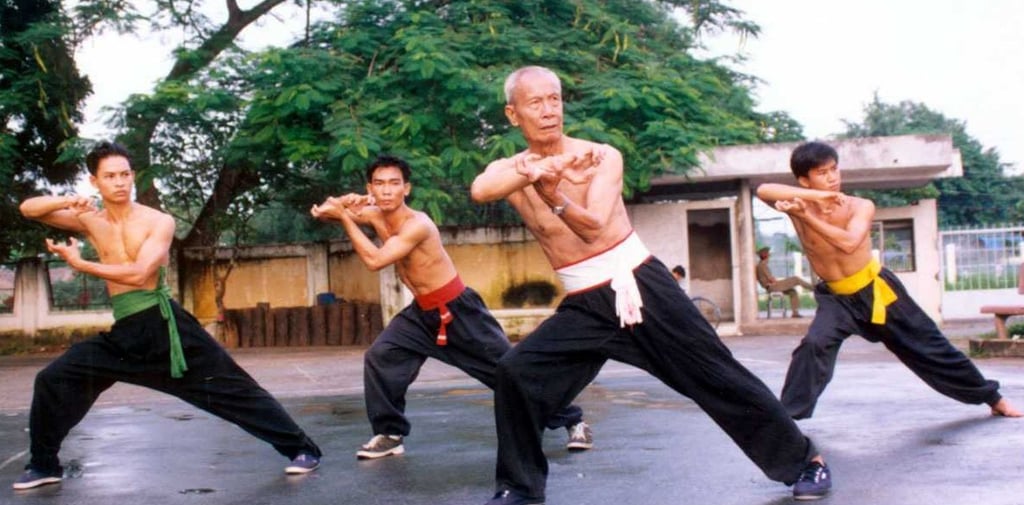
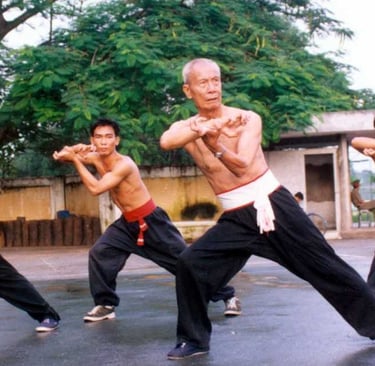
For the international combat historian, the seeker of internal energy disciplines, and the student of cultural self-defense, Traditional Vietnamese Martial Arts—encompassing styles like Võ Cổ Truyền, Vovinam, and Nhất Nam—are far more than techniques for fighting. They are the nation's most rigorous, disciplined, and potent philosophy of physical and spiritual self-mastery, a living, flowing archive that transforms the human body into a weapon capable of defending not only the self, but the integrity of the nation itself. VTMA asserts a profound, moral truth: true strength is not found in external aggression, but in the disciplined, continuous cultivation of inner stability (tĩnh tâm) and the mastery of Khí (Life Force). The practice is a continuous, high-stakes dialogue between the physical form and the unyielding will.
As specialists in Vietnamese heritage and profound cultural analysis at Vietnam Charm, we embark on an essential, detailed exploration to decode this flowing, physical philosophy. We will meticulously analyze the historical mandate that required martial arts to be a hidden tool of national defense, the structural genius of its Nội Công (Internal Power) and Ngoại Công (External Power) synthesis, the spiritual geometry that integrates Zen and energy cultivation into physical form, and the profound way this discipline articulates the core national values of self-mastery, strategic resourcefulness, and the unbowed spirit of resistance. Understanding VTMA is essential to grasping the physical integrity and the disciplined self-reliance that underpins the Vietnamese spirit.
1. The Historical Mandate: Hidden Defense and the Code of Sovereignty
The genesis and the secret transmission of Traditional Vietnamese Martial Arts are rooted in a clear historical and political mandate: the necessity of developing a decentralized, hidden, and effective system of self-defense and national resistance against centuries of foreign occupation and internal conflict. VTMA was born as a weapon of sovereignty.
For much of its history, the open training of organized martial arts was viewed by occupying powers as a direct threat to stability and was often suppressed. This suppression forced the martial arts to become internalized and decentralized, often practiced secretly within family lineages (gia truyền) or within the protected walls of Buddhist pagodas and communal houses (Đình Làng). The movements and forms (quyền) were meticulously designed to appear harmless or to mimic the movements of daily labor or animals, concealing their deadly combat application. This necessity for concealment cemented the art as a disciplined, silent, and spiritual act of patriotic defiance.
This mandate ensures that VTMA is intrinsically linked to military resourcefulness and strategic cunning. The emphasis shifted from raw physical strength (which was often outmatched by foreign professional armies) to internal power (Nội Công) and practical, asymmetrical techniques—speed, agility, leverage, and the strategic use of minimal force to defeat a stronger opponent. The practice of martial arts became a moral covenant—a physical declaration that the body itself was the final, non-negotiable frontier of national defense. The martial artist was, and remains, the physical embodiment of the unbowed national spirit.
2. The Structural Genius: Nội Công, Ngoại Công, and the Balance of Force
The structural genius of Traditional Vietnamese Martial Arts lies in its absolute dedication to the holistic synthesis of Nội Công (Internal Power) and Ngoại Công (External Power), asserting that true martial capability is a function of disciplined balance.
Ngoại Công (External Power): This focuses on the physical techniques—strikes, blocks, kicks, throws, and weaponry (binh khí). Training here involves rigorous conditioning, mastering the forms (quyền), and achieving speed and precision in execution. This is the visible, measurable component of the art, designed for practical, effective combat. Many styles integrate the philosophy of animal movements (Tiger, Crane, Snake) to achieve specific characteristics—the Tiger's ferocity and power, the Crane's agility and stability.
Nội Công (Internal Power): This focuses on the cultivation of Khí (Life Force), disciplined breathing (luyện hơi thở), and Tĩnh Luyện (Static Training). This is the invisible, philosophical core of the art, deeply influenced by Khí Công and Thiền. Nội Công enables the practitioner to maximize energy flow, increase pain tolerance, and use leverage and subtle shifts in center of gravity to defeat opponents through minimal force. The mastery of Nội Công is the essential differentiator: it allows the small, disciplined practitioner to access deep reserves of energetic power that brute strength alone cannot equal. The structural training ensures that the body is maintained as a flexible, open, and powerful conduit for the flow of disciplined intention.
3. The Spiritual Geometry: Thiền and the Mastery of Tĩnh Tâm
Traditional Vietnamese Martial Arts are fundamentally a spiritual geometry, transforming the physical practice into a form of moving meditation and anchoring the entire discipline in the pursuit of tĩnh tâm (spiritual stillness).
The Unity of Action and Thought: The physical forms (quyền) are highly complex, often requiring immense concentration to execute with precision and power. This intense focus acts as a form of Thiền trong động (Meditation in Movement). The mind is entirely focused on the present movement, stripping away external distraction, anger, or fear. The disciplined execution of the form is an act of mindfulness (chánh niệm), transforming the chaotic energy of potential combat into a controlled, powerful, and flowing rhythm.
The Role of Tĩnh Luyện (Stillness): Practice often begins and ends with formalized meditation (tọa thiền) and breath control. This static discipline is crucial for developing the Tâm (Mind) to command the Khí (Energy). The inner stillness achieved through meditation is the ultimate weapon, providing the practitioner with the psychological clarity to observe the opponent's movements without panic, anticipate their actions, and respond with precise, economical force. The philosophy asserts that the most powerful fight is won not by the body's fastest strike, but by the mind's unwavering stillness.
4. The Pedagogical System: Self-Mastery and Ethical Responsibility
The pedagogical system of Traditional Vietnamese Martial Arts is not designed to produce aggressors; it is designed to produce ethically responsible citizens who have achieved profound self-mastery and understand the moral weight of their physical power.
Ethical Mandate: Training is perpetually framed by a clear ethical mandate—the power acquired through martial discipline must only be used for Tự Vệ (Self-Defense) or the Bảo Vệ Dân Tộc (Defense of the Nation). Aggression, arrogance, and the misuse of skill are strictly forbidden, often leading to immediate expulsion. The initial focus is always on Đạo Đức (Moral Cultivation) and Lễ Độ (Respect/Propriety), ensuring that the student masters the self before mastering the technique.
The Transfer of Skill: The practice is often characterized by the transfer of skill through rigorous, continuous repetition and the intimate, authoritative relationship between the Sư Phụ (Master) and the Đệ Tử (Disciple). The Master imparts not only the physical technique but the spiritual and moral philosophy, ensuring the lineage remains pure and ethically sound. The journey is long and demanding, cultivating the patience, humility, and disciplined perseverance that are the core virtues of the Vietnamese soul. The martial arts training is ultimately a continuous education in moral responsibility.
5. Conclusion: The Permanent Testament to Disciplined Internal Power
Traditional Vietnamese Martial Arts are the ultimate, enduring, and flowing testament to the nation's capacity for strategic ingenuity, profound spiritual discipline, and physical self-mastery. They transform the human body into a physical conduit for courage and resilience. By analyzing the historical mandate that required the art to be a hidden weapon of sovereignty, the structural genius of the Nội Công and Ngoại Công synthesis, the spiritual geometry that anchors combat in Thiền and Khí Công, and the pedagogical system focused on ethical responsibility, the observer gains access to a core, luminous truth: VTMA is far more than fighting technique. It is the permanent, unwavering declaration of disciplined internal power—a powerful, fierce assertion that asserts the cultural value of ethical self-mastery, strategic resourcefulness, and the belief that the purest, most effective strength is continuously achieved through the cultivation of an unshakeable mind and the mastery of the internal self.
We are on social media
Vietnam Charm belongs to Vietpearl Travel., JSC
Contact:
Email: info@vietnamcharm.top
© 2026. by Vietnam Charm. All rights reserved
Travel license number: 01-827/2020
Refund Policy