Giảm giá hấp dẫn cho tour du lịch!


THE POETICS OF LABOR: VÍ & GIẶM FOLK SONGS — DECODING THE LYRICAL DIALOGUE, RESILIENCE, AND THE EMOTIONAL HEART OF THE CENTRAL VIETNAMESE HEARTLAND
More than song: exploring Ví and Giặm as Việt Nam's ultimate lyrical chronicle of daily life, analyzing the art of responsive singing, its profound role as a mechanism for communal labor and emotional release, and its embodiment of Central Việt Nam’s enduring spirit and profound intellectual wit.
HERITAGE & SPIRITLOCAL EXPERIENCESTHE SOUNDSCAPEVIETNAMESE CULTURE
Tobin Nguyen
11/6/20255 phút đọc
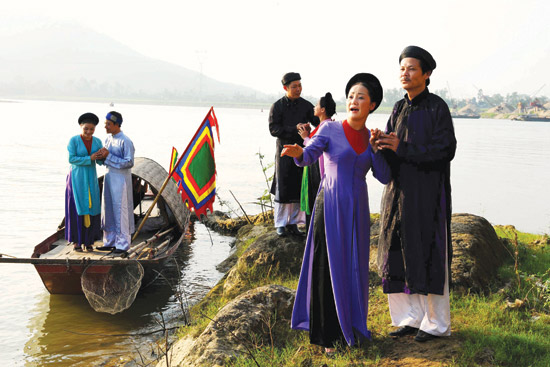
For the international musicologist, the social historian, and the seeker of genuine cultural expression rooted in the daily rhythms of life, Ví and Giặm Folk Songs (Dân ca Ví, Giặm)—unique to the Nghệ An and Hà Tĩnh provinces of Central Việt Nam—offer a powerful, unvarnished insight into the nation’s soul. Recognized by UNESCO as an Intangible Cultural Heritage of Humanity in 2014, this tradition is far more than a repertoire of melodies; it is a living, improvisational poetic dialogue—a dynamic vocal tradition that transforms mundane, often harsh, labor into moments of intense intellectual wit, emotional honesty, and spontaneous literary artistry. Ví and Giặm are the eloquent, lyrical ledger of the Central Vietnamese heartland, articulating the region's enduring spirit of resilience in the face of challenging geography and historical hardship.
As specialists in Vietnamese heritage and profound cultural analysis at Vietnam Charm, we embark on an essential, detailed exploration to decode this lyrical social code. We will meticulously analyze the structural genius of the two distinct forms (Ví and Giặm), the sociological function of their performance as a tool for synchronizing communal labor, the philosophical value of improvisation and immediate emotional expression, and the profound way this vocal tradition articulates the core values of endurance, disciplined wit, and the fierce, unyielding poetic spirit that defines the people of Nghệ Tĩnh. Understanding Ví and Giặm is essential to grasping the emotional depth and intellectual vitality of Central Vietnamese culture.
1. The Geographical and Sociological Mandate: Labor, Synchronicity, and Resilience
The genesis and enduring structure of Ví and Giặm are deeply rooted in the specific geographical and sociological necessities of Central Việt Nam—a region characterized by narrow coastal plains, frequent natural disasters (typhoons, droughts), and a history of hardship that mandated collective labor and extraordinary resilience.
The fundamental function of the songs is economic and physical. Ví and Giặm originated as a spontaneous, conversational form of singing performed by groups of laborers to synchronize their repetitive tasks—planting rice in the fields, weaving cloth by the loom, rowing boats on the river, or pounding rice in the evening. The call-and-response structure ensured that the physical effort of the communal group was harmonized, reducing the monotony of the task and increasing efficiency and endurance. The music is thus an ancient, effective form of collective occupational therapy and labor management.
This necessity for collective endurance cemented the culture’s core value: resilience (tinh thần kiên cường). In a region where nature is often harsh, the ability to transform hardship into art through the spontaneous creation of poetry and song became a psychological survival mechanism. The songs allowed individuals to express profound emotional truths—their sadness, love, anger, or philosophical questions—in a formalized, witty dialogue, providing essential emotional release without disrupting the social order. The songs are the lyrical expression of the people who learned to thrive not despite hardship, but through it.
2. The Structural Genius: Ví vs. Giặm — The Dichotomy of Flow and Tempo
The art form is built upon the structural distinction between its two components, Ví and Giặm, which represent a dichotomy in rhythm, tempo, and poetic structure, each tailored to a specific social or occupational context.
Ví (The Weaving/Rowing Song): Characterized by a free rhythm, gentle melody, and slow, flowing tempo. Ví literally means "metaphor" or "simile," reflecting its poetic function. It is typically sung by individuals engaged in slower, gentler, or less physically demanding tasks, such as weaving, spinning, or rowing a small boat. The musical structure is largely defined by the length of the poetic phrase (often based on the lục bát or six-eight foot), allowing the singer immense freedom in vocal delivery and ornamentation. Ví is the sound of contemplation and gentle narrative, often sung as a tender exchange between lovers or a mother and child.
Giặm (The Pounding/Planting Song): Characterized by a fixed, measured, and often accelerating tempo, with a rhythm that is short, sharp, and highly repetitive. Giặm literally means "stepping" or "pounding," reflecting its physical function. It is performed during more physically demanding, rhythmic tasks like pounding rice, planting seedlings in the field, or beating out fishing nets. The rhythmic structure is strict, ensuring that the labor of the communal group remains synchronized. The poetry is often shorter, punchier, and focuses on moral instruction, social critique, or quick-witted, humorous dialogue. Giặm is the sound of collective discipline and physical endurance.
This structural dichotomy ensures that the tradition is adaptable to the full range of agrarian and domestic tasks, with the music serving as the perfect metronome for human labor.
3. The Art of Đối Đáp (Responsive Dialogue): Improvisation and Wit
The profound artistic power of Ví and Giặm lies in its absolute dedication to improvisational đối đáp (responsive dialogue)—a spontaneous, high-stakes lyrical duel where intellectual wit and poetic memory are the ultimate currency.
The singing is almost always performed as a call-and-response between individuals or groups (such as men and women, or two different villages). The challenge lies in the second singer's ability to immediately respond to the first singer's lyric with a spontaneous verse that is not only thematically relevant but also utilizes a higher-quality rhyme, a more clever metaphor, or a final, decisive piece of moral wit. This demanding spontaneity transforms the communal workplace into a living, open-air poetry competition. The singer must possess deep knowledge of the vast, traditional repertoire of folk poetry, local history, and traditional proverbs, allowing them to pull from memory and immediately restructure the verse to fit the current moment and the rhythm.
The sociological function of this witty exchange is immense. It provides a sanctioned, formalized outlet for courtship, social critique, and the resolution of minor disputes. A young man can use a carefully crafted, metaphor-laden Ví to subtly court a young woman, and she can use an equally witty Giặm to accept or reject him, all while maintaining the veneer of polite, public conversation. The wit of the poetry, rather than physical conflict or aggressive shouting, becomes the final arbiter of social interaction, affirming the cultural value of lịch sự và trí tuệ (courtesy and intellect) in all interpersonal exchanges.
4. The Emotional Landscape: Melancholy, Honesty, and the Poetic Soul
The emotional resonance of Ví and Giặm is defined by its capacity to hold and express the pervasive melancholy (nỗi buồn sâu sắc) that characterizes the spirit of Central Việt Nam—a region frequently tested by history and geography.
The songs are often used to express themes of longing, separation, historical injustice, and philosophical contemplation of fate (số phận). The gentle, flowing melodies of Ví are the perfect vehicle for expressing the intense pain of a young woman separated from her lover by war or geographic distance, or the deep philosophical sadness of a scholar whose talent remains unrecognized. The songs allow the community to collectively acknowledge and process their shared historical burdens through the cathartic power of shared lyrical expression.
This emotional honesty is central to the tradition's appeal. Unlike the rigid formal structure of court music, Ví and Giặm are designed to be immediate, accessible, and emotionally authentic. They are the unvarnished voice of the common person—the farmer, the weaver, and the boatman—who uses poetry to elevate the hardship of their daily life into enduring art. The lyrical genius of Nghệ Tĩnh ensures that even the most painful truths are articulated with beauty, wisdom, and profound poetic grace.
5. Conclusion: The Permanent Tone of Lyrical Resilience
Ví and Giặm Folk Songs are the ultimate, enduring lyrical testament to the artistic discipline, intellectual wit, and unyielding spirit of Central Việt Nam. It is a structure of musical dialogue that transforms the challenge of labor into a source of immense poetic wealth. By analyzing the structural dichotomy that links rhythm to physical task, the spontaneity mandated by the đối đáp duel, the sociological function of synchronizing labor, and the pervasive, honest melancholy of its lyrical content, the observer gains access to a core truth: Ví and Giặm are far more than folk music. They are the permanent, unwavering tone of lyrical resilience—a powerful, conversational declaration that asserts the cultural value of disciplined wit, emotional honesty, and the belief that the human spirit is strong enough to transform the harsh realities of the land into lasting beauty through the shared, spontaneous language of poetry and song.
We are on social media
Vietnam Charm belongs to Vietpearl Travel., JSC
Contact:
Email: info@vietnamcharm.top
© 2026. by Vietnam Charm. All rights reserved
Travel license number: 01-827/2020
Refund Policy