Giảm giá hấp dẫn cho tour du lịch!


THE RITUAL OF THE PAUSE: SIDEWALK COFFEE CULTURE — SOCIALIZING, OBSERVATION, AND THE UNOFFICIAL URBAN NEWSROOM
More than caffeine: decoding the profound sociological, economic, and philosophical role of the Vietnamese street café as the essential anchor for urban communication, collective observation, and the national ritual of the contemplative pause.
LOCAL EXPERIENCESVIETNAMESE CULTUREURBAN & DAILY LIFE
Tobin Nguyen
11/6/20255 phút đọc
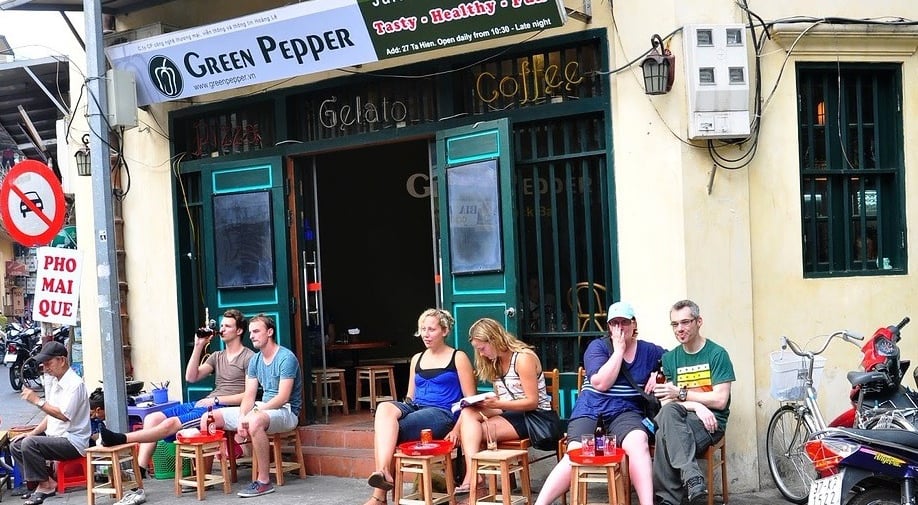
For the international visitor, the ubiquitous sight of low plastic stools clustered around a small table on the pavement—often accompanied by the slow, rhythmic drip of a phin filter—is the defining tableau of Vietnamese urban life. This is the Cà Phê Vỉa Hè (Sidewalk Coffee Culture), a phenomenon far surpassing mere beverage consumption. It is a profound, non-negotiable social ritual—the operational hub for communication, commerce, and political dialogue, and the ultimate democratic platform for engaging with the pulse of the metropolis. The street café is, in essence, the nation's most decentralized, essential, and informal urban newsroom.
As specialists in Vietnamese heritage and profound cultural analysis at Vietnam Charm, we embark on an essential, detailed exploration to decode this daily ceremony. We will meticulously analyze the historical and economic foundation that elevated this robust beverage to a cultural obsession, the sociological code that governs the public-private interaction on the low stools, the philosophical value of the deliberate slowness inherent in its preparation, and the profound way coffee culture articulates the collective spirit, observation skills, and democratic resilience of the Vietnamese city dweller. Understanding sidewalk coffee is essential to grasping the true rhythm of urban Vietnamese life.
1. The Historical and Economic Foundation: Robusta, Resilience, and the French Legacy
The rise of the Vietnamese sidewalk coffee culture is rooted in a unique intersection of colonial history, agrarian innovation, and economic necessity that cemented the beverage as the nation's fuel.
Coffee was introduced during the French colonial era, initially cultivated in the Central Highlands. However, the Vietnamese adaptation was immediate and profound. Due to the challenging climate, farmers prioritized the cultivation of the Robusta bean, a variety known for its resilience, its powerful, earthy flavor, and its significantly higher caffeine content (nearly double that of the Arabica bean). This choice was purely pragmatic and ultimately dictated the entire national preference for a strong, intensely flavored brew. This intensity necessitated the iconic serving style: mixing the dark, potent extract with thick, sweet, creamy condensed milk (sữa đặc) to balance the bitterness, a practice born out of the historical difficulty of accessing fresh dairy.
Economically, the street café is the ultimate expression of the micro-business ecosystem. Operating with minimal overhead—a few plastic stools, a simple counter, and a charcoal brazier—the vendor can transform a few square feet of pavement into a profitable, viable enterprise. This economic accessibility ensures that the coffee ritual remains universally affordable, making it a truly democratic daily pleasure accessible to all social strata, from the cyclo driver to the CEO. The low cost and high energy return of the cà phê fuel the intense entrepreneurial pace of the urban economy.
2. The Architecture of the Pause: Phin, Stool, and the Discipline of Slowness
The physical and ritualistic architecture of the sidewalk café is defined by its intentional discipline of slowness and its commitment to the Vỉa Hè's low-slung, democratic aesthetic.
The central mechanism of the pause is the Phin filter. This small, gravity-fed, metal drip filter forces an absolute deceleration in consumption. Unlike the immediate gratification of espresso, the phin mandates a patient, four-to-seven-minute wait for the liquid to slowly, rhythmically drip into the cup below. This enforced slowness is the philosophical core of the ritual. It is a mandatory moment of stillness in the middle of urban chaos, compelling the participant to set aside the immediate rush of the xe máy and engage in quiet observation and reflection. The rhythmic drip of the phin becomes the counter-rhythm to the city's ceaseless roar.
The use of the low plastic stool (ghế nhựa) is equally significant. Sitting low on the pavement immediately grounds the participant, placing them at the exact level of the street's energy. This low posture minimizes the distinction between the café and the surrounding commercial life, integrating the drinker directly into the urban flow. The low stools allow vendors maximum flexibility to rapidly deploy and clear their space, reinforcing the fluid, adaptable nature of the Vỉa Hè.
3. The Sociological Function: The Urban Newsroom and Public Observation
The street café functions as the single most important, reliable, and informal social hub in the Vietnamese metropolis, often acting as the unofficial urban newsroom.
The Vỉa Hè coffee session is the primary venue for socializing, business networking, and political dialogue. Unlike the sterile, enclosed environments of modern office spaces, the sidewalk café is a highly permeable, open space where communication is fluid and organic. Business deals are often negotiated over iced coffee; neighbors exchange critical local gossip; and political opinions are debated in a relaxed, open setting. The open-air nature of the café makes the conversation public, fostering a sense of collective accountability and shared information.
Crucially, the coffee ritual is the primary platform for collective observation (quan sát). The act of sitting still, sipping the strong coffee, and facing the street allows the participants to actively engage in the vital urban practice of "watching the world go by." This observation is not passive; it is a critical form of data collection—observing traffic flow, recognizing new commercial competitors, evaluating social trends, and maintaining a constant awareness of the community's rhythm. The shared act of observation strengthens the collective bond and heightens the participant's sense of belonging to the fluid urban tapestry.
4. The Aesthetic of Fusion: Cà Phê Trứng and Innovation
While the traditional cà phê sữa đá is the mainstay, the coffee culture is also a continuous laboratory for culinary and aesthetic fusion, demonstrating the nation’s ingenuity and refusal to remain stagnant.
The most famous example is Cà Phê Trứng (Egg Coffee), a unique Hà Nội invention. This rich, complex beverage represents a masterful culinary solution to post-war scarcity (when fresh milk was scarce), replacing the creamy element with a thick, velvety foam made from whisked egg yolk and sugar. This fusion created a profoundly luxurious texture, elevating the coffee experience from a simple routine to a high-end, dessert-like indulgence. The Egg Coffee ritual—often consumed slowly in a small, historic café nestled in the Old Quarter—is an expression of historical resilience and artistic innovation.
Furthermore, the emergence of modern chains and aesthetically driven cafes (the "Third Wave") has not destroyed the Vỉa Hè culture; it has forced a creative coexistence. The Vỉa Hè café continues to thrive due to its authenticity, affordability, and essential social function, running parallel to the new, internationalized coffee houses, which cater to a different need for quiet, air-conditioned workspace. This duality ensures that the coffee landscape is rich, diverse, and adaptable to all consumer needs.
5. Conclusion: The Urban Soul's Unwavering Fuel
The Sidewalk Coffee Culture is the vibrant, indispensable, and highly organized heart of the Vietnamese urban experience. It is the spiritual and psychological engine that fuels the nation's relentless economic pace. By decoding the ritual of the Phin filter, the democratic logic of the low stool, the intense Robusta flavor, and the essential social function as the urban newsroom, the observer moves beyond the superficial sensory experience to grasp a profound truth: the coffee ritual is the nation’s daily affirmation of resilience, collective observation, and social ingenuity. The shared sip of strong, sweet coffee provides the mandatory moment of contemplative pause that stabilizes the urban soul before it plunges back into the necessary chaos of the metropolis.
We are on social media
Vietnam Charm belongs to Vietpearl Travel., JSC
Contact:
Email: info@vietnamcharm.top
© 2026. by Vietnam Charm. All rights reserved
Travel license number: 01-827/2020
Refund Policy