Giảm giá hấp dẫn cho tour du lịch!

THE SACRED GATEWAY: THE ĐÌNH (COMMUNAL HOUSE) — DECODING THE SPIRITUAL AXIS, POLITICAL HEART, AND THE UNIFYING SOUL OF THE VIETNAMESE VILLAGE
More than a building: exploring Văn Hóa Đình Làng (The Communal House Culture) as Việt Nam’s ultimate architectural and sociological crucible, analyzing its profound function as the political, spiritual, and cultural axis of the self-governing village, and its embodiment of disciplined governance and the ancestral covenant.
VIETNAMESE CULTURETHE COSMIC TOLERANCELOCAL EXPERIENCES
Tobin Nguyen
11/8/20255 phút đọc
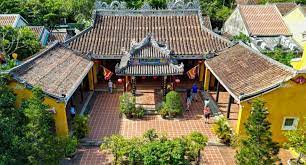
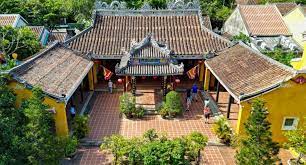
For the international anthropologist, the student of vernacular architecture, and the seeker of the nation’s deepest social roots, the Đình Làng (Communal House)—a powerful, often dark, and beautifully carved wooden structure that stands as the historical centerpiece of the traditional Vietnamese village (làng)—is far more than a public assembly hall. It is the nation’s most vital, resilient, and enduring symbol of local autonomy and spiritual sovereignty—the single, non-negotiable architectural structure that houses the sacred and the secular, the ancestral past and the political present. The Đình asserts an ultimate, non-negotiable truth: governance is spiritual, community is sacred, and the authority of the village rests eternally on the consent and reverence of its own ancestors and local deities.
As specialists in Vietnamese heritage and profound cultural analysis at Vietnam Charm, we embark on an essential, detailed exploration to decode this flowing, dynamic social architecture. We will meticulously analyze the political mandate that establishes the Đình as the self-governing administrative center ("the small court"), the spiritual mandate that consecrates the structure as the primary temple for the Thành Hoàng (Tutelary God), the architectural genius of its open, integrated spatial design, and the profound way this structure articulates the core national values of local autonomy, ancestral reverence, and the disciplined cohesion of the collective soul. Understanding the Đình Làng is essential to grasping the emotional heart and the political resilience of Vietnamese social order.
1. The Political Mandate: The Village as a Small Court (Tiểu Triều Đình)
The genesis and the rigid structure of the Đình Làng are rooted in a clear political mandate: to serve as the unquestionable administrative and legislative center of the self-governing village, effectively acting as a "Tiểu Triều Đình" (Small Court) for the local populace.
Historically, the central imperial government often adhered to the principle of "Phép vua thua lệ làng" (The King's law yields to the Village's custom). This principle granted the village, and specifically the Hội Đồng Kỳ Mục (Council of Elders) who convened in the Đình, immense local autonomy, legal authority, and political sovereignty. The Đình was the sacred space where the Hương Ước (Village Covenant/Code of Laws) was drafted, debated, administered, and enforced. It was the site for the public resolution of disputes, the imposition of communal taxes, the organization of local defense, and the formal registry of births, marriages, and deaths.
The Kiến Trúc (Architecture) itself reinforced this political gravity. The main hall, often featuring massive, imposing wooden columns and a raised platform, was meticulously designed to inspire awe and disciplined reverence, reminding all who entered that the proceedings held within were the ultimate source of local law and justice. The Tôn Nghiêm (Solemnity) of the structure was inseparable from the legitimacy of the decisions made within its walls. The Đình was the architectural guarantee of the village's right to govern itself.
2. The Spiritual Mandate: The Sanctuary of the Thành Hoàng
The most profound, non-negotiable function of the Đình Làng is its spiritual mandate: the structure is consecrated as the primary, sacred temple dedicated to the worship of the Thành Hoàng (Tutelary God)—the supreme, local spiritual sovereign who guards the village’s territory, destiny, and moral order.
The Thành Hoàng is the ultimate spiritual protector. This deity is usually a historical hero (a general, a scholar, or a revered ancestor who performed exceptional deeds for the community) or a natural spirit (a Mountain God, a River Spirit) whose spiritual power is believed to be intrinsically linked to the geographical location and the continued prosperity of that specific village. Worshipping the Thành Hoàng is a fundamental act of spiritual fidelity and local patriotism.
The Hậu Cung (Inner Sanctuary) of the Đình—the most sacred, deepest, and usually dark part of the structure—is where the Sắc Phong (Imperial Edict/Decree) and the physical Bài Vị (Worship Tablet) of the Thành Hoàng are kept, often concealed behind curtains or a wooden screen. This concealment is intentional, signifying the ultimate, hidden power of the divine guardian. The formal Lễ Tế (Solemn Sacrifice), performed by the elders during the annual Kỳ Yên Festival, is the village’s most important ritual—an intense, high-stakes negotiation with the spiritual sovereign to request continued prosperity, rain, and protection from disaster and conflict. The Đình is the physical, architectural covenant between the living community and its divine guardian.
3. The Architectural Genius: Openness, Integration, and the Flow of Khí
The Đình Làng demonstrates a profound architectural genius rooted in the philosophy of openness, integration, and the management of communal energy (Khí). The structure is specifically designed to facilitate both solemn ritual and democratic assembly.
The Open Structure: The primary hall (Đại Đình) is often an open, multi-sided pavilion with large, sturdy wooden pillars and elevated flooring, but without fixed walls or permanent partitions. This open structure is functional (allowing excellent ventilation in the tropical climate) and sociological (facilitating the democratic assembly of the entire village during major ceremonies, ensuring maximum visibility and participation). The openness of the structure symbolically asserts the transparency and communal nature of the political and spiritual life held within.
Integration of Ritual and Performance: The design typically features a large, paved Sân Đình (Communal Yard) directly in front of the main structure. This yard is the crucial, fluid space that connects the temple and the community. During the Hội (Festival), the Đình structure acts as the sacred stage for ritual theater, official sermons, and traditional folk singing (Hát Quan Họ, Hát Xoan). The Yard serves as the democratic auditorium for communal games (trò chơi dân gian) and collective feasting. The architectural layout ensures that the political gravity, the spiritual ritual, and the communal celebration are perpetually integrated into a single, cohesive social experience.
4. The Sociological Rhythm: Hierarchy, Merit, and the Collective Feast
The Đình Làng enforces a unique, precise sociological rhythm on the village, acting as the ultimate stage for the affirmation of hierarchy, the celebration of merit, and the bond of the collective feast.
The Affirmation of Hierarchy: While the assembly is open to all, the seating arrangements and participation roles within the Đình rigidly follow the Tôn Ti Trật Tự (Hierarchy of Respect and Order). The oldest, most respected elders (the Hương Chức) sit in the highest, central positions, reinforcing the Confucian mandate that age and accumulated wisdom grant social authority. This ritual affirmation of hierarchy provides the necessary social stability and clarity for the community to function.
The Celebration of Merit: The Đình is the site where individuals who achieved vinh quy bái tổ (returning home in honor)—scholars who passed the imperial exams or soldiers who gained rank—were formally welcomed and honored, their merit transforming into social capital for the entire village. The Đình is the ultimate stage for rewarding disciplined effort and intellectual achievement, reinforcing the cultural value of học vấn (scholarship).
The Collective Feast (Ăn Chung): The collective feasting that follows major rituals (the Kỳ Yên) is the climax of social cohesion. The food, ritually blessed by the Thành Hoàng, is consumed communally by all attendees. This act of shared, sacred sustenance is the ultimate affirmation of đoàn kết (unity) and social harmony, ensuring that the political, spiritual, and material life of the community is perpetually fused into a single, unbreakable covenant.
5. Conclusion: The Permanent Axis of Local Autonomy
The Đình Làng (Communal House) is the ultimate, enduring, and essential architectural testament to the Vietnamese spirit's profound commitment to local autonomy, ancestral reverence, and disciplined social order. It is an architectural masterpiece that transforms timber and tile into the unshakeable axis of the village soul. By analyzing the political mandate that established it as the small, self-governing court, the spiritual mandate that consecrated it as the sanctuary of the Thành Hoàng, the architectural genius of its open design that integrates ritual and assembly, and the sociological rhythm that affirms hierarchy and unity through the collective feast, the observer gains access to a core, luminous truth: the Đình is far more than a building. It is the permanent, unwavering axis of local autonomy—a powerful, structural declaration that asserts the cultural value of disciplined self-governance, the sanctity of ancestral custom, and the belief that the moral and political strength of the nation is eternally rooted in the autonomous, cohesive, and spiritually guided soul of the village collective.
We are on social media
Vietnam Charm belongs to Vietpearl Travel., JSC
Contact:
Email: info@vietnamcharm.top
© 2026. by Vietnam Charm. All rights reserved
Travel license number: 01-827/2020
Refund Policy