Giảm giá hấp dẫn cho tour du lịch!



THE SIDEWALK SYMPHONY: DECODING THE VỈA HÈ — PUBLIC SPACE AS RESTAURANT, LIVING ROOM, AND MICRO-COMMERCE HUB
More than pavement: exploring the profound sociological, economic, and philosophical ingenuity of the Vỉa Hè as Việt Nam's essential urban stage, analyzing its fluid function as the nexus of commerce, cuisine, and collective community life.
LOCAL EXPERIENCESVIETNAMESE CULTUREURBAN & DAILY LIFE
Tobin Nguyen
11/6/20255 phút đọc
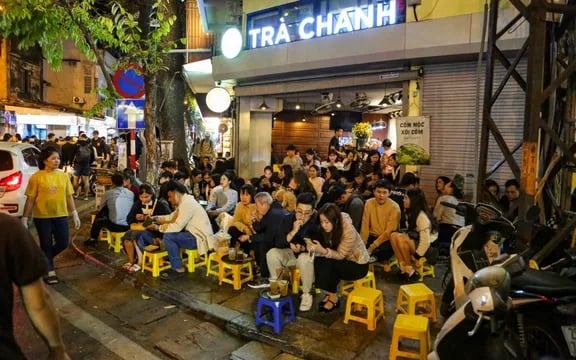
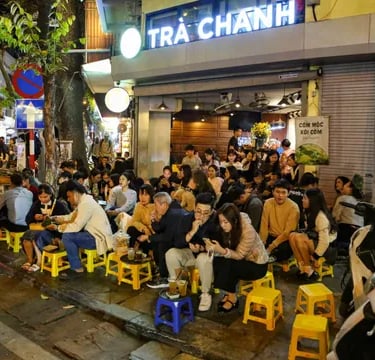
For the international visitor, the Vỉa Hè (sidewalk) in any Vietnamese city—from the dense chaos of Sài Gòn to the historical periphery of Hà Nội—is a source of immediate sensory fascination and structural confusion. It is a space that defies rigid Western categorization, functioning simultaneously as a café, a kitchen, a makeshift hair salon, a parking lot, and a vibrant community living room. The Vỉa Hè Culture is far more than an unplanned phenomenon; it is the fundamental organizing principle of urban social life, a dynamic, fluid, and brilliantly pragmatic utilization of public space that underpins the nation’s micro-economy and defines its communal spirit. The sidewalk is the ultimate democratic platform.
As specialists in Vietnamese heritage and profound cultural analysis at Vietnam Charm, we embark on an essential, detailed exploration to decode this urban stage. We will meticulously analyze the historical and economic pressures that transformed the sidewalk from a mere path into a fluid, multi-functional hub, the sociological code that governs the seamless coexistence of pedestrians, vendors, and motorbikes, the culinary genius of the low-stool gastronomy, and the profound way the Vỉa Hè articulates the adaptability, ingenuity, and fierce social spirit of the Vietnamese urban dweller. Understanding the Vỉa Hè is essential to grasping the true social rhythm, economic resilience, and intimate, public character of the Vietnamese metropolis.
1. The Historical and Economic Imperative: Space as a Fluid Commodity
The unique character of the Vỉa Hè culture is rooted in a specific historical necessity: the acute, unyielding shortage of private, affordable commercial space coupled with a high demand for public interaction. The sidewalk became the ingenious solution to this profound spatial constraint.
The foundation of the Vietnamese economy is built upon millions of micro-businesses—small, family-run enterprises that require minimal capital but immediate, highly visible access to the public flow. The Vỉa Hè offers these vendors and small shop owners the most accessible commercial real estate available. By placing a few low plastic stools, a small charcoal stove, or a temporary display table directly on the pavement, the vendor immediately transforms a free, public space into a viable, revenue-generating commercial zone. This adaptability underpins the immense resilience of the urban economy, allowing it to absorb countless entrepreneurs and maintain high levels of employment and commerce despite the lack of formal, expensive infrastructure. The sidewalk is, in essence, the nation’s most decentralized and democratic marketplace.
This phenomenon creates a profound philosophical statement: the Vỉa Hè is not a "buffer zone" between traffic and buildings; it is an active, fluid commodity. Its value lies in its permeability and flexibility. It must constantly shift its function throughout the day—parking in the morning, a lunch restaurant at noon, a café in the afternoon, and a social hub by night—demonstrating the inherent Vietnamese genius for temporal and spatial optimization.
2. The Sociological Code: Negotiation, Tolerance, and the Shared Ecosystem
For the sidewalk to function as a hyper-efficient, multi-use hub, it must operate under a complex, unwritten sociological code of negotiation and mutual tolerance that dictates how different activities coexist without complete anarchy.
The coexistence of the three major Vỉa Hè users—Pedestrians, Vendors, and Motorbikes—is the ultimate test of this code. Pedestrians must accept that their path is not fixed; they must weave around cooking fires, tables, and parked xe máy. Vendors must accept that their space is temporary and flexible, capable of being packed up instantly if authorities intervene or if a sudden logistical need arises. Motorbikes, which colonize the majority of the pavement for parking, must adhere to a strict understanding that their presence is essential but secondary to the human interaction occurring around them.
The key to this smooth, high-volume operation is low-speed negotiation and continuous situational awareness. Unlike the rigid, high-speed rules of the main road, the Vỉa Hè demands a slow, conscious ballet of movement. The required tolerance for noise, proximity, and visual clutter fosters a profound sense of collective public life—a shared, intimate ecosystem where anonymity is dissolved. The Vỉa Hè is where neighbors engage, gossip is exchanged, and the pulse of the community is most easily taken. It is the ultimate expression of the Vietnamese preference for communal visibility over private isolation.
3. The Culinary Genius: Low-Stool Gastronomy and the Sensory Feast
The most famous and sensory-rich manifestation of Vỉa Hè culture is the low-stool gastronomy—the art of transforming a few square feet of pavement into an authentic, high-quality dining experience.
This culinary experience is defined by its intimacy and its immediate authenticity. Dining on a low plastic stool (ghế nhựa) brings the diner down to the level of the street, forcing them into immediate engagement with the city's energy. The food itself is often prepared on simple charcoal braziers (bếp than) placed directly on the ground, minimizing the distance between the kitchen, the chef, and the table. This proximity ensures maximum freshness and visibility, allowing the customer to witness the entire preparation process—a crucial element of trust and quality control.
The genius of Vỉa Hè cuisine lies in its hyper-specialization. Vendors rarely attempt to cook many dishes; they focus on perfecting one or two signature items—a specific type of Bún, Phở, Ốc (snails), or a particular cut of Bánh Mì. This specialization ensures high turnover, expert quality, and deep culinary knowledge transmission. Furthermore, the Vỉa Hè provides the perfect environment for specific, socially-charged food rituals: the sharing of communal dishes, the mixing of specific dipping sauces, and the prolonged consumption of Cà Phê Sữa Đá (Iced Coffee), turning the simple act of eating into a prolonged, sensory, and social event. The sidewalk provides the essential, democratic stage for the nation's culinary masterpieces.
4. The Architectural and Spiritual Intersection: Home and Hearth
The Vỉa Hè is not physically separate from the domestic structure; it is an extension of the home and the hearth, blurring the lines between private and public space in a uniquely Vietnamese way.
For the Tube House owner, the sidewalk in front of their facade is a flexible part of their property, managed and maintained with a sense of personal responsibility. During the day, it is their shop; in the evening, after the business closes, it can become the family's temporary, public living room—a cool, open space to escape the heat of the interior, where family members chat, watch the street flow, or supervise children. This fluidity means the Vietnamese definition of "privacy" is different; while the inner sanctum of the Nhà Ống is fiercely private, the immediate facade and the surrounding sidewalk are intentionally permeable, designed for active social engagement and community surveillance. The home is porous to the street.
Spiritually, the Vỉa Hè is often the site of the Tín Ngưỡng Thờ Thổ Địa/Thần Tài (Worship of the Earth God and God of Wealth). Small shrines, often meticulously maintained, are placed directly on the pavement or near the front door. The daily ritual of lighting incense and offering tea to these local deities underscores the belief that the prosperity of the household is directly tied to the spiritual blessing of the immediate ground upon which they conduct commerce. The sidewalk is not merely secular space; it is a sacred commercial zone under the watch of local protective spirits.
5. Conclusion: The Urban Soul of Resilience and Adaptability
The Vỉa Hè Culture is the ultimate, masterful expression of Vietnamese urban resilience and adaptability. It is a triumphant, functioning solution to the universal constraints of space, capital, and social need. By decoding the fluid economic function, the sociological code of negotiation, the culinary genius of the low-stool dining, and the intimate blurring of private and public life, the observer gains profound access to the spirit of the Vietnamese metropolis. The Vỉa Hè is not chaos; it is a complex, dynamic symphony of human ingenuity, proving that the most essential, vibrant, and democratic forms of urban life are often found not in towering architecture, but in the flexible utilization of the shared pavement.
We are on social media
Vietnam Charm belongs to Vietpearl Travel., JSC
Contact:
Email: info@vietnamcharm.top
© 2026. by Vietnam Charm. All rights reserved
Travel license number: 01-827/2020
Refund Policy