Giảm giá hấp dẫn cho tour du lịch!


THE SILKEN THREAD: SILK WEAVING VILLAGES — DECODING PATIENCE, LYRICAL CRAFT, AND THE FABRIC OF VIETNAMESE IDENTITY
More than fabric: exploring Làng Nghề Dệt Lụa (Silk Weaving Villages) as Việt Nam’s ultimate archive of material elegance, analyzing the profound philosophy of patience and precision, the sacred bond between the weaver and the loom, and its embodiment of disciplined beauty and enduring cultural continuity.
VIETNAMESE CULTURETHE AGRARIAN HEARTLOCAL EXPERIENCES
Tobin Nguyen
11/8/20255 phút đọc
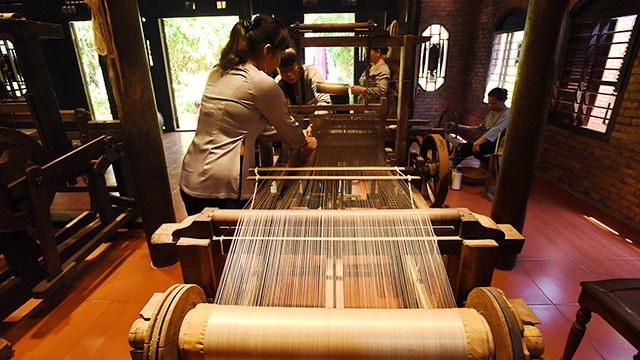
For the international textile historian, the collector of refined materials, and the seeker of the nation’s quiet, enduring aesthetic, Vietnamese Silk—from the traditional villages of Vạn Phúc (North) to the vibrant patterns of the Central region—is far more than a luxury commodity. It is the nation’s most intimate, lyrical, and profound material chronicle—a soft, luminous fabric that carries the weight of history, the discipline of generations, and the refined aesthetic of the human spirit. The process of transforming the tiny, fragile thread of the silkworm into the shimmering expanse of silk is not merely production; it is a sacred, painstaking ritual of transformation, a continuous, disciplined act that affirms the core cultural value that true, lasting beauty can only be achieved through immense patience and dedicated, quiet labor.
As specialists in Vietnamese heritage and profound cultural analysis at Vietnam Charm, we embark on an essential, detailed exploration to decode this material elegance. We will meticulously analyze the historical mandate that established silk as the fabric of the court and the scholar, the philosophical covenant that binds the weaver to the discipline of the loom, the technical genius of its indigenous dyes and intricate patterns (vân lụa), and the profound way silk articulates the core national values of elegance, disciplined labor, and the enduring continuity of ancestral craft. Understanding silk weaving is essential to grasping the emotional depth and the refined, patient aesthetic of the Vietnamese soul.
1. The Historical Mandate: Silk as the Fabric of Hierarchy and Poetry
The genesis and the profound cultural status of Lụa (Silk) are rooted in a clear historical mandate: the fabric was established as the unquestionable material of hierarchy, refinement, and poetry, serving as the non-negotiable symbol of status, power, and cultural sophistication.
For centuries, the finest silk was the exclusive material of the imperial court (triều đình) and the scholarly elite (giới trí thức). Its fluid elegance, subtle luster, and inherent difficulty in creation made it the perfect, silent material for signifying rank, wealth, and moral refinement. The áo dài, the nation’s spiritual garment, reaches its highest aesthetic expression when rendered in pure, high-quality silk, its movement transforming the wearer's figure into a flowing, visual poem. The fabric is thus intimately linked to the highest levels of political and intellectual life.
Furthermore, silk is deeply integrated into the nation’s lyrical tradition. Its softness, its luminous sheen, and its association with refined beauty have made it a perpetual metaphor in poetry and folk song for femininity, fragility, and profound emotional depth. A phrase referencing silk in Vietnamese literature immediately evokes an image of elegance, sorrow, and gentle, enduring grace. The material is not just worn; it is read and felt as a continuous archive of national aesthetic preference. This historical gravity ensures that the craft of weaving is viewed as a sacred, cultural duty, preserving the material soul of the nation.
2. The Philosophical Covenant: Patience, Precision, and the Discipline of the Loom
The entire process of transforming the tơ tằm (silkworm thread) into finished silk is governed by a singular, unyielding philosophical covenant: the commitment of the weaver to absolute patience, disciplined precision, and the relentless, non-negotiable rhythm of the loom. This covenant dictates the quality and the spiritual character of the final fabric.
The process is one of profound, disciplined slowness. From the meticulous cultivation of the mulberry leaves to feed the silkworm, to the careful unwinding of the thread from the fragile cocoon, and finally, to the weaving itself—every stage demands manual dexterity and unwavering, continuous attention. The silk thread is notoriously delicate; any moment of carelessness, any lapse in concentration, can break the entire weave, rendering hours of labor useless. The weaver must therefore cultivate an inner stillness (tĩnh tâm) that mirrors the quiet, repetitive rhythm of the loom itself.
The loom (khung cửi) is the ultimate technological and spiritual focal point of the craft. It is the complex, intricate instrument that converts the single, fine thread into the stable, collective fabric. The sound of the loom—the rhythmic clicking and clacking—is the audible rhythm of the craft village, a continuous, hypnotic sound that symbolizes the disciplined, collective effort that sustains the community. The weaver’s contract with the loom is spiritual: the weaver yields their speed and ego to the machine's disciplined rhythm, and in return, the machine yields the luminous, enduring fabric. The silk is the final, tangible proof that discipline is the ultimate source of beauty.
3. The Technical Genius: Vân Lụa, Natural Dyes, and Material Honesty
Vietnamese silk weaving is characterized by a high degree of technical genius—an indigenous mastery of pattern, natural chemistry, and material manipulation that elevates the final product beyond simple mass-produced textiles.
The unique beauty of traditional Vietnamese silk often lies in its vân lụa (silk pattern), which is created not merely by printing but by the complex manipulation of the thread on the loom itself. Weavers utilized intricate, generations-old techniques to interweave the threads, creating subtle, elegant, and often sophisticated geometric or floral patterns (like the traditional Lãnh Mỹ A of the South, or the Gấm of the North) that appear to change and shift as the light hits the fabric. This process demands immense, specialized knowledge of the loom’s mechanism and the thread's tension.
Furthermore, the commitment to natural dyes (nhuộm tự nhiên) is a defining technical and ecological trait. Traditional silk was colored using dyes extracted from locally sourced materials—indigo for deep blues, earth pigments for yellows, and the bark or leaves of specific trees for reds and browns. This reliance on natural chemistry ensured that the fabric retained a unique, subtle, and earthy luminosity that industrial chemical dyes cannot replicate. The colors are never harsh; they are deep, organic, and harmonious, a final aesthetic affirmation of the craft's intimate, respectful bond with the natural environment.
4. The Sociological Rhythm: The Village of Threads and Collective Memory
The Silk Weaving Village (Làng Nghề Dệt Lụa)—such as Vạn Phúc near Hà Nội—functions as a powerful sociological and economic anchor, preserving ancestral knowledge through its continuous, collective rhythm of production.
The village is the crucible where the tacit knowledge of the craft is preserved. The highly specialized, intricate process (from silkworm cultivation to final weaving and dyeing) requires continuous collaboration, ensuring that the knowledge is transmitted through immersion and disciplined observation from elder to apprentice. The entire community's identity is inseparable from the sound of the looms and the skill of its hands. The village's prosperity is perpetually linked to the quality and purity of its silk, making the maintenance of the ancestral standard a sacred, communal duty.
The silk itself acts as a physical carrier of collective memory. A family purchasing silk from a famous Làng Nghề is not merely buying cloth; they are investing in the lineage, the discipline, and the spiritual energy of that entire community. The finest, most durable silks are often kept as family heirlooms, passed down through generations, ensuring that the material elegance of the silk remains a continuous, tangible link between the ancestors, the present generation, and the disciplined craft of the Làng Nghề. The fabric is a soft, flowing chronicle of enduring family and national history.
5. Conclusion: The Permanent Testament to Disciplined Beauty
Vietnamese Silk Weaving Culture is the ultimate, enduring, and beautiful testament to the nation's profound commitment to patience, aesthetic refinement, and the quiet dignity of disciplined labor. It is a material science that transforms the fragility of a thread into a fabric of enduring historical weight and luminous elegance. By analyzing the historical mandate that established silk as the fabric of the elite, the profound philosophical covenant that binds the weaver to the discipline of the loom, the technical genius of its indigenous dyes and pattern work, and the sociological resilience of the craft village, the observer gains access to a core, luminous truth: silk is far more than a textile. It is the permanent, unwavering declaration of disciplined beauty—a powerful, lyrical assertion that asserts the cultural value of meticulous precision, patient labor, and the belief that the true, lasting beauty of the human spirit is best expressed through the soft, enduring, and luminous elegance of the silken thread.
We are on social media
Vietnam Charm belongs to Vietpearl Travel., JSC
Contact:
Email: info@vietnamcharm.top
© 2026. by Vietnam Charm. All rights reserved
Travel license number: 01-827/2020
Refund Policy