Giảm giá hấp dẫn cho tour du lịch!



The Sizzling Geography: Decoding Bánh Xèo — A Study in Crispy Pancakes from the Mekong Delta to the Central Coast
From the colossal, coconut-rich pancakes of the South to the delicate, folded crepes of Huế, Bánh Xèo is Việt Nam’s ultimate lesson in how terrain shapes texture, size, and flavor.
LOCAL EXPERIENCESFOODS
Tobin Nguyen
11/2/20254 phút đọc
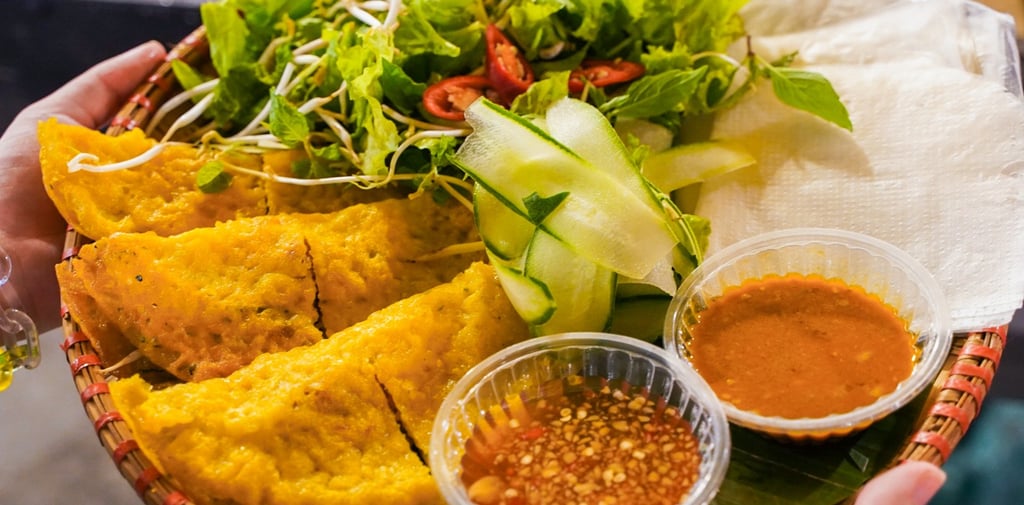
Bánh Xèo, or the Vietnamese Sizzling Pancake, is arguably the most dramatic and satisfying dish in the nation’s repertoire of street food. Its name itself—Bánh (cake) Xèo (the loud, sizzling sound the batter makes when it hits the hot oil)—is an auditory promise of crispy, flavorful indulgence. For the Western palate, it offers an approachable familiarity (a savory crepe or pancake) yet delivers an exhilarating complexity through its fresh herbs and dipping sauces. However, like its cousin Phở, Bánh Xèo is not a singular dish; it is a culinary chameleon, morphing dramatically in size, ingredients, and texture as it travels across Việt Nam’s varied geography.
As specialists at Vietnam Charm, we embark on a deep dive into the fascinating regional variations of Bánh Xèo. This is a study in sizzling geography, revealing how the abundance of the Mekong Delta fostered massive, generous portions, while the austere, historical environment of the Central Coast favored smaller, more delicate forms. Understanding these differences is essential to appreciating the full spectrum of Vietnamese culinary artistry.
I. Bánh Xèo Miền Tây (Southern Sizzling Pancake): The Colossal, Generous Feast
The Bánh Xèo of the South, particularly prevalent in the Mekong Delta (Miền Tây) and Sài Gòn (Ho Chi Minh City), is characterized by its scale, richness, and sheer abundance. This style reflects the fertility and generosity of the surrounding land and water.
Anatomy of the Southern Giant
Colossal Size: The most immediate difference is the size. Southern Bánh Xèo is often colossal, spanning the entire circumference of a large, flat pan (often 10-12 inches wide). It is typically served folded once, resembling a substantial half-moon that can easily feed two people.
The Batter and Texture: The batter is richer. Cooks in the South traditionally incorporate a generous amount of coconut milk into the rice flour and turmeric mixture. This addition not only imparts a subtle sweetness and richness but also helps the pancake achieve a distinctly crisp, thin, and brittle texture across its entire surface. The desired result is a deep, golden-yellow color and a glass-like snap upon breaking.
The Filling (Abundance): The filling reflects the Delta’s bounty. It often includes a mixture of sliced pork belly, shrimp, mung beans, and sometimes mushrooms or bean sprouts. The filling is cooked first in the pan before the batter is added, ensuring deep flavor integration.
The Accompaniments: The serving platter is vast. It features a stunning array of fresh herbs (rau sống), including mint, fish mint (rau diếp cá), perilla leaves, lettuce, and mustard greens. The wrapping medium is usually whole lettuce leaves. The dipping sauce (nước chấm) is a classic Nước Mắm Pha (fish sauce dressing), balanced with lime, sugar, chili, and minced garlic.
The Southern Bánh Xèo is an architectural triumph of abundance, designed to be disassembled and reassembled into a fresh, crisp, herbaceous hand-roll.
II. Bánh Xèo Miền Trung (Central Sizzling Pancake): The Delicate, Focused Bite
As you travel north towards the narrow, historically significant Central Coast, Bánh Xèo undergoes a fascinating miniaturization, reflecting the area’s historically leaner resources and refined courtly sensibilities (particularly around Huế).
Anatomy of the Central Miniature (Bánh Khoái/Bánh Xèo Huế)
Miniature Size (Bánh Khoái): In places like Huế and Đà Nẵng, the pancake shrinks dramatically. Known locally as Bánh Khoái (in Huế, sometimes meaning "Pancake of Pleasure") or simply a smaller Bánh Xèo, the diameter rarely exceeds 4-6 inches. They are cooked in tiny, individual, round-bottomed woks.
The Batter and Texture: The batter is often thicker and chewier in the center compared to the South's brittle version. Coconut milk is used sparingly or sometimes omitted entirely. The resulting pancake has raised edges that are crispy, but the center retains a dense, almost soft texture.
The Filling (Refinement): The filling is less varied, reflecting a focus on precision: often just small shrimp and a small piece of pork or quail egg.
The Accompaniments (The Dipping Sauce is King): The herb platter is simpler, but the dipping sauce becomes the focal point. Central Việt Nam uses a specialized, savory, peanut-based dipping sauce (nước lèo) that is complex, slightly thick, and heavily flavored with fermented soybeans and liver pâté. This sauce is poured over the pancake or used as a dip, adding immense depth to the smaller bite.
The Central Bánh Xèo is a masterpiece of refinement and intensity, relying on the complexity of its dipping sauce rather than the quantity of its filling.
III. The Sizzling Science: Why the Texture Changes
The difference between the South’s brittle, thin pancake and the Center’s denser, chewier one is rooted in two key factors:
Coconut Milk: The generous use of coconut milk in the South inhibits gluten formation in the rice flour batter, leading to a thinner, crispier structure across the whole surface. The Center, with less access to immediate coconut abundance, relies more purely on rice flour and water, yielding a denser result.
The Pan: The South uses large, thin, flat-bottomed pans over open heat, allowing the batter to spread thinly and crisp quickly. The Center uses small, deep, round-bottomed woks, resulting in a deeper oil bath and thicker batter layer, leading to the characteristic soft, doughy center and crispy edge of Bánh Khoái.
IV. The Ritual of Consumption: Wrapping and Rolling
The joy of Bánh Xèo lies in the ritual of consumption, which is the same regardless of the region:
Disassembly: The diner breaks off a piece of the crispy pancake using chopsticks.
The Wrap: The piece is placed onto a chosen wrapping medium—usually a piece of lettuce, mustard green, or sometimes a piece of rice paper (bánh tráng).
The Herb Bouquet: Essential herbs from the accompanying platter (mint, perilla, fish mint) are added onto the wrap.
The Roll and Dip: The whole ensemble is rolled tightly into a manageable cylinder and dipped generously into the respective regional dipping sauce.
This act of building each bite ensures a perfect balance: the warm crunch of the pancake, the cool moisture of the vegetable, the herbaceous blast of the greens, and the complexity of the sauce.
V. Conclusion: The Culinary Chameleon
Bánh Xèo, in its widespread popularity and striking regional variations, offers the discerning traveler a delicious, direct lesson in Vietnamese culinary adaptation. The immense, communal portions of the South reflect the region's agricultural wealth and open-hearted culture, while the small, dense, sauce-dependent Bánh Khoái of the Center speaks to a tradition of refinement and historical austerity. Together, these sizzling pancakes demonstrate that the spirit of Vietnamese cuisine is one of constant, creative evolution, always reflecting the history and resources of the terrain upon which it is cooked.
We are on social media
Vietnam Charm belongs to Vietpearl Travel., JSC
Contact:
Email: info@vietnamcharm.top
© 2026. by Vietnam Charm. All rights reserved
Travel license number: 01-827/2020
Refund Policy