Giảm giá hấp dẫn cho tour du lịch!


THE SLOW EPIC: TRANS-VIỆT NAM RAILWAY — A JOURNEY THROUGH TIME, LANDSCAPE, AND THE PHILOSOPHY OF DECELERATION
More than transit: exploring the profound historical, logistical, and aesthetic significance of the North-South railway as Việt Nam's essential geographic and spiritual spine, analyzing its role in national reunification and the contemplative beauty of slow travel.
VIETNAMESE CULTUREURBAN & DAILY LIFELOCAL EXPERIENCES
Tobin Nguyen
10/22/20255 phút đọc
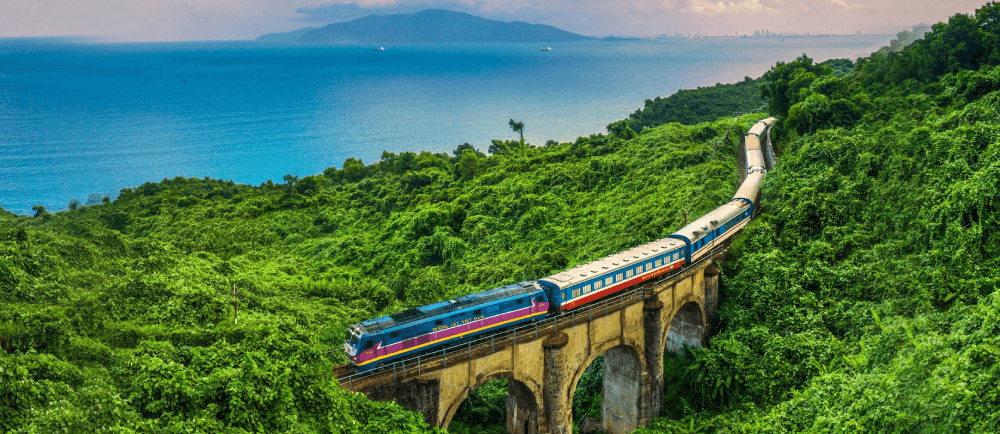
For the international traveler, the Trans-Việt Nam Railway—known historically as the Thống Nhất (Reunification) Express—is far more than a practical means of transport stretching over 1,700 kilometers from Hà Nội to Ho Chi Minh City. It is a living narrative of the nation, a continuous moving testament to geopolitical struggle, resilience, and the sheer, breathtaking diversity of the Vietnamese landscape. The railway functions as the country’s physical and spiritual spine, binding the ancient North to the dynamic South, and transforming the act of travel from a logistical necessity into a prolonged, meditative act of national immersion and contemplation.
As specialists in Vietnamese heritage and profound cultural analysis at Vietnam Charm, we embark on an essential, detailed exploration to decode this slow epic. We will meticulously analyze the historical mandate that created the railway system, the logistical and economic challenges of maintaining this critical spine, the aesthetic philosophy of slow travel (du lịch chậm), and the profound emotional role the railway plays in articulating the deep-seated desire for national unity and geographical cohesion. Understanding the Trans-Việt Nam Railway is essential to grasping the core values of endurance, connection, and the contemplative beauty found in observing life at a measured pace.
1. The Historical Mandate: From Colonial Vision to National Unification
The history of the Trans-Việt Nam Railway is a direct reflection of the nation's political evolution, serving first as a tool of imperial power and later as the ultimate symbol of national sovereignty and hard-won unity.
The initial construction of the line was a colossal undertaking driven by the French colonial administration in the late 19th and early 20th centuries. The motive was purely logistical and economic: to consolidate administrative control, facilitate the efficient extraction of resources from the Central and Northern regions, and swiftly move troops. This colonial mandate necessitated immense, complex engineering—bridging countless rivers, carving routes through the steep, geologically challenging Trường Sơn (Annamite Range) mountains, and connecting the major urban and resource centers. The railway was, in its genesis, a tool of foreign domination.
However, the railway's destiny was profoundly rewritten by the 20th-century conflicts. During the war years, sections of the track were repeatedly bombed and destroyed, only to be repaired and put back into service with astonishing speed and resilience—often by local volunteers and militias—demonstrating the Vietnamese spirit's profound understanding of the railway's strategic necessity. After the reunification of the country in 1975, the restoration and full linkage of the North and South lines became a paramount national project. The reopening of the entire line, renamed the Thống Nhất (Reunification) Express, was a powerful, symbolic act, physically and emotionally cementing the national unity achieved after decades of conflict. The railway thus transitioned from being a colonial mechanism to the unquestionable artery of national identity and sovereignty.
2. The Logistical Spine: Geography, Resilience, and Economic Flow
The railway's most fundamental function is its role as the nation's logistical spine, capable of managing both passenger volume and heavy cargo across geographical boundaries that challenge road and air travel.
The rail corridor is strategically essential because it manages the difficult geographic transition between the two major population centers (Hà Nội and Ho Chi Minh City) while navigating the incredibly rugged, central mountainous terrain. The rail line often runs parallel to the strategic National Highway 1A, but unlike the road, the train maintains a fixed, predictable schedule largely immune to road congestion, extreme weather events, and traffic chaos. This reliability makes it the preferred method for transporting bulk cargo—rice, coal, construction materials—providing stability to the national supply chain. Furthermore, the train serves as the essential, affordable connector for millions of citizens who lack the means for air travel, ensuring equitable mobility across the vast territory.
The infrastructure itself is a testament to resilience. The continuous maintenance required to manage tracks that cross dynamic river deltas, navigate coastal erosion, and traverse seismic zones is immense. This constant engineering effort reflects the national commitment to preserving this vital link, understanding that the railway is not merely an alternative form of transport but an essential strategic asset that guarantees the country's economic and administrative cohesion, functioning as the ultimate physical manifestation of unity across diverse landscapes.
3. The Aesthetic Philosophy: Deceleration and the Contemplative Journey
For the discerning traveler, the Trans-Việt Nam Railway offers an unparalleled aesthetic philosophy of deceleration—a deliberate choice for slow travel (du lịch chậm) that transforms the journey itself into a profound cultural experience.
The train's measured pace is the key to this philosophy. Unlike the rushed, abstract view from an airplane window or the high-speed blur of a highway, the train provides a continuous, intimate, and human-scale view of the Vietnamese landscape. This view is layered: from the narrow, intimate backyards of urban centers, where the tracks run directly behind the Tube Houses, to the breathtaking, sweeping vistas of the Central Coast, where the track skirts sheer cliffs high above turquoise water (most famously near the Hải Vân Pass). The train forces the traveler to adopt a contemplative, patient pace, allowing the mind to fully absorb the transformation of culture, dialect, architecture, and topography as they transition seamlessly from North to South.
The journey encourages a unique form of social immersion. Confined spaces necessitate interaction, and the shared experience of the dining car, the communal seating areas, and the sleeper cabins fosters spontaneous connection between locals and foreigners. The train becomes a temporary, movable Vietnamese microcosm, where the traveler is immediately immersed in the rhythms of daily life—the vendor's call, the shared meal, and the quiet camaraderie of a long journey. The railway is the ultimate stage for observing the unfolding epic of Vietnamese life.
4. The Iconic Viewpoints: Chronicle of the Landscape
The railway's route is an intentional chronicle of the nation's most iconic and geographically significant regions, turning every segment into a distinct visual chapter.
The journey offers a direct, visceral comparison between the three primary geographical zones. The initial hours out of Hà Nội chronicle the dense, communal structure of the Red River Delta—the vast, flat expanse of rice paddies, the tightly organized villages, and the heavy reliance on water. The central segment, traversing provinces like Quảng Bình and Thừa Thiên Huế, narrates the struggle against the rugged Trường Sơn Range and offers the sublime beauty of the littoral zone, culminating in the iconic views near Đà Nẵng and Lăng Cô Lagoon. This segment showcases the contrast between the green mountains and the deep blue sea. The final segments into the South reveal the intense agricultural abundance and tropical energy of the Coastal Plains, culminating in the eventual chaos of the Ho Chi Minh City metropolis.
This continuous visual contrast reinforces the profound geographic diversity that defines the nation, turning the physical journey into an intellectual exercise in understanding the shifting microclimates, dialects, and architectural adaptations that occur over the 1,700-kilometer span. The window seat on the Thống Nhất Express is, therefore, the premier vantage point for decoding the nation's immense physical and cultural complexity.
5. Conclusion: The Unwavering Spine of National Identity
The Trans-Việt Nam Railway is the ultimate, enduring testament to the nation's historical resilience, geographical diversity, and profound commitment to unity. It is an engineering marvel that physically links two distinct cultural poles, ensuring that the North and the South remain perpetually connected by a fixed, visible spine of steel. By analyzing its historical mandate as a tool of reunification, its reliable logistical function, and the contemplative beauty of its slow pace, the observer gains access to the profound truth: the railway is more than just infrastructure; it is the unwavering spiritual artery of the nation. It transforms the long journey into a necessary, moving meditation on the complexity, beauty, and enduring resilience of the Vietnamese spirit.
We are on social media
Vietnam Charm belongs to Vietpearl Travel., JSC
Contact:
Email: info@vietnamcharm.top
© 2026. by Vietnam Charm. All rights reserved
Travel license number: 01-827/2020
Refund Policy