Giảm giá hấp dẫn cho tour du lịch!



THE SONIC ARCHITECTURE: NHÃ NHẠC — DECODING THE RITUAL, HIERARCHY, AND SOUND OF IMPERIAL SOVEREIGNTY
More than music: exploring Nhã Nhạc as Việt Nam's ultimate state manifesto in sound, analyzing the intricate hierarchy of its instrumental ensembles, its role as the governing axis for imperial ritual, and its profound articulation of political stability and cosmological order.
VIETNAMESE CULTURETHE SOUNDSCAPELOCAL EXPERIENCES
Tobin Nguyen
10/22/20255 phút đọc
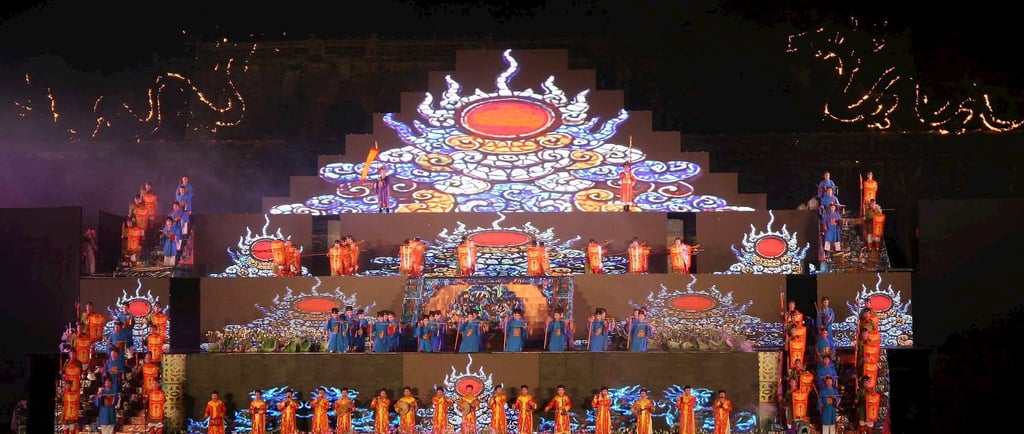
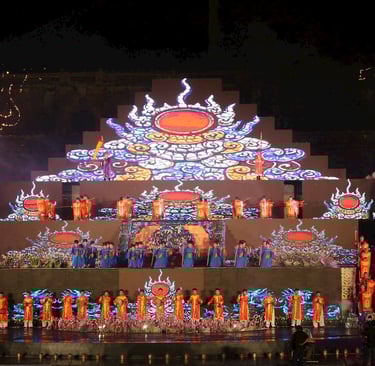
For the international musicologist, the historian of ritual, and the discerning traveler, Nhã Nhạc (Vietnamese Court Music) is a spiritual and acoustic monument. Recognized by UNESCO as a Masterpiece of the Oral and Intangible Heritage of Humanity in 2003, this music is far more than mere entertainment; it is the highest, most codified, and most solemn form of musical expression in the nation's history. Nhã Nhạc is the sound of absolute imperial power, the precise acoustic protocol that governed every significant ritual—from the coronation of an emperor to the solemn offering to the Ancestors. The music is not listened to casually; it is a mandatory, sacred component designed to align the human, political world with the orderly, benevolent forces of the cosmos.
As specialists in Vietnamese heritage and profound cultural analysis at Vietnam Charm, we embark on an essential, detailed exploration to decode this sonic architecture. We will meticulously analyze the cosmological principles that dictated its tempo and instrumental configuration, the political hierarchy that was rigidly enforced through its performance, the spiritual necessity of its ceremonial function, and the profound way Nhã Nhạc articulates the core values of discipline, solemnity, and the ancient Vietnamese commitment to centralized political and ritual order. Understanding Nhã Nhạc is essential to grasping the core mechanisms of imperial power and the high value placed on ritual precision.
1. The Cosmological Mandate: Music as the Instrument of Governance
The genesis and rigorous adherence to Nhã Nhạc are rooted in the ancient Confucian belief that music is a fundamental instrument of governance, moral instruction, and cosmological alignment. The quality of the music was believed to directly reflect the stability, morality, and prosperity of the imperial state.
The core philosophy dictates that Nhã Nhạc (meaning "Elegant Music") must be harmonious, solemn, and strictly measured to align the earthly court with the orderly, benevolent forces of Heaven (Thiên). Music that was too frivolous, too fast, or too complex was believed to disrupt the cosmic harmony, potentially inviting ill fortune and political instability. Therefore, the tempo is deliberately slow, measured, and highly restrained, forcing the listener—including the Emperor himself—into a contemplative, respectful state. The rhythm and pitch were codified to reflect the moral order, ensuring that the sound itself was virtuous and proper (chính xác và đúng đắn).
This mandate enforced an absolute need for ritual precision. Every note, every pause, and every instrumental entry was dictated by strict imperial protocol (lễ nghi) written in the official codes (Khâm Định Đại Nam Hội Điển Sự Lệ). The music was composed to perfectly synchronize with the physical movements of the ritual—the prostrations, the offerings, and the ascent or descent of the Emperor. The music and the ritual were functionally inseparable: the music provided the required spiritual energy (Khí) for the ceremony to be effective, while the ceremony provided the necessary political justification for the music to exist. Nhã Nhạc was, in its purest form, applied imperial philosophy in sound.
2. The Architecture of Sound: Hierarchy and the Instrumental Ensembles
The performance of Nhã Nhạc is rigidly structured around a precise hierarchy of instrumental ensembles, with the size and composition of the orchestra dictated entirely by the political and spiritual gravity of the ritual being performed. The sound itself embodies the stratification of the court.
The ensembles are broadly divided into two major groups, reflecting the required volume and formality:
Đại Nhạc (Great Music): The largest, most formal, and highest-ranking ensemble, consisting primarily of powerful percussion instruments (large drums, gongs), wind instruments (trumpets, horns), and strings. The Đại Nhạc was reserved for the most solemn and public ceremonies, such as the Tế Giao (Sacrifice to Heaven and Earth) and the Emperor’s major state appearances. Its massive sound was designed to command attention, project absolute power, and resonate across the large imperial courtyards, signaling the presence of the highest political authority.
Tiểu Nhạc (Small Music): The smaller, more intimate, and more delicate ensemble, consisting primarily of strings (like the Đàn Nhị and Đàn Tỳ Bà), flutes (Ống Sáo), and soft percussion. The Tiểu Nhạc was used for less public, more internal court rituals, such as the daily court sessions, banquets, and internal offerings to the ancestors within the Forbidden Purple City. Its refined, softer sound was designed to foster contemplation and gentle formality.
The core of the Nhã Nhạc repertoire utilized specialized instruments, many of which are unique to the tradition, such as the biên khánh (stone chime) and the biên chung (bronze bells). These heavy, ancient instruments were chosen for their pure, clear tones, which symbolized the moral clarity and permanence of the Confucian state. The complex, synchronized playing of these instruments ensured that the music was a direct, audible representation of order, discipline, and hierarchical structure.
3. The Sacred Functions: Ritual Purity and the Tế Giao
The most sacred and politically vital function of Nhã Nhạc was its performance during the Tế Giao (Sacrifice to Heaven and Earth)—the ultimate, most important ritual performed by the Emperor to secure his Mandate of Heaven.
The Tế Giao ceremony was the ultimate spiritual performance of the Emperor’s role as the "Son of Heaven" (Thiên Tử), the sole legitimate intermediary between the celestial realm and the mortal population. The ritual, performed at the Đàn Nam Giao (Open-Air Altar), demanded absolute spiritual and acoustic purity. Nhã Nhạc was the non-negotiable component that provided the required sacred energy. The music was used to summon the celestial spirits, guide the Emperor through the meticulously choreographed offerings, and affirm the successful transmission of the Thiên Mệnh (Mandate of Heaven). Any error in the music or the ritual could theoretically lead to catastrophe and the collapse of the dynasty.
The music was also crucial for Tế Miếu (Temple Rites)—the solemn, internal court rituals dedicated to the Nguyễn Dynasty's Ancestors. During these rites, the music fostered a sense of spiritual connection and deep respect, ensuring the ancestors were pleased and their blessings were secured for the political future of the bloodline. In both external (Heaven) and internal (Ancestors) rituals, Nhã Nhạc served as the sonic bridge, transforming the political act into a sacred, cosmological necessity.
4. The Legacy of Revival: Resilience, Memory, and UNESCO
Following the collapse of the Nguyễn Dynasty in 1945, and decades of subsequent conflict, the rigorous art form of Nhã Nhạc faced an immediate threat of extinction. The loss of the imperial court—its primary patron, venue, and enforcer—led to the rapid dispersion and decline of the required skill sets, instruments, and repertoire. The preservation of Nhã Nhạc in the late 20th and early 21st centuries is a remarkable story of cultural resilience and political commitment.
The core of the revival effort, centered in Huế, focused intensely on recovering the immense, complex repertoire and retraining the master artisans required to perform it. The music, being written in ancient, complex notation, demanded dedicated, painstaking scholarship to translate and reconstruct. Crucially, the instruments themselves—the ancient drums, the specific gongs, the unique strings—had to be precisely recreated by specialized master craftsmen, ensuring the sound's integrity was maintained. This required massive investment in cultural infrastructure and a generational commitment to the oral tradition of performance.
The 2003 UNESCO recognition of Nhã Nhạc was a powerful international validation, affirming its status as a vital part of global heritage. This recognition not only secured funding but also provided a potent symbol for national pride, ensuring that this highest art form—the sonic architecture of the ancient state—was preserved for future generations, transforming the music from a relic of the past into a living, active component of contemporary Vietnamese cultural identity.
5. Conclusion: The Permanent Tone of Imperial Order
Nhã Nhạc is the ultimate, enduring acoustic manifesto of imperial Việt Nam. It is a profound, solemn expression of political authority, cosmological belief, and meticulous ritual discipline. By analyzing its foundation in Confucian morality, the complex hierarchy of its instrumental ensembles, its sacred function as the ultimate sonic bridge to the celestial realm, and its powerful contemporary revival, the observer gains access to a core truth: Nhã Nhạc is far more than historical music. It is the permanent, unwavering tone of imperial order—a sound that demands patience, profound respect, and contemplation. The slow, solemn notes of Nhã Nhạc assert that true political power, like true cultural value, is ultimately rooted in ritual precision, moral alignment, and the disciplined pursuit of enduring cosmic harmony.
We are on social media
Vietnam Charm belongs to Vietpearl Travel., JSC
Contact:
Email: info@vietnamcharm.top
© 2026. by Vietnam Charm. All rights reserved
Travel license number: 01-827/2020
Refund Policy