Giảm giá hấp dẫn cho tour du lịch!

THE SOUL OF THE PADDY FIELD: RICE AS HISTORY, CIVILIZATION, AND THE CORE OF THE VIETNAMESE SPIRIT
More than a grain: decoding the profound cultural, economic, and spiritual significance of wet rice cultivation, exploring how the paddy field served as the crucible of Vietnamese identity, mythology, and resilience.
HERITAGE & SPIRITLOCAL EXPERIENCES
Tobin Nguyen
11/6/20256 phút đọc
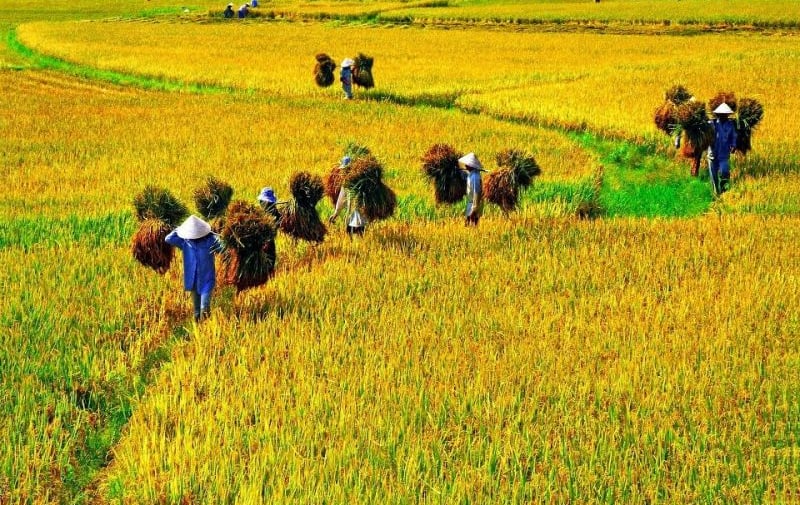
For the international traveler, the image of Việt Nam is often incomplete without the sweeping, shimmering visuals of the rice paddy fields—the emerald carpets stretching across the deltas or the intricate, carved terraces climbing the steep mountain slopes. Yet, the grain of rice is far more than a staple crop; it is the unwavering foundation of Vietnamese civilization—the economic engine, the spiritual currency, and the very philosophical anchor of the nation's identity. Wet rice cultivation (nền văn minh lúa nước) is the lens through which history is viewed, rituals are performed, and collective memory is preserved.
As specialists in Vietnamese heritage and profound cultural analysis at Vietnam Charm, we embark on an essential, detailed exploration to decode this most fundamental aspect of the national consciousness. We will meticulously analyze the geographical necessity that mandated wet rice cultivation, the economic and social structure that evolved directly from the paddy field, the spiritual significance imbued in rice rituals, and the powerful role this simple grain plays in articulating the resilience and deep ancestral connection of the Vietnamese people. Understanding the rice culture is essential to grasping the cyclical nature of time, the commitment to community, and the profound simplicity that defines the Vietnamese soul.
1. The Geographical Mandate: The Cradle of the Wet Rice Civilization
The genesis of Vietnamese culture is inextricably linked to the geography of its two great deltas—the Red River Delta in the North and the Mekong River Delta in the South. These vast, low-lying, fertile floodplains provided the ideal conditions, and the necessary challenges, that mandated the development of the intensive wet rice cultivation system.
This was not a choice; it was a geographical imperative. The annual flooding, the reliable monsoons, and the rich alluvial soil created an environment where the systematic control of water was the key to survival and prosperity. Unlike dry farming, wet rice cultivation requires immense, coordinated communal labor to construct, maintain, and manage the complex system of dikes, canals, and irrigation channels—a necessity that forced the early inhabitants to organize into tight-knit, highly structured communities. This early organizational demand meant that the social contract and the collective effort (tinh thần đoàn kết) were established by the rhythm of the rice field itself. The field became the ultimate social laboratory, forging a culture where the success of the individual was inherently tied to the prosperity of the collective.
The cyclical nature of the rice calendar—the planting, the growing, the harvest, and the necessary pause before renewal—became the nation's earliest conceptualization of time. The calendar and the subsequent festivals, such as Tết, are entirely structured around the successful completion of the agrarian cycle. The paddy field is, therefore, the true, original cradle of the Vietnamese state.
2. The Economic and Social Architecture: The Village as a Collective
The cultivation of rice demanded a social structure that was fundamentally different from the nomadic or dry-farming cultures of the world. The complexity of water management necessitated a social architecture centered around the village (làng) as the definitive unit of economic and political organization.
The village functioned as a collective hydrological engineering unit. Decisions regarding the maintenance of irrigation dikes, the timing of water release, and the sharing of labor for planting and harvesting required immense cooperation and a system of governance that preceded even the centralized state. This necessity cemented the famous Vietnamese proverb: "Phép vua thua lệ làng" (The Emperor’s law yields to the village’s custom). This statement is a direct philosophical reflection of the rice economy, asserting that the local, practical knowledge required to manage the irrigation system was more immediately vital than the distant, theoretical authority of the court.
Furthermore, the rice economy established the profound concept of sufficiency and self-reliance. While rice was a commodity, its primary role was to ensure the survival and food security of the family and the village first. This focus on subsistence and security over aggressive commercialism shaped the traditional Vietnamese view of wealth and resource management, prioritizing stability and ancestral obligation over rapid, individual accumulation. The architecture of the communal house (đình)—the village's spiritual and political heart—was often built at the edge of the rice fields, visually symbolizing the spiritual protection required for the harvest.
3. The Mythology of Creation: Rice, Water, and Ancestral Duty
Rice is woven into the very fabric of Vietnamese creation mythology and spirituality, transcending its physical form to become a spiritual currency used to communicate with the ancestors and the heavens.
The legendary origins of Việt Nam, stemming from Lạc Long Quân (The Dragon Lord) and Âu Cơ (The Fairy Princess), inherently link the people to the water and the land. Rice is the ultimate product of this union, requiring the water from the heavens (the Dragon) and the fertile soil of the land (the Fairy). This mythology instills a profound sense of spiritual duty concerning the cultivation and respect of the grain. Rice is not just food; it is a sacred offering.
This spiritual significance is most evident in the ritual preparation of Bánh Chưng and Bánh Giầy during Tết. These square and round sticky rice cakes are the ultimate culinary symbols of the rice civilization:
Bánh Chưng (The Square Cake): Symbolizes Đất (Earth), the feminine (Yin), and the source of life and sustenance. The sticky rice is carefully wrapped in natural, square layers of banana leaves, representing the physical world.
Bánh Giầy (The Round Cake): Symbolizes Trời (Heaven), the masculine (Yang), and the celestial blessing of rain and sun. It is a simple, round, white mound of pure sticky rice.
The meticulous, hours-long process of preparing these cakes is a communal ritual, serving as an annual, powerful reaffirmation of the agrarian roots, the cosmological balance, and the ancestral mandate to respect the land that sustains them. This reverence is also evident in the first harvest rituals (Lễ Cúng Lúa Mới) performed by various ethnic groups, thanking the rice spirit for its bounty.
4. The Geopolitical and Strategic Role: From Defense to Abundance
The rice civilization has historically played a critical, often unrecognized, geopolitical role in defining Việt Nam’s fate, serving as both a source of stability and a strategic liability during times of conflict.
The vast abundance of the rice deltas, particularly the Mekong in the South, historically attracted foreign powers seeking control over this vital agricultural engine. Maintaining control over the rice supply was always central to any long-term military strategy against the nation. However, the complex, water-logged terrain of the paddy fields also served as a natural, formidable defensive barrier. The environment was easily navigable by the local population (who mastered the use of boats and shallow paths) but highly frustrating and debilitating for organized, motorized foreign armies. The terrain itself became an ally, proving that the agricultural land could be weaponized through strategic resilience and intimate knowledge of the watery environment.
Today, rice continues its strategic importance, but on the global economic stage. Việt Nam has transitioned from a nation primarily concerned with subsistence rice production to becoming one of the world's largest rice exporters. This economic transformation demonstrates the extraordinary adaptability, resilience, and industrial efficiency that the deeply ingrained culture of wet rice labor has imparted to the modern Vietnamese workforce. The discipline and collective organization required to manage the complex irrigation systems have translated seamlessly into modern economic efficiency.
5. The Enduring Cultural Texture: Rice in Daily Life
The influence of rice extends far beyond the main meal, permeating the entire cultural and culinary texture of daily Vietnamese life. The grain is the base material for an astonishing diversity of forms, reflecting remarkable resourcefulness and culinary creativity.
Rice is the essential, transformational medium, used to create the nation's signature secondary foods:
Phở (The Noodle): The wide, flat rice noodle that defines the national dish, requiring precise milling and stretching.
Bún (The Vermicelli): The thin, delicate rice vermicelli used in countless dishes like Bún Chả and Bún Riêu, reflecting regional specialties.
Bánh Mì (The Sandwich): The iconic baguette uses rice flour mixed with wheat flour, a uniquely Vietnamese adaptation that provides the signature light, airy crumb and shatteringly crisp crust.
Bánh Cuốn and Bánh Tráng (The Wraps): Thin, steamed rice sheets used for wrapping food, demonstrating the complexity of transforming rice flour into delicate, edible fabric.
Xôi (Sticky Rice): The ceremonial glutinous rice, colored and flavored, used for offerings, festivals, and rich daily consumption, symbolizing togetherness and prosperity.
This omnipresence ensures that the scent, taste, and texture of rice—whether steamed, ground, fermented, or baked—are a constant, comforting sensory presence, acting as a direct link between the modern citizen and their agrarian ancestors. The culture of rice is, in its purest form, the ultimate expression of simplicity, abundance, and profound resourcefulness.
The history of Việt Nam cannot be separated from the history of its rice. The paddy field served as the ultimate crucible, forcing collective action, defining social time, and cementing a profound reverence for the land and the ancestral mandate. The grain is the essential material that built the civilization, fed the heroes, and continues to sustain the nation's spiritual and physical health. It is the silent, ubiquitous, and unwavering soul of the Vietnamese spirit, teaching every generation the enduring value of hard work, community, and the simple beauty of abundance.
We are on social media
Vietnam Charm belongs to Vietpearl Travel., JSC
Contact:
Email: info@vietnamcharm.top
© 2026. by Vietnam Charm. All rights reserved
Travel license number: 01-827/2020
Refund Policy