Giảm giá hấp dẫn cho tour du lịch!

THE SOUTHERN SERENADE: ĐỜN CA TÀI TỬ — DECODING FREEDOM, IMPROVISATION, AND THE MELANCHOLY HEART OF THE MEKONG DELTA
More than folk music: exploring Đờn Ca Tài Tử as the ultimate artistic expression of Southern Vietnamese emotional fluidity, analyzing its profound dedication to improvisation, the complex system of its melodic Hơi (Modes), and its role as the democratic, intimate voice of the river and the rice fields.
VIETNAMESE CULTURELOCAL EXPERIENCESTHE SOUNDSCAPE
Tobin Nguyen
11/6/20255 phút đọc
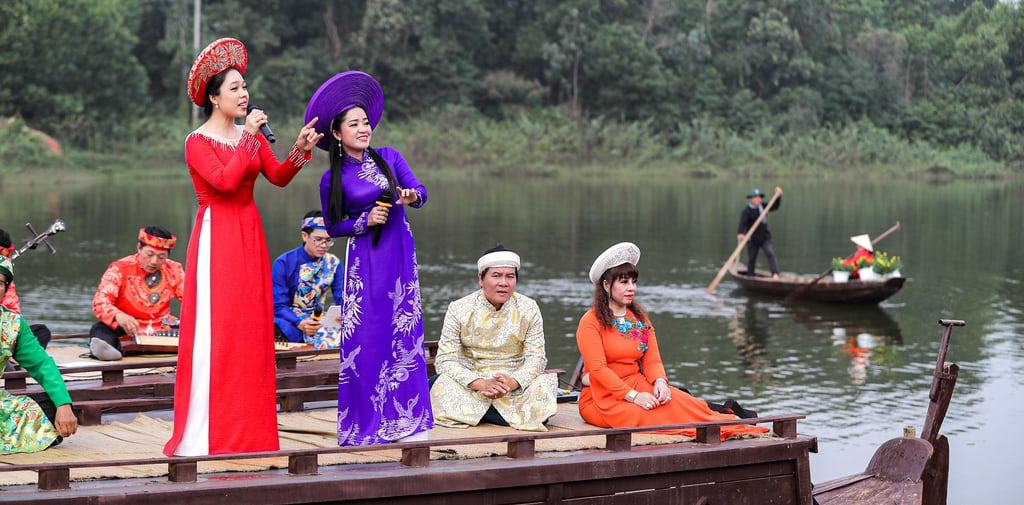
For the international musicologist, the seeker of spontaneous artistry, and the observer of deep cultural intimacy, Đờn Ca Tài Tử (Amateur Chamber Music)—the vibrant, expressive, and structurally fluid music of Southern Việt Nam—offers a profound experience. Recognized by UNESCO as a Masterpiece of the Oral and Intangible Heritage of Humanity in 2013, Tài Tử music is far more than a simple regional performance; it is the ultimate emotional ledger of the Mekong Delta, a unique art form built entirely on the principle of ngẫu hứng (improvisation), immediate emotional connection, and the deep, shared sorrow and joy of the common people. Its music flows, adapts, and speaks with the same organic, unpredictable rhythm as the great Mekong River itself.
As specialists in Vietnamese heritage and profound cultural analysis at Vietnam Charm, we embark on an essential, detailed exploration to decode this lyrical tradition. We will meticulously analyze the sociological genesis that enshrined improvisation as its core value, the complex technical genius of its melodic Hơi (Modes) and Tổ (Ancestral Pieces), the democratic philosophy that allows any skilled amateur to participate, and the profound way Tài Tử articulates the core values of emotional honesty, individual freedom, and the pervasive, gentle melancholy that defines the Southern soul. Understanding Đờn Ca Tài Tử is essential to grasping the fluidity, warmth, and enduring spirit of the Mekong civilization.
1. The Sociological Genesis: Democracy, Freedom, and the Amateur Spirit
The fundamental structure and emotional character of Đờn Ca Tài Tử are a direct, fluid reflection of the sociological and geographical landscape of Southern Việt Nam—a region characterized by pioneering settlement, economic fluidity, and a strong tradition of individualism and emotional honesty.
The term Tài Tử literally translates to "talented amateur" or "master artist." This title is a deliberate, powerful statement of the art form's democratic philosophy. Unlike the court-mandated and rigidly hierarchical Nhã Nhạc of Huế, Tài Tử music originated among the landowners, scholars, and affluent common people of the late 19th century who pursued music for personal enjoyment, intellectual refinement, and social intimacy rather than for state service or professional gain. The skill was pursued out of passion, not economic necessity, ensuring that the music remained profoundly authentic and emotionally accessible.
The geographical environment—the vast, open, frontier nature of the Mekong Delta—reinforced this democratic spirit. The music was designed to be performed in intimate, informal settings: living rooms, riverboats, small village gatherings, or garden gazebos. This setting eliminated the need for state sanction, allowing the artists maximum creative freedom and emotional spontaneity. The music became the perfect social lubricant, fostering deep, honest connection among friends and family through the shared expression of profound, often melancholy, emotion. The emphasis on individual emotional expression over rigid collective rhythm is the true signature of the Southern pioneering spirit.
2. The Technical Genius: The Tổ and the Complex System of Hơi (Modes)
The seeming simplicity and emotional spontaneity of Đờn Ca Tài Tử belie a sophisticated, rigorous technical structure built upon a system of Tổ (Ancestral Pieces) and complex Hơi (Modes). This structure provides the necessary philosophical framework for spontaneous improvisation.
The tradition rests upon a repertoire of Tổ—approximately 20 core, ancestral pieces (such as Dạ Cổ Hoài Lang or the Tứ Đại Oán) that all musicians must master. These Tổ are not rigid scores; they are structural blueprints—a melodic and rhythmic framework that defines the theme, the sequence of phrases, and the emotional intent. Mastery of Tài Tử means knowing how to spontaneously elaborate, ornament, and personalize these ancestral templates without ever losing the original piece's core identity. The music is therefore a continuous, respectful dialogue with the past.
The true emotional depth is achieved through the system of Hơi (Melodic Modes). Hơi is the philosophical and technical concept that dictates the emotional color, tonal centers, and performance style of the piece:
Hơi Bắc (Northern Mode): Characterized by a joyful, major, bright, and assertive emotional tone, reserved for pieces that celebrate life, honor, and prosperity.
Hơi Nam (Southern Mode): Characterized by a gentle, sad, reflective, and melancholy emotional tone, reserved for pieces that express longing, historical regret, or philosophical contemplation of destiny.
Hơi Oán (Lament Mode): The most profound, deeply expressive, and slow mode, dedicated to expressing existential sorrow, tragedy, and intense, deeply personal grief.
The musicians' skill lies in their ability to seamlessly shift the emotional color of the music by subtly changing the Hơi mid-performance, often within the same phrase, achieving complex emotional layering. This sophisticated modal system allows the spontaneous music to achieve immense emotional depth and nuanced expression.
3. The Art of Ngẫu Hứng (Improvisation): Fluidity and Emotional Honesty
The core artistic value of Đờn Ca Tài Tử is its absolute commitment to Ngẫu Hứng (Improvisation). This principle transforms the music from a performance into an immediate, unmediated emotional exchange among the musicians, demanding high levels of skill and mutual trust.
Tài Tử is built on the idea that the performance should never be identical twice. The musicians (typically utilizing the Đàn Kìm (Moon Lute), Đàn Tranh (Zither), Đàn Cò (Fiddle), and the Song Loan (Wood Block) for rhythm) must constantly listen and react to each other, engaging in a continuous, complex, musical conversation. The lead instrumentalist lays down the melodic skeleton, and the other instruments ornament, echo, and create counter-melodies, demonstrating their personal emotional reading of the Hơi being used.
The music's fluidity perfectly reflects the geographical fluidity of the Mekong Delta. Just as the rivers and canals constantly shift, so too does the music, allowing for expressive freedom and personal spontaneity. This dedication to honest, immediate emotional expression makes Tài Tử profoundly appealing to the Southern temperament, which culturally values emotional sincerity and openness. The performance is not a display of technical perfection, but a genuine, shared act of emotional honesty and mutual respect. The music's purpose is to move the heart, not just to satisfy the mind.
4. The Ensemble and Aesthetics: Intimacy, Resourcefulness, and Rượu
The aesthetic and ritualistic environment of Đờn Ca Tài Tử is defined by its intimacy, its resourcefulness, and the essential role of communal sharing.
The preferred setting is small and intimate, designed to foster emotional connection rather than grand distance. The instruments themselves are crucial: the long-necked Đàn Kìm and the resonant Đàn Tranh are played with unique micro-tonal bends and rapid vibratos that mimic the human voice's capacity for emotional expression, giving the music its deeply human sound. The musicians are highly aware of the acoustic philosophy of their instruments, focusing on resonance and texture over sheer volume.
Crucially, the performance is almost always accompanied by communal food and drink, most famously the local specialty, Rượu Đế (strong rice liquor) or trà (tea). This sharing transforms the performance into a social ceremony, using the food and drink to lower social barriers and encourage emotional openness and spontaneity. The music serves as the emotional background and catalyst for conversation, philosophy, and collective contemplation of life, fate, and the beautiful, pervasive melancholy that often defines Southern poetry. The simple, non-professional nature of the performance ensures that the music remains deeply rooted in the daily emotional life of the common people.
5. Conclusion: The Enduring Lyrical Voice of the South
Đờn Ca Tài Tử is the ultimate, enduring lyrical voice of Southern Vietnamese emotional and cultural life. It is an art form that transforms structural framework into spontaneous emotional poetry. By analyzing its democratic genesis among the amateur elite, the sophisticated technical framework of its Hơi (Modes), the absolute commitment to Ngẫu Hứng (Improvisation), and its role as the intimate backdrop to communal life, the observer gains access to a core truth: Tài Tử music is far more than entertainment. It is the permanent, emotional ledger of the Mekong Delta—a profound, fluid serenade that asserts the cultural value of emotional honesty, individual artistic freedom, and the belief that the deepest truths of the human spirit are best expressed through the shared, spontaneous language of music. It is the sound of the South's enduring, gentle, and resilient heart.
We are on social media
Vietnam Charm belongs to Vietpearl Travel., JSC
Contact:
Email: info@vietnamcharm.top
© 2026. by Vietnam Charm. All rights reserved
Travel license number: 01-827/2020
Refund Policy