Giảm giá hấp dẫn cho tour du lịch!

THE STATUES OF SOVEREIGNTY: DECODING PUBLIC MEMORY, HEROISM, AND THE UNYIELDING ARCHITECTURE OF NATIONAL UNITY
More than bronze: exploring Văn Hóa Tượng Đài (The Culture of Monuments and Statues) as Việt Nam’s ultimate physical ledger of collective memory, analyzing their profound function as pedagogical tools for patriotism, their role in immortalizing myth and heroism, and their embodiment of unyielding national will and political continuity.
LOCAL EXPERIENCESVIETNAMESE CULTURERESILIENCE & MEMORY
Tobin Nguyen
11/6/20255 phút đọc
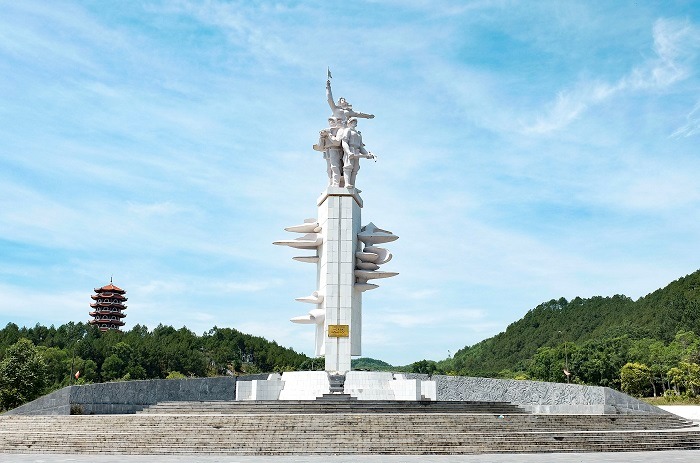
For the international historian, the urban planner, and the seeker of the nation’s deepest spiritual anchors, the Monuments and Statues that command the public squares and historical junctions of Việt Nam are not mere urban decoration. They are unwavering physical declarations of national sovereignty, collective memory, and political ideology—the ultimate, visible code through which the Vietnamese state chronicles its heroes, sanctifies its struggles, and perpetually instructs its populace in the sacred, non-negotiable duty of patriotism. The monument is the point where the ephemeral, chaotic flow of modern life yields to the imposing, silent gravity of history, compelling every citizen to pause, remember, and reaffirm their covenant with the ancestral past.
As specialists in Vietnamese heritage and profound cultural analysis at Vietnam Charm, we embark on an essential, detailed exploration to decode this silent, powerful architecture of remembrance. We will meticulously analyze the historical mandate that dictates which narratives are solidified in stone and bronze, the architectural grammar of the monument (scale, material, and gesture) used to convey moral clarity, the sociological function of the monument as a site for public ritual and patriotic pilgrimage, and the profound way this monumental culture articulates the core national values of unity, sacrifice, and the eternal, unbowed spirit of defiance. Understanding the monument culture is essential to grasping the physical structure of national memory and the emotional engines of Vietnamese political identity.
1. The Historical Mandate: Sovereignty, Legitimacy, and the Choice of Immortality
The genesis and the choice of subject matter for Vietnamese monuments are governed by a fierce historical and political mandate: they must serve as permanent, undeniable anchors of state legitimacy and national unity. The act of erecting a monument is the ultimate declaration of which historical figures and narratives deserve immortality in the public consciousness.
Monuments are strategically chosen to immortalize the foundational moments of national sovereignty and the figures who secured it. For instance, the majestic statues of Lý Thái Tổ (Founding Emperor of Hà Nội) or Trần Hưng Đạo (The Mongol Defeater) are placed in commanding urban spaces not merely to celebrate ancient history, but to establish a visible, unbroken, and legitimate lineage of national leadership and military prowess. These statues provide a physical, tangible continuity between the ancient, sovereign state and the modern political regime, asserting that the current leadership is the rightful heir to the nation's millennia-old struggle for independence. The bronze or stone figures act as silent, towering witnesses to the nation’s unyielding historical trajectory.
Crucially, the monuments dedicated to the 20th-century conflicts—the countless memorials dedicated to martyrs (liệt sĩ)—serve a vital pedagogical function. They transform the abstract concept of sacrifice into a painful, specific, and physical reality. These monuments remind the populace of the immense, tragic cost of peace, thereby perpetually fueling the moral imperative for patriotic duty and collective vigilance. The monument is the permanent, unmoving archive of the blood covenant between the living and the honored dead.
2. The Architectural Grammar: Scale, Material, and the Language of Gesture
The persuasive power of the Vietnamese monument is rooted in its rigorous architectural grammar—a sophisticated language of material, scale, and gesture designed to convey moral clarity, political purpose, and spiritual transcendence.
Scale and Placement: Monuments are deliberately engineered for imposing scale to induce awe and humility in the observer. A towering statue, placed in the center of a wide, open square, physically commands the surrounding urban flow, forcing the citizen to look up and confront the gravity of the historical narrative. The statue's placement is never accidental; it utilizes Phong Thủy (Feng Shui) principles, often commanding the confluence of roads or overlooking a river, ensuring the figure is imbued with maximum political and spiritual authority. The sheer size asserts the perpetual supremacy of the ideal (Patriotism, Heroism) over the ephemeral concerns of the individual.
Material and Symbolism: The choice of material—typically bronze or durable stone—is symbolic. Bronze signifies permanence, strength, and unwavering military resolve, while white or gray stone can signify purity, moral clarity, and the enduring stillness of memory. The monument’s material asserts that the virtues of the hero are not temporary; they are forged to be eternal and indestructible.
The Language of Gesture: The hero's posture is the final, essential key to the monumental language. A raised, pointing arm (often seen in statues of Hồ Chí Minh) symbolizes clear ideological direction, optimism, and the mobilization of the people towards a unified future. A hand on a sword hilt (Trần Hưng Đạo) symbolizes readiness and disciplined, strategic defense. Even the subtle, calm gesture of an extended hand (symbolizing compassion and wisdom) is a conscious political and moral instruction, ensuring that the statue functions as a silent, continuous teacher of civic virtue.
3. The Sociological Function: Civic Ritual, Pilgrimage, and the Collective Bond
The sociological role of monuments transcends their physical presence; they function as the necessary focal points for civic ritual, patriotic pilgrimage, and the continual reaffirmation of the collective social bond.
The public spaces surrounding major monuments are transformed into secular sanctuaries for formalized gatherings. National holidays, liberation anniversaries, and military parades inevitably culminate in tributes and wreath-layings at these sites. These rituals are crucial for transmitting patriotic values across generations, ensuring that young people physically engage with the pain and sacrifice of the past. The solemn procession, the silence during the minute of remembrance, and the collective sharing of patriotic song and history are all tools for re-establishing and strengthening the collective consciousness—the necessary, unifying spirit of đoàn kết (unity).
Furthermore, monuments dedicated to the war martyrs (such as the sprawling war cemeteries and local memorial halls) serve as sites for intense personal and familial pilgrimage. Families visit these sites to perform rituals of ancestral reverence (lễ tri ân), ensuring the perpetual memory of their loved ones' sacrifice is maintained. This blending of the state's political narrative (national heroism) with the family's spiritual duty (ancestral worship) imbues the monument with profound, lasting emotional power. The monument is the architectural anchor for the nation's spiritual economy of gratitude and remembrance.
4. The Emotional Core: Sanctuary, Sacrifice, and the Unyielding Gaze
At their core, monuments embody a powerful emotional mandate: they must channel the profound sorrow of sacrifice into the unyielding motivation and moral clarity required for present-day action. They are the permanent physicalization of the concept of resilience.
The gaze of the monument is deliberately unyielding, focused, and purposeful. It forces the citizen to momentarily step out of the chaotic, often self-interested, flow of modern life and confront the heroic idealism of the past. The monument asserts that the struggles of the ancestors were not in vain, and that the current generation has a moral obligation to maintain the integrity of the peace and unity that was paid for at such a high cost.
This spiritual transaction transforms the monument into a psychological sanctuary. In a world defined by moral ambiguity, the figures in bronze and stone offer clear, simplified ethical lessons—lessons of unwavering loyalty, self-sacrifice, and disciplined courage. The unmoving, silent hero provides a crucial sense of stability and permanence, serving as a constant reminder that core national values remain inviolable, regardless of external economic or political turbulence. The monument is the emotional generator that converts historical pain into future-focused determination.
5. Conclusion: The Permanent, Unmoving Ledger of Defiance
The Culture of Monuments and Statues is the ultimate, enduring, and physically magnificent testament to Việt Nam’s profound commitment to national memory and unyielding sovereignty. They are not passive structures but active, unmoving ledgers of collective defiance. By analyzing the historical mandate that sanctifies the figures of sovereignty, the rigorous architectural grammar of scale and gesture, the sociological necessity of civic ritual and patriotic pilgrimage, and the emotional core that channels sacrifice into moral clarity, the observer gains access to a core, luminous truth: the monument is far more than physical art. It is the permanent, unwavering architecture of resilience—a powerful, structural declaration that asserts the cultural value of disciplined patriotism, the sanctity of memory, and the belief that the nation's future strength is eternally rooted in the silent, commanding gaze of its ancestral heroes.
We are on social media
Vietnam Charm belongs to Vietpearl Travel., JSC
Contact:
Email: info@vietnamcharm.top
© 2026. by Vietnam Charm. All rights reserved
Travel license number: 01-827/2020
Refund Policy