Giảm giá hấp dẫn cho tour du lịch!



THE STONE FORTRESS OF SOVEREIGNTY: TRÀNG AN — DECODING THE BIRTH OF THE NATION, THE WATER-KARST SYNTHESIS, AND THE PHILOSOPHY OF THE HIDDEN CAPITAL
More than landscape: exploring Quần Thể Danh Thắng Tràng An (Tràng An Landscape Complex) as Việt Nam’s ultimate fusion of nature, myth, and political destiny, analyzing its profound role as the secret, hidden cradle of the nation's independence and its embodiment of the spiritual stillness of the ancient Earth.
LOCAL EXPERIENCESVIETNAMESE CULTURETHE WATER CIVILIZATION
Tobin Nguyen
11/6/20255 phút đọc
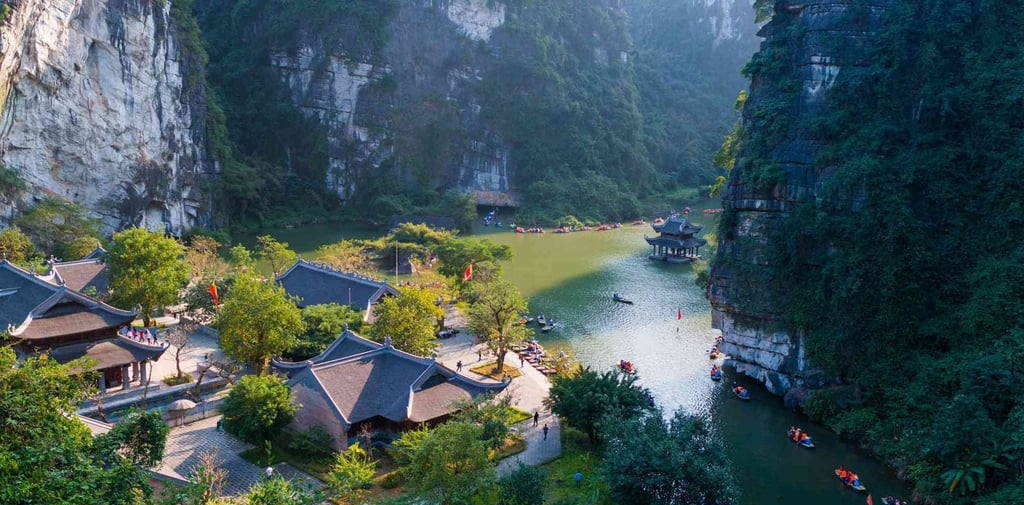
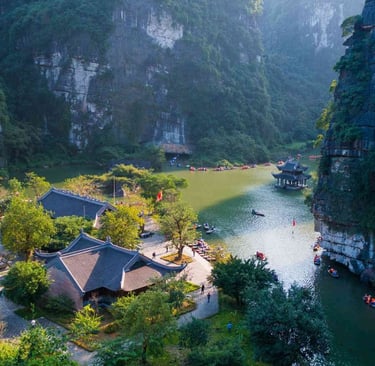
For the international visitor, the historian, and the seeker of profound spiritual anchors, Tràng An—a vast, ethereal labyrinth of towering limestone karsts, emerald rice fields, and tranquil cave-river systems in Ninh Bình—is not merely a scenic spot. Recognized by UNESCO as a World Heritage Site, it is the unquestionable, sacred crucible of Vietnamese sovereignty—the site where the nation’s political independence was physically secured in the 10th century and its enduring spiritual philosophy was forged. Tràng An is a landscape of profound contradiction: a fiercely guarded, natural fortress that simultaneously radiates an overwhelming, lyrical tranquility. The scene is a constant, visible reminder that the most powerful historical narratives are often written in the silence of the stone and the gentle flow of the water.
As specialists in Vietnamese heritage and profound cultural analysis at Vietnam Charm, we embark on an essential, detailed exploration to decode this flowing narrative of destiny. We will meticulously analyze the historical mandate that required this landscape for national defense, the geological genius of its water-karst synthesis that created a unique fortress-capital, the spiritual philosophy embedded in its cave-temple sanctuaries, and the profound way this silent environment articulates the core national values of strategic defense, disciplined stillness, and the eternal reverence for the ancestors who chose this sacred ground. Understanding Tràng An is essential to grasping the emotional weight, the strategic cunning, and the quiet power of the Northern Vietnamese soul.
1. The Historical Mandate: Dinh Tiên Hoàng and the Cradle of Sovereignty
The political and spiritual identity of Tràng An is rooted in the pivotal historical mandate of the 10th century—the desperate necessity for the nascent Vietnamese state to find an impregnable natural fortress to defend its newly won independence and establish a stable, legitimate capital.
Following centuries of Northern domination, the fragmented state needed a defensive capital that could withstand superior military force. Đinh Bộ Lĩnh (later Emperor Đinh Tiên Hoàng) chose this labyrinthine landscape as the site for Hoa Lư—the first independent capital of the unified Vietnamese nation. His choice was a stroke of strategic genius based entirely on the geology of the place. The sheer, towering limestone karsts formed natural, unassailable ramparts, while the complex, interconnected river and cave systems provided perfect, hidden logistical arteries for movement, storage, and defense. The only effective way into the capital was via boat through narrow, submerged cave entrances, making large-scale invasion impossible. The landscape was, and remains, the ultimate, natural Great Wall of the South.
This historical choice imbues Tràng An with sacred, permanent political gravity. The landscape is not a place of conflict; it is a sacred memorial to the birth of sovereignty. The temples and shrines that remain—dedicated to the Emperors Đinh and Lê—serve as permanent, solemn reminders that the freedom of the entire nation was anchored in this specific, quiet valley. The political act of establishing the capital here transformed the geological space into a sacred, national monument.
2. The Geological Genius: The Water-Karst Synthesis
The unique aesthetic and strategic power of Tràng An are the result of a rare, exquisite geological synthesis—the harmonious, intimate fusion of Karst (Limestone) and Water. This fusion creates a defensive mechanism of profound, lyrical beauty.
Like Ha Long Bay, Tràng An is defined by towering karst limestone structures, but here, the geology is experienced from the interior. The vast, interconnected system of rivers, streams, and flooded caves is the primary axis of travel. The water, which sculpted the limestone over millennia, is not a separate element; it is an integral part of the architectural structure, functioning as both moat and highway. The boats glide through the flooded rice fields and into the dark, silent chambers of the caves, providing a continuous, breathtaking visual narrative.
The ultimate experience of Tràng An is the journey through the Hang Động (Caves). These caves—which are the flooded tunnels of the subterranean river system—are the ultimate symbol of the landscape’s strategic value: a hidden passage for defense, a sheltered refuge, and a spiritual sanctuary. The silence and the natural darkness inside the caves induce a sense of profound spiritual stillness and contemplation, offering a temporary, awe-inspiring escape from the chaos of the surface world. The stalactites and the natural stone formations, subtly lit, are the eternal, silent guardians of the nation’s history.
3. The Spiritual Philosophy: Temples, Pilgrimage, and the Flow of Khí
The profound spiritual resonance of Tràng An is rooted in its continuous function as a site of spiritual pilgrimage and the intricate application of Phong Thủy (Feng Shui)—a landscape designed to harness and collect benevolent Khí (Cosmic Energy).
The area is dotted with ancient, sacred pagodas and temples, many built directly into the karsts or nestled in secluded, hard-to-reach valleys, such as Chùa Bái Đính and Đền Thái Vi. These locations were chosen precisely because the geological configuration—the towering mountains surrounding the collecting water—is the ultimate manifestation of the Tựa Sơn, Hướng Thủy (Backed by Mountain, Facing Water) principle. The landscape is seen as a vast, powerful spiritual generator, constantly channeling stability, health, and prosperity toward the central plain.
The journey through Tràng An—navigating the twisting river, passing through the dark caves, and arriving at the temples—is itself a ritualistic, meditative pilgrimage. The slow, quiet pace of the boat, propelled by the silent, disciplined rhythm of the oarsman, forces the visitor into a state of contemplation and humility. This journey mirrors the spiritual path: the seeker must pass through darkness (the cave, symbolizing ignorance and suffering) to reach the light (the secluded valley, symbolizing enlightenment and peace). Tràng An, therefore, is not merely geographical; it is a philosophical and spiritual roadmap for the pursuit of inner peace.
4. The Sociological Rhythm: The Oarsman, the Silence, and Collective Awe
The unique sociological rhythm of Tràng An is dictated by the mandatory silence, the reliance on the oarsman, and the collective awe induced by the sublime beauty of the surroundings.
The experience is dominated by the human element of the silent oarsman/oarswoman. These disciplined individuals, often local villagers, perform the challenging, rhythmic labor of rowing the flat-bottomed boats for hours, frequently utilizing their feet to propel the oar—a testament to physical endurance and ingenious adaptation. Their quiet, rhythmic effort dictates the pace of the pilgrimage, ensuring the journey remains slow, meditative, and profoundly respectful of the environment. The silence of the boat, broken only by the gentle sound of the oar displacing the water, is crucial; it forces the visitor to focus on the scale of the environment and the deep stillness of the sacred space.
The beauty of Tràng An induces a state of collective awe. The sight of the towering karsts, the shimmering rice fields, and the sudden emergence from a dark cave into a bright valley creates shared moments of profound wonder. This shared experience reinforces a collective cultural pride in the nation's immense natural beauty and the genius of the ancestors who understood how to utilize and protect this sanctuary. The landscape is the permanent, collective mirror of the nation’s soul.
5. Conclusion: The Permanent Sanctuary of National Destiny
Tràng An is the ultimate, enduring, and flowing masterpiece of Vietnamese history, geology, and spiritual philosophy. It is a landscape that transforms natural rock and water into the unassailable fortress of national destiny. By analyzing the strategic mandate that forced the Emperors to choose this hidden sanctuary, the geological genius of the water-karst synthesis, the profound spiritual philosophy embedded in the cave-temples, and the disciplined, quiet rhythm enforced by the oarsman, the observer gains access to a core truth: Tràng An is far more than a complex of scenic views. It is the permanent, unwavering sanctuary of national memory—a powerful, lyrical declaration that asserts the cultural value of strategic wisdom, profound stillness, and the belief that the nation’s deepest, most resilient strength is eternally rooted in the silent, hidden heart of the revered Earth.
We are on social media
Vietnam Charm belongs to Vietpearl Travel., JSC
Contact:
Email: info@vietnamcharm.top
© 2026. by Vietnam Charm. All rights reserved
Travel license number: 01-827/2020
Refund Policy